
Debate over 'success sequence' curriculum centers on local control, abstinence concerns and evidence
Get AI-powered insights, summaries, and transcripts
Subscribe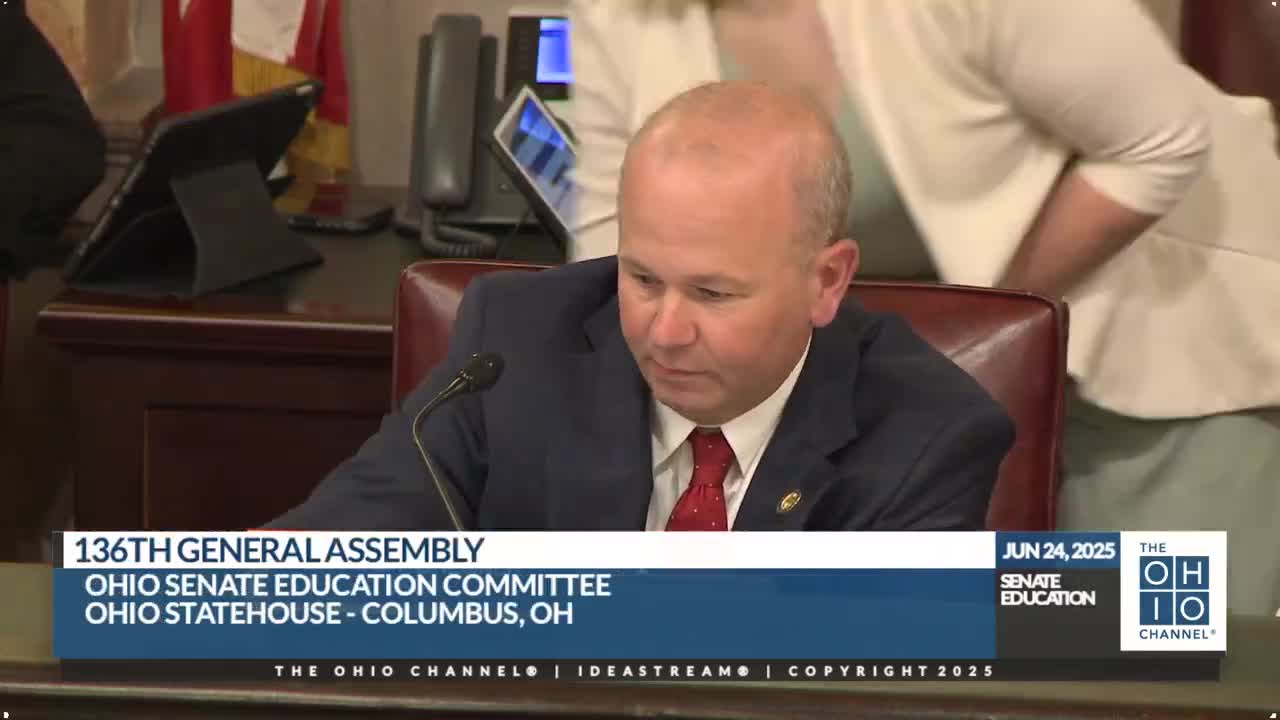
Summary
Witnesses and senators sparred at a Senate Education Committee hearing over Senate Bill 156, which would direct the Department of Education and Workforce to develop a model 'success sequence' curriculum. Critics called the model abstinence-oriented and unproven; supporters said it offers another tool to reduce poverty.
The Senate Education Committee held a third hearing on Senate Bill 156, a bill directing the Department of Education and Workforce to convene a committee and develop standards and a model curriculum based on the so-called "success sequence" — a framework that emphasizes graduating high school, obtaining full-time employment and marrying before starting a family.
Jamie Mericle, deputy director of Abortion Forward (formerly Pro-Choice Ohio), testified in opposition, telling the committee the success sequence "traces a path that people already likely to succeed, usually walk, as opposed to describing a technique that will lift people over systematic hurdles they face." Mericle argued the sequence's model curricula rely on abstinence-only approaches and said those approaches have been repeatedly rejected by public health experts. "The inclusion of abstinence only programming shows the true intent of this bill," Mericle said, and warned such programming can harm students, including LGBTQ students and survivors of sexual violence.
Melissa Cropper, representing the Ohio Federation of Teachers, provided interested-party testimony that while she supported the intent to encourage graduation and employment, she told the committee "one-size-fits-all solutions don't work when you're talking about more than 600 school districts." Cropper said the union was concerned the bill could become an unfunded mandate and that the research does not show longitudinal evidence that teaching a branded "success sequence" curriculum changes students' long-term outcomes. She suggested integrating the bill's three concepts into existing social-emotional learning, career exploration and health or financial-literacy standards rather than creating a separate mandated model curriculum. Cropper also asked the committee to include instruction on labor unions and collective bargaining when discussing pathways to higher wages and stable employment.
Committee members questioned witnesses at length about evidence, parental rights, and whether teachers and other educators would be included in the state committee that develops standards. Ranking Member Ingram and several senators pressed Mericle and Cropper for citations; witnesses provided some sources and offered to share studies after the hearing. Senator Catrona and others argued the proposal is a modest, flexible step that local districts could adopt with local input; Mericle and Cropper countered that the bill's use of "shall" in places could produce requirements and that teacher involvement appears optional in the bill's language as written.
Committee members raised implementation questions the transcript shows were not resolved at the hearing: how the model curriculum would be measured, how proposed standards would fit into existing graduation requirements and which personnel would be required to teach the components. Transcript discussion noted the bill would require instruction in at least two graduation-required courses but did not specify assessments or timelines for statewide adoption of standards. The Legislative Service Commission analysis (referred to in committee discussion) was cited by senators as a point of reference for which lines of the bill require "shall" versus "may."
The committee did not take a vote on the bill during the hearing; the chair closed the item and recorded that the hearing concluded. The hearing included multiple written testimonies on file and the committee recessed for the summer afterward.