Get Full Government Meeting Transcripts, Videos, & Alerts Forever!
Get email alerts on the Mining Regulation topic
No spam. Unsubscribe anytime.
Committee hears industry-backed bill to set oversight for underground limestone mining
Summary
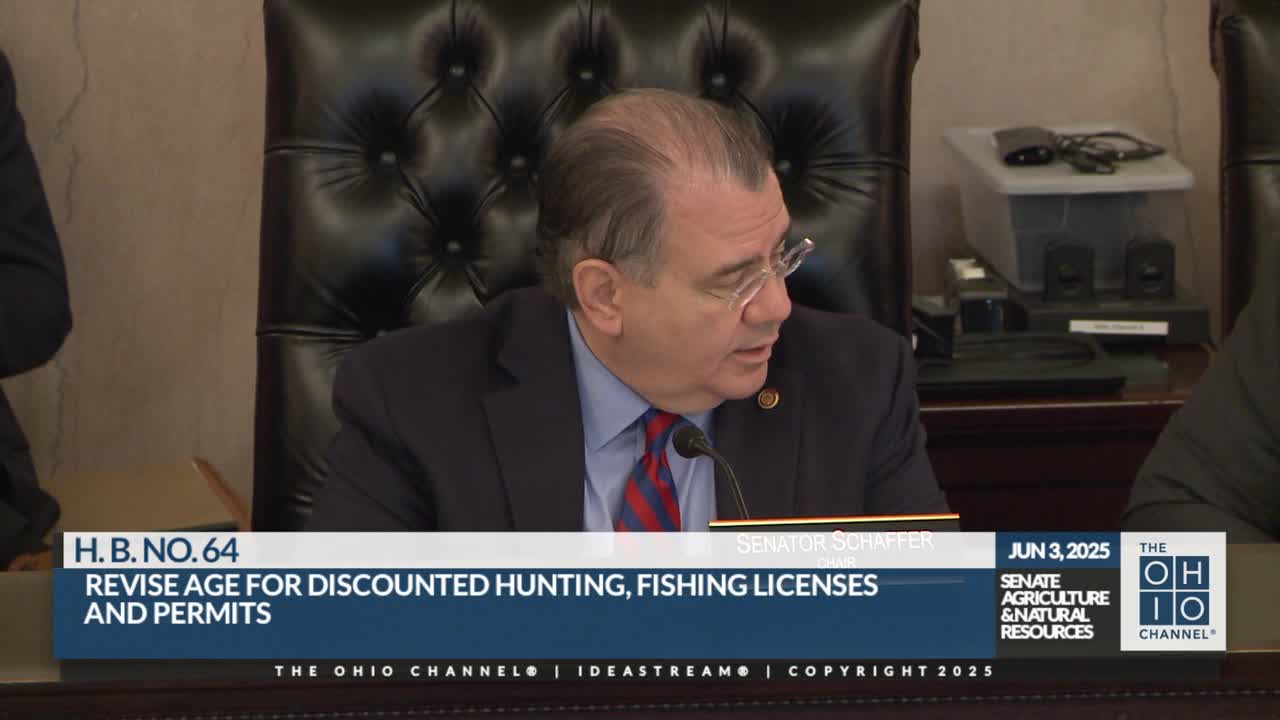
The Senate Agriculture and Natural Resources Committee heard proponent testimony on Senate Bill 181, which would create a statutory framework for regulating underground limestone mining and fold oversight of that activity into the Ohio Department of Natural Resources’ (ODNR) industrial-minerals program.
The Senate Agriculture and Natural Resources Committee heard proponent testimony on Senate Bill 181, which would create a statutory framework for regulating underground limestone mining and fold oversight of that activity into the Ohio Department of Natural Resources’ (ODNR) industrial-minerals program.
Pat Giacomet, executive director of the Ohio Aggregates and Industrial Minerals Association (OAIMA), told the committee the industry "is pleased to offer our very strong support for Senate Bill 181," saying the measure and its rulemaking would give the sector and regulators predictable standards for underground mining.
The bill, as described by OAIMA legal counsel Brian Barger, would: assign ODNR primary oversight of underground mining activities that could cause off-site impacts (groundwater, blasting and hydrology); replace the current 15-year permit renewal paperwork with a five-year review process to reduce administrative burden; allow easier amendments to add land to existing permits under defined conditions; clarify local governments’ ability to contract with mines for road-maintenance or tipping-fee funds; update procedures for appeals to the Reclamation Commission specific to industrial minerals; and create a small severance-tax increase and a dedicated fund to help address problems associated with abandoned underground mines.
Barger said the bill is intended to be a framework with most technical standards set by rule, noting the legislation was developed over several years with ODNR: "This bill represents several years worth of work between our industry and our regulator, ODNR." He said the technical rulemaking will cover explosives, groundwater and other operational standards.
Proponents provided several quantitative details in testimony. The witnesses said Ohio produced about 110,000,000 tons of aggregate in 2023, worth roughly $1.6 billion; that asphalt is roughly 95% aggregate and concrete roughly 85% aggregate; that four underground limestone mines currently operate in Ohio; and that initial capital costs for an underground mine can approach $100,000,000. Barger and Giacomet also said paperwork savings from switching to a five-year review could be substantial for operators and ODNR: a renewal application was described as taking about 65–70 hours, compared with an estimated eight hours for the five-year review, while a permit amendment to add land was estimated at about 30 hours of work.
Committee members did not take a formal vote on the bill during the second hearing. Witnesses emphasized that many technical requirements will be developed in rulemaking following statute changes and that ODNR would retain enforcement tools including orders, civil penalties and, when necessary, injunctive relief.
The testimony also noted an ODNR-requested, modest severance-tax increase to fund hydrology permitting and staffing; OAIMA said it supported that increase and that uncodified language in the bill would direct use of those funds. Proponents said a small additional severance-tax contribution tied to underground minerals would seed a fund intended to address potential future liabilities at abandoned underground mines when no responsible operator exists.
Committee Chair Schafer concluded the proponent testimony and did not call opponents or additional witnesses during the second hearing.
Why it matters: supporters framed the bill as creating regulatory certainty for a sector that supplies material for public works and private construction across Ohio. The committee’s next steps were not taken during the hearing; proponents indicated much of the program’s detail will be resolved through ODNR rulemaking if the statute is enacted.