
APD outlines technology upgrades including real‑time crime center, drones and new taser contract; privacy and costs raised
Get AI-powered insights, summaries, and transcripts
Sign Up Free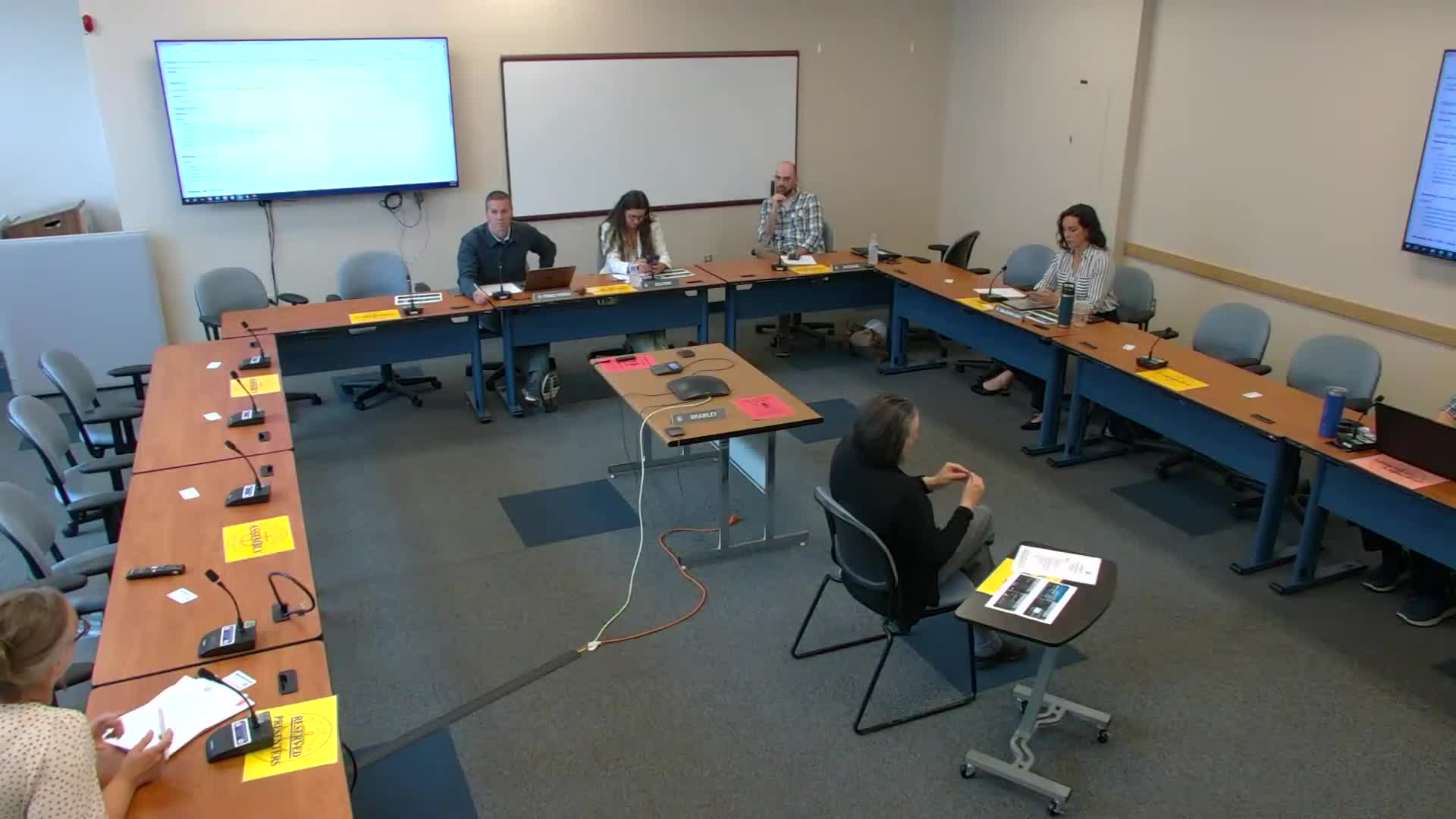
Summary
Anchorage Police Chief Case told the Assembly the department plans a consolidated Axon contract and other upgrades, including a real‑time crime center, roof‑mounted drones, license‑plate readers and transition to the Taser 10 to improve less‑lethal reliability.
Anchorage Police Department Chief Case briefed the Assembly on a package of technology upgrades and an upcoming consolidated contract, describing how the department intends to modernize dispatch/records systems, deploy rooftop drones and license‑plate readers, replace aging tasers and expand video analysis and real‑time crime‑center capabilities.
Case said the department is implementing Hexagon for CAD and RMS and expanding its PowerDMS suite to integrate recruiting, training, internal affairs, early‑intervention and wellness modules. The systems are intended to centralize records and speed access for investigations, training and policy review. "Without those two systems, we kinda don't exist," Case said of CAD and RMS.
Chief Case described a proposed consolidated contract with Axon that would reset related contracts to five years and include two body‑worn camera refreshes, one dash‑camera refresh, a taser refresh, unlimited video‑analysis licenses (the department currently pays about $3,000 per license) and data migration services. Case estimated Axon‑related migration and license costs in the near term at roughly $514,000 and described one potential subscription model for tasers at about $308,000 per year; he also said the total upgrade under discussion is in the vicinity of $800,000.
On less‑lethal options, Case said the department has been fielding failures with its current X2 taser model and that the Taser 10 offers improved probe velocity, better clothing penetration and an extended effective range, which could increase effectiveness and reduce failures. He said the X2 model shows a roughly 20–22% effectiveness rate in his presentation and that the Taser 10's single‑dart trigger design and updated cartridges intended for heavy clothing could reduce failures in Anchorage conditions.
On aerial and camera tools, Case described a Fusus real‑time crime center to aggregate feeds from dash cams, fixed cameras, private business systems and Ring; the Axon package would include three roof‑mounted drones (deployable as a “hive” or separately), remote launch and thermal sensors to assist fast response and officer safety. Case said drones can arrive on scene in roughly 30 seconds from a roof mount and that the real‑time crime center can provide immediate, verified intelligence to officers, such as vehicle direction and license information.
Chief Case emphasized use‑limits: he said APD will not use the real‑time crime center for predictive policing and that human operators will verify information before pushing it to officers. He said evidence is stored in a secure, FedRAMP‑certified system (evidence.com) and that the municipality retains ownership and can migrate data to another system if it changes vendors.
Assembly members and public speakers asked about data security, retention, warrants for drone use over private property, coordination with FAA and interagency data sharing. Case said drones flying into homes would require a warrant and that rooftop drones and pilots will follow FAA notification and Part 107 certification; he also said interjurisdictional data sharing with state troopers is not seamless at present and that access to evidence is granted on a case‑by‑case basis.
Chief Case said the department will seek Assembly review of the consolidated contract and indicated no net budget increase would be requested for the program; he asked the Assembly for input before contract approval. No formal contract award or Assembly vote was recorded in the briefing.
Public comment during the meeting reiterated concerns about data retention policies, third‑party vendor access and the potential for expanded surveillance; APD and community members agreed further policy discussion is needed as procurement and contract language are finalized.