Get Full Government Meeting Transcripts, Videos, & Alerts Forever!
Get email alerts on the Homestead Screening Tool topic
No spam. Unsubscribe anytime.
County auditors back statewide screening tool for owner‑occupancy credits; committee asks for cost details
Summary
The County Auditors Association of Ohio testified in favor of House Bill 179, which would create a statewide eligibility‑screening system to verify owner‑occupancy credits and homestead exemptions. Auditors said automated verification could reduce improper state reimbursements and ease county workloads but requested detail on a proposed $7.5M GRF
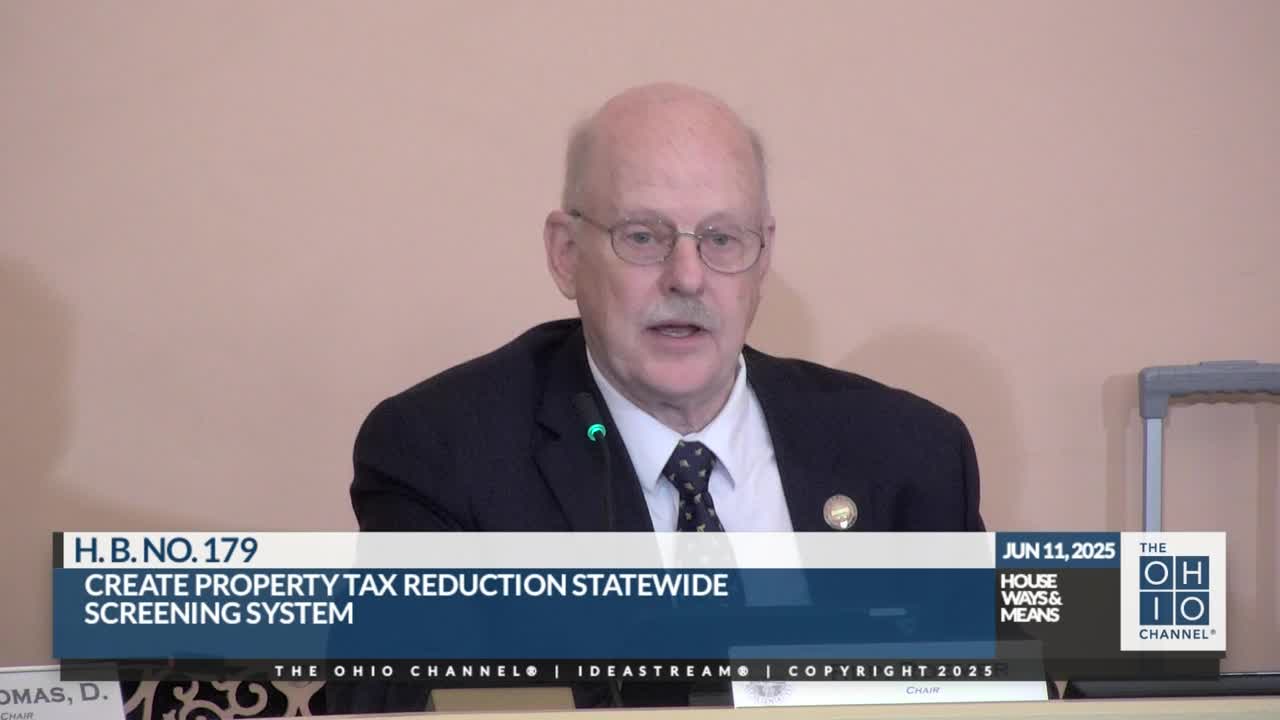
Ron O’Leary, administrator of the Cuyahoga County Board of Revision, testified to the committee in support of House Bill 179, which would create a statewide screening process to verify eligibility for owner‑occupancy credits and homestead exemptions.
O’Leary said county auditors currently rely on manual checks, outreach and overtime to verify roughly 3,000,000 applicants statewide and that inaccuracies have cost the state “hundreds of millions of dollars” in reimbursements. He described the bill’s proposed model—state‑led procurement of vendors and automated checks against national databases for homestead status, driver’s licenses, voter registrations, postal moves and other records—citing precedent in Florida and Texas.
“Accurate and thorough administration of these tax credits requires access to data and technical capabilities that Ohio’s county auditors currently lack,” O’Leary told the committee, and he said a standardized screening tool would protect the General Revenue Fund against unnecessary revenue loss while helping local auditors administer benefits fairly.
Committee members asked about the bill’s projected GRF allocation — O’Leary said he did not have the detail on the proposed $7,500,000 appropriation and agreed to work with auditors and the committee to supply that information. The committee closed the second hearing on HB 179 and asked staff to collect cost and procurement details.
Ending: Committee concluded the second hearing and requested follow‑up detail on the expected $7.5 million GRF appropriation and vendor procurement and implementation plans.