Get Full Government Meeting Transcripts, Videos, & Alerts Forever!
Get email alerts on the Property Tax topic
No spam. Unsubscribe anytime.
Sponsor urges rollback of property valuations to 2022 levels amid concerns over spikes
Summary
Representative Schmidt told the House Ways and Means Committee that rapid revaluations have sharply increased tax bills in parts of the state and described House Bill 89 as a "quick fix" to set valuations back to 2022 levels; committee members asked questions about consequences for levies and market effects.
Representative Katie Schmidt told the House Ways and Means Committee that House Bill 89 would reset property valuations to 2022 levels after recent reappraisals drove tax-assessed values sharply higher in many counties.
"Ohio has seen an unprecedented increase in property valuations in numerous counties across the state," Representative Schmidt said. She told the committee some valuations recommended by the Ohio Department of Taxation reached "more than 30%" and said, "In my own county of Clermont County, it has reached 43%."
Schmidt described House Bill 89 as "a quick fix" and said the bill would "set those values at the 2022 level." She framed the measure as a way to stop what she called a current "bleed" of higher tax liabilities that she said is hitting homeowners, particularly seniors.
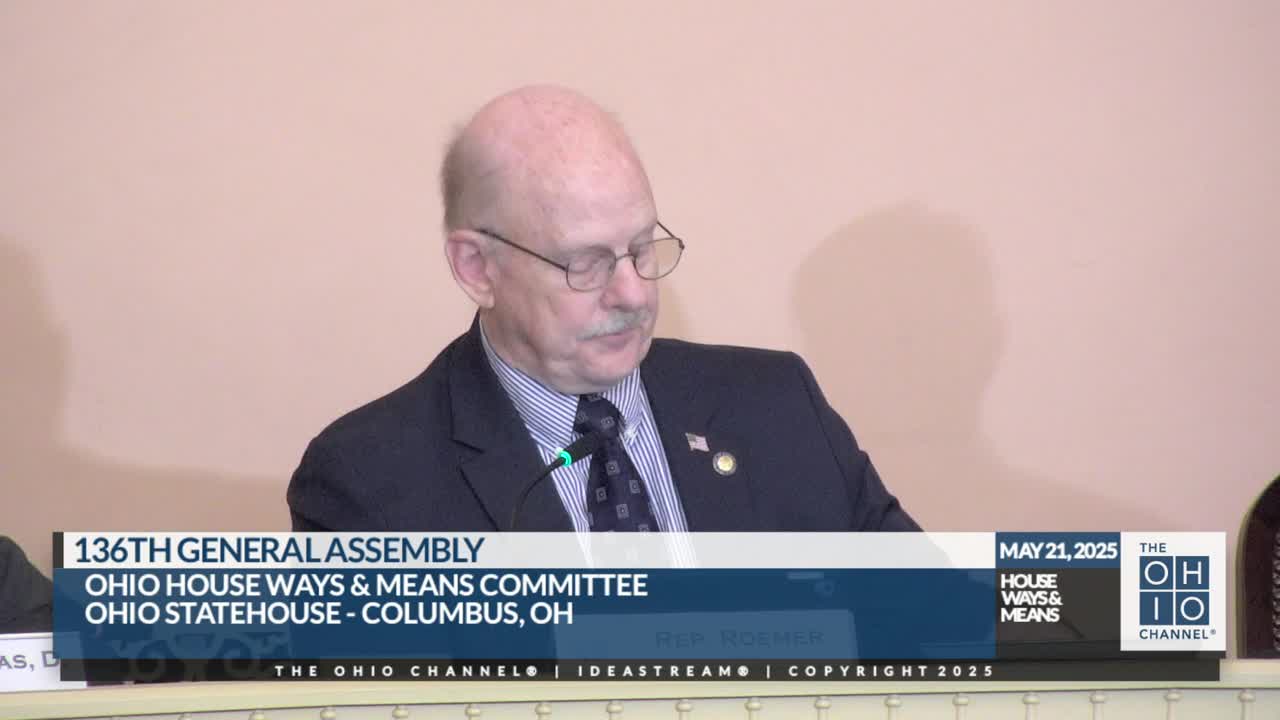
Committee members asked detailed questions about how the rollback would interact with voter-approved levies and with reappraisals taken in different years. Chair Romer confirmed that if the bill set valuations at 2022 levels, later levies passed by voters would still be reflected under the bill as it was explained by the sponsor.
Representative Frey and others pressed the sponsor on whether the bill would be a temporary or permanent floor and how it would affect mills and levy revenues. Schmidt said the change would set a 2022 floor moving forward but acknowledged complicating factors, such as differences across counties that used a three-year lookback or had reappraisals in later years.
Sponsor testimony included market context: Schmidt argued banks and lending practice influence perceived home values and that a shortage of homes relative to buyers has produced bidding pressure. Committee members requested and were promised additional data and fiscal analysis; no votes were taken at this hearing and committee staff did not present a fiscal note during the sponsor testimony.
The committee closed the session after questions and the hearing was recorded as the first hearing of House Bill 89.