Get Full Government Meeting Transcripts, Videos, & Alerts Forever!
Get email alerts on the Cryptocurrency Policy Coinbase Testimony topic
No spam. Unsubscribe anytime.
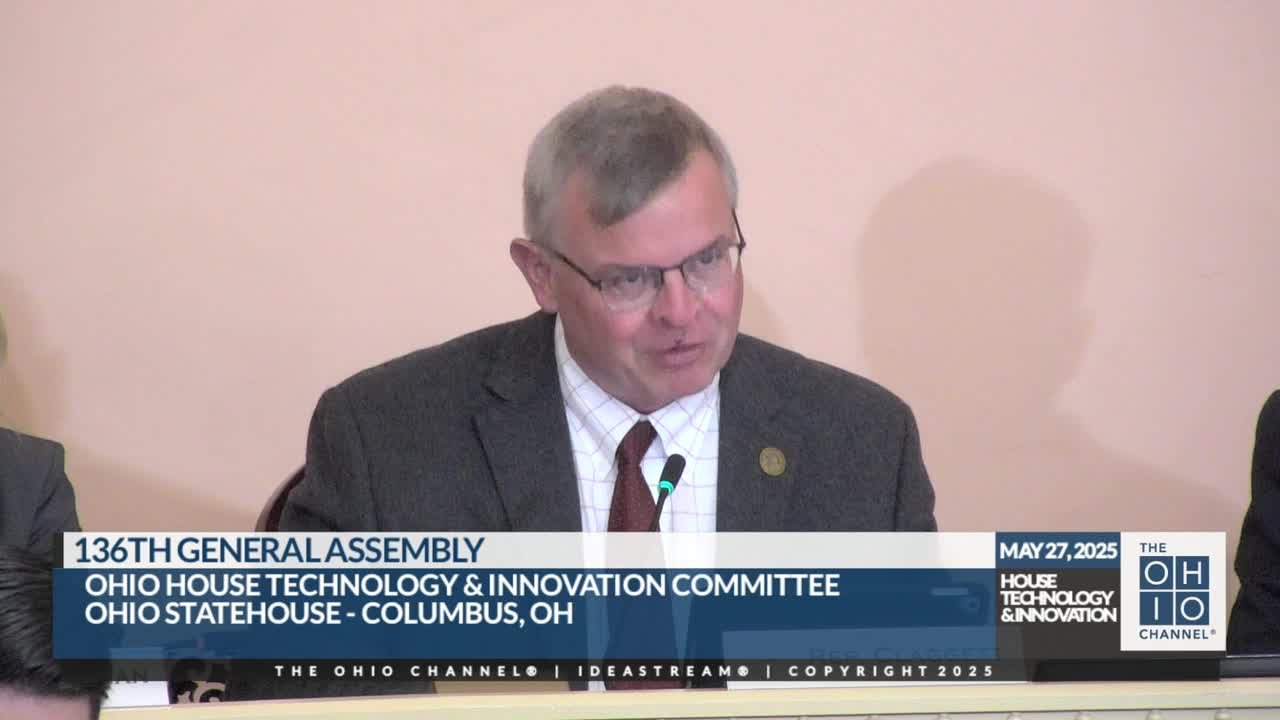
Coinbase official outlines consumer protections, Ohio ties in committee testimony
Summary
Ashley Gunn, Coinbase’s state policy lead, told the House Technology and Innovation Committee that Coinbase is regulated, uses cold storage for most customer funds, and sees Ohio as important for crypto education and commerce. Lawmakers pressed the company on security, custody, and quantum‑computing risks.
Ashley Gunn, state policy lead for Coinbase, told the House Technology and Innovation Committee that Coinbase is regulated by more than 50 authorities and holds 46 money‑transmission licenses, including one from the Ohio Division of Financial Institutions.
Gunn said Coinbase is registered under the federal Bank Secrecy Act and employs “over 400 compliance, legal, and investigative professionals” who work with law enforcement and carry out transaction monitoring and suspicious‑activity reporting. “We are committed to being the most trusted crypto platform by prioritizing consumer protection, security, and regulatory compliance,” Gunn said.
Why it matters: Committee members repeatedly asked whether state law and the committee’s work are keeping pace with fast‑moving technology and whether Ohio can protect residents who trade or hold digital assets. Several lawmakers raised questions about custody, where systems and data are physically hosted, and how the state should weigh innovation against privacy and safety.
Most‑important facts: Gunn said Coinbase stores the majority of customer funds in cold storage—an offline form of custody intended to reduce cyber‑theft risk—and that the platform uses online “hot” wallets for transactions and payments. She described on‑screen warnings for high‑risk assets and said Coinbase advocates for federal and state regulation that protects consumers while enabling innovation. Gunn noted academic activity in the state, citing the University of Cincinnati and Ohio State’s business coursework as evidence of an emerging local talent pipeline.
Committee concerns and follow‑up: Representatives pressed Gunn on several topics:
- Quantum computing: Representative Todd Matthews and others asked whether future quantum breakthroughs could weaken blockchain security. Gunn said she is not a quantum computing expert and could not provide a technical assessment, but she offered to follow up with Coinbase’s technical team. Committee members agreed to seek deeper technical testimony later in the oversight process.
- Physical location of systems: Representatives asked where Coinbase’s systems are hosted. Gunn said she did not have those security details and said she would arrange a briefing with Coinbase’s head of security, adding that some operational details are not appropriate for a public hearing.
- Consumer protection and criminal targeting: Lawmakers cited recent news reports of crimes involving attempts to obtain private keys and passwords. Gunn said blockchain addresses are pseudo‑anonymous and that reverse‑engineering could be possible in some cases; she emphasized the need for continued work on consumer protections and noted Coinbase’s platform features that warn users about risky transactions.
Quotes from other witnesses: Andrew Birchwell, executive director of the Ohio Blockchain Council, told the committee that the bill under consideration limits state holdings to digital assets with “an average market cap of at least $750,000,000,000,” a threshold Birchwell said was intended to restrict initial purchases to what he described as relatively stable, high‑profile assets such as Bitcoin.
The committee heard two additional proponent witnesses who described operational safeguards the state could adopt, including multisignature custody, geographic distribution of keys, third‑party audits and proof‑of‑reserves checks. Noah Harmon of Fortress Global recommended that the state retain private key sovereignty and implement disaster‑recovery and insider‑threat monitoring protocols if the state holds digital assets.
Ending: Committee members asked Coinbase to return with additional technical and security briefings and encouraged staff to coordinate those follow‑ups with the chair’s office. Gunn said she would work with the committee’s staff to arrange further briefings.