
City consultants recommend expanding Lake Wales wastewater plant; estimate $55 million for first phase
Get AI-powered insights, summaries, and transcripts
Subscribe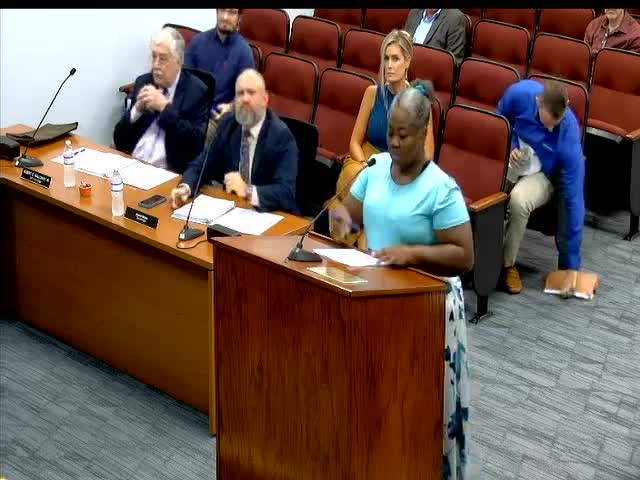
Summary
Consultants told the City of Lake Wales commission that expanding the existing wastewater treatment plant (alternative 1) is the most cost-effective near-term option, with a phase‑1 price tag near $55 million and a multi‑year design and construction timeline.
City of Lake Wales officials heard a presentation on a wastewater and reclaimed‑water master plan that recommended expanding the existing wastewater treatment plant to meet projected growth.
The master plan presented three alternatives and recommended “Alternative 1” — retaining the current biological treatment process and adding tankage — as the most cost‑effective approach for the next 20 years. Jamieson Tondrow, project manager for Kimley‑Horn, said that phase 1 preliminary probable cost was closer to $55 million and that phase 1 would raise capacity to about 3.6 million gallons per day (MGD) from the current plant capacity of about 2.19 MGD.
The recommendation matters because current average flows are roughly 1.2 MGD, the consultants said, and projected 20‑year flows are about 3.6 MGD. With known development the planning team estimated full build‑out needs between about 4.5 and 4.6 MGD, which would require a second phase of additional improvements.
Consultants outlined three alternatives. Alternative 1 keeps the existing technology and adds tankage and supporting equipment; it is lowest in capital and long‑term operations and maintenance costs among the options evaluated. Alternative 2 would convert the plant to membrane bioreactor (MBR) technology, which would reduce footprint but carry higher initial capital and ongoing O&M costs and require operator retraining. Alternative 3 would rely on purchasing and expanding the Polk County Waverly plant to the north and splitting flows between two plants; consultants estimated that option at about $91 million and said it carried more schedule and implementation risk because of land acquisition and uncertainty about relocating force mains.
"For phase 1, preliminary probable cost was closer to $55 million," Tondrow said during the presentation. Consultants also noted the need to evaluate effluent disposal (reuse/percolation ponds) and whether existing percolation ponds can be rerated to accept higher flows instead of expanding pond acreage.
The consultant outlined an implementation schedule tied to Alternative 1: finalize the facility plan and secure funding, an estimated design period of about 18 months, and a construction period of roughly two years for phase 1 — a multi‑year effort that aligns with the commission’s projection that the plant could reach about 80% of treatment capacity within five or six years.
Funding options identified in the presentation included state revolving fund (SRF) financing for design and several competitive grant programs (referred to in the presentation as "DP water quality improvement grants"), with the consultants citing recent examples of grant awards in the region.
Commission discussion focused on costs, schedule and reuse. Commissioners and staff asked whether Alternative 1 could be augmented later to deliver reuse north of the plant; consultants said additional pumping and piping improvements could be added, but those improvements were not part of the recommended phase‑1 scope. Commissioners generally supported advancing the master plan and pursuing design and funding steps, but the presentation and discussion constituted a work session; the record does not show a formal vote approving construction funding.
Consultants and staff said the next steps are to finalize the facility plan with the relevant state agency, prepare a request for proposals for design, and pursue financing options consistent with the recommended Alternative 1.
The presentation and discussion left open longer‑term choices — especially whether to advance higher‑cost technologies such as MBR or to invest in expansion north of town — but the consultant’s net‑present‑worth comparison found Alternative 1 lowest in total lifecycle cost for the 20‑year planning horizon.
Ending: The commission asked staff to continue work on the facility plan and funding strategy; if the commission approves a design contract in a future agenda session, the process described by the consultant would begin with design and later go to construction bids. No construction contract award was recorded at this meeting.