
Cypress council adopts balanced FY25-26 budgets and seven‑year CIP, approves streamlining pilot over objections
Get AI-powered insights, summaries, and transcripts
Subscribe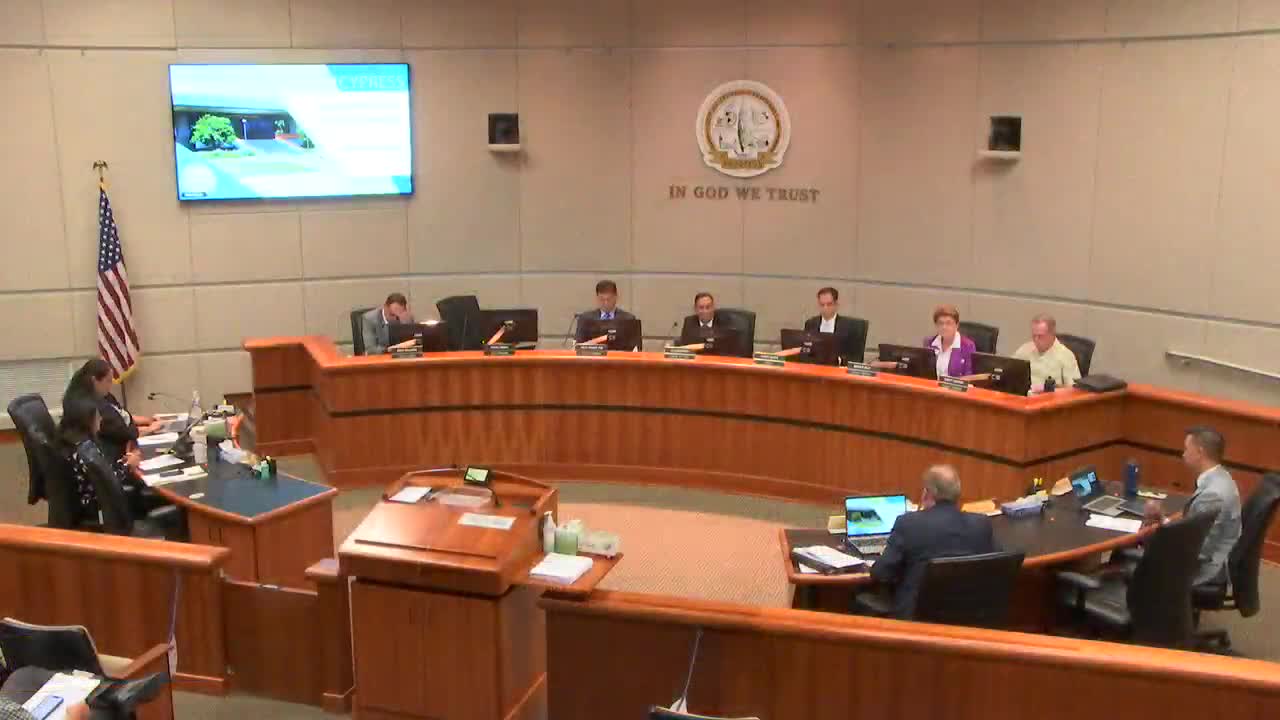
Summary
The City of Cypress adopted balanced fiscal year 2025–26 budgets for the city and the Cypress Recreation and Park District and approved a $37 million first‑year capital improvement program and a contentious pilot to streamline some routine CIP approvals. The pilot drew a 3‑2 split amid calls for more public review.
The Cypress City Council adopted the city and Cypress Recreation and Park District fiscal year 2025–26 budgets and approved a seven‑year capital improvement program (CIP) on June 23, and it also approved a pilot program to streamline administrative approval of certain routine capital projects despite objections from two council members.
Finance Director Matt Burton told the council the budgets are balanced and largely status quo: “Both budgets are balanced, and they're largely status quo budgets. And service levels are unchanged from the prior year.” Burton said the city is projecting a modest deficit of about $600,000 but is drawing on designated reserves — $307,000 set aside for economic development and about $260,000 of other reserves — to balance the upcoming year.
Why it matters: the CIP sets infrastructure priorities and schedules $37 million in projects in year one and just over $98 million across seven years, including upgrades to the Meyer Avenue pump station, accessible pedestrian signals at intersections citywide, replacement of the aging City Hall HVAC, and design outreach for park expansions. Public works staff said the program also accelerates park playground replacements and pairs design and construction work across years to improve efficiency.
Public debate focused on the council’s separate but related vote to authorize a streamlining pilot that lets staff administratively approve a narrow set of routine projects without bringing each contract to the council for a separate vote. Public works director Nick (identified in the meeting transcript only by his first name) described the pilot as a way to save four to eight weeks per project by reducing procurement lead time for routine maintenance, repair or replacement work. “For this pilot program, we're recommending 8 projects, which are all routine maintenance, repair and or replacements,” Nick said, adding the pilot represents less than 12% of the fiscal year’s CIP budget.
Councilmember Helen Chang and Mayor David Burke both pressed for greater transparency and urged the council to delay the municipal code changes that enable the pilot. Chang said she worried the public would lose an opportunity to review and comment on contracts and urged a separate presentation and broader outreach before changing council approval practices. “I don't wanna be the first city to adopt a policy or ordinance… I don't want us to be the first,” Chang said. Councilmember Kyle Menickas defended the pilot as a limited test that the council can stop if it proves unsatisfactory.
Outcome: the council adopted the city and park district budgets unanimously. The motion to adopt the CIP and related ordinances passed after a substitute motion; the streamlining pilot and the municipal code amendments enabling it were approved in a separate vote that carried 3–2, with Burke and Chang voting no and three other members voting yes. The council directed staff to provide quarterly updates and a year‑end recap on the pilot’s activity.
What’s next: staff will proceed with design and procurement steps for year‑one CIP projects and return quarterly reports on the pilot’s use. Several council members asked staff to bundle potential shade and playground work at multiple parks to explore cost‑saving opportunities; staff said they would bring options back for council direction ahead of design to avoid wasted consultant work.
Quotes in context: Burton presented the revenue and expenditure outlook and said the city prioritizes long‑term stability over short‑term spending. Nick framed the pilot as limited and reversible. Chang sought more time for public review and independent comparisons to other cities’ practices.
Ending: With budgets adopted and the CIP in place for the coming year, council discussion now shifts to specific project designs and to the pilot’s first quarterly update, which council members said they will monitor for evidence that administrative approvals are saving time without sacrificing transparency.