
Highland Lake group donates water-gauge; selectmen and staff discuss drainage, silt and bond projects
Get AI-powered insights, summaries, and transcripts
Subscribe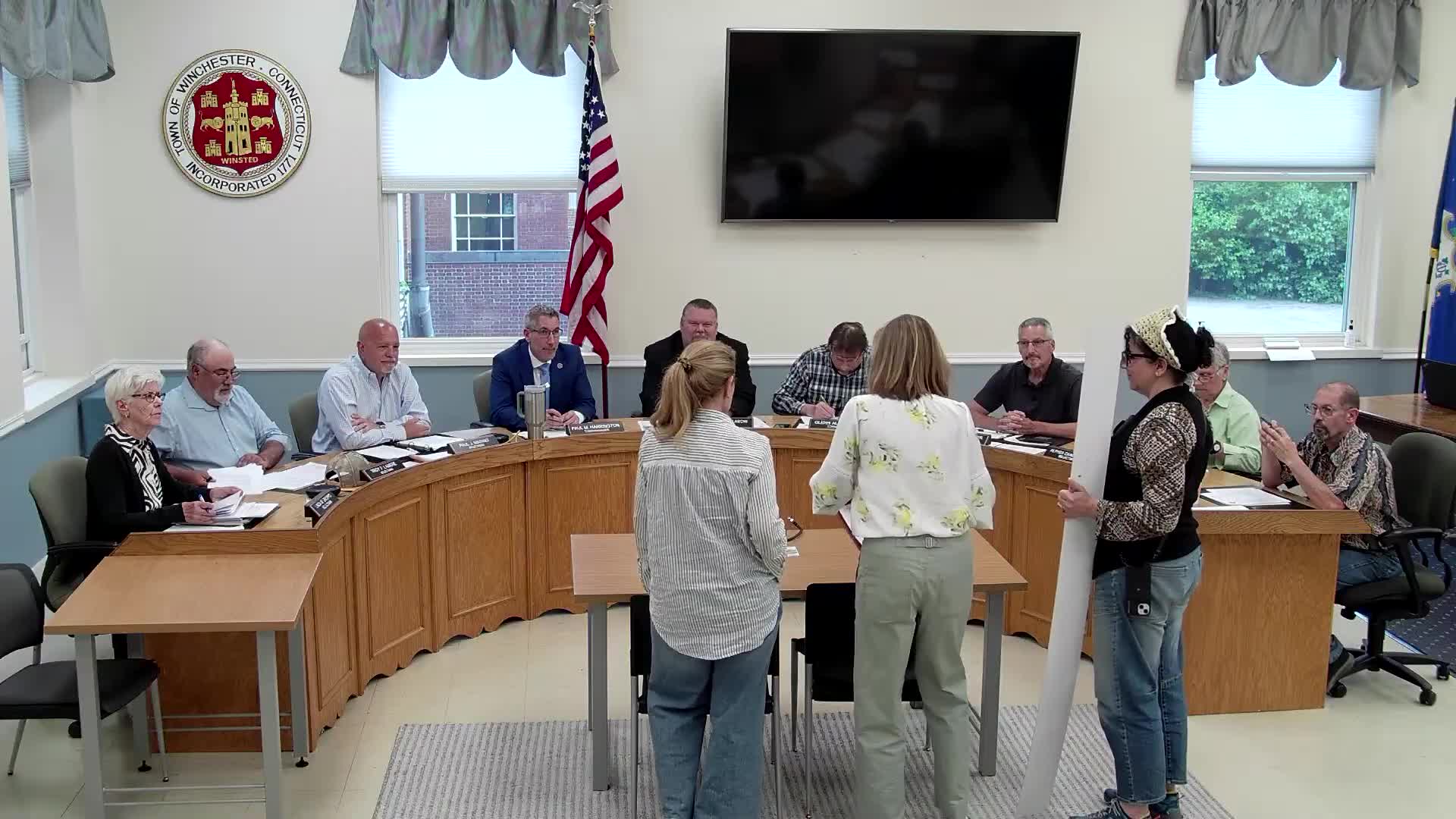
Summary
Highland Lake Watershed Association presented a new water-level gauge to the town; discussion expanded into long-running concerns about silt, drainage, and the town’s $1 million bond allocation for lake-related drainage improvements.
Betty Martin, secretary of the Highland Lake Watershed Association, presented a new water-level gauge to the Board of Selectmen on June 16 and outlined recent conservation steps around Highland Lake, then joined a broader discussion about sediment runoff, drainage and the lake’s long-term health.
The gauge: Martin told the board the gauge will be mounted near the gatehouse on the rock wall and will give public works a visible reference for lake water level; the association described the gauge marker’s “0” as the optimal (low) level for the lake.
Ongoing projects and history: Martin summarized recent work by the association and town staff, including bioswales at the public boat launch, rain-garden installations, and drainage improvements near Holland Beach parking. Those efforts stem from recommendations in a 2020 study that identified multiple runoff sources and priority interventions.
Bonded drainage funds and priorities: Selectmen and staff discussed the town’s roughly $1 million bond allocation for pond and lake drainage work. Officials said the bond can fund sections of drainage and related road work, but that a full lake-wide solution would require substantially more funding and complex engineering. Board members debated whether to use bond funds for the most offending drainage areas identified in the 2020 study or to attach drainage repairs to larger road projects already funded by the bond.
Private offenders and enforcement: Selectmen raised a recurring problem on East Wakefield Boulevard and other locations where a private property owner repeatedly deposits soil that then washes into the lake during storms. Staff said repeated enforcement attempts have not produced a long-term fix, and board members discussed whether the town should take more direct remedial action in such locations.
State and federal assistance: Town Manager Paul Harrington and selectmen noted past and possible future state environmental funding streams and outside partners (for example, Trout Unlimited and regional river associations) that could help larger-scale lake protection or drainage work. They asked staff and the town’s grant person to look for competitive state or federal funding opportunities.
Why it matters: Board members described the lake as a major town asset; continued sedimentation and failing drainage infrastructure were framed as threats to swimming water quality, aquatic habitat and long-term recreation value.