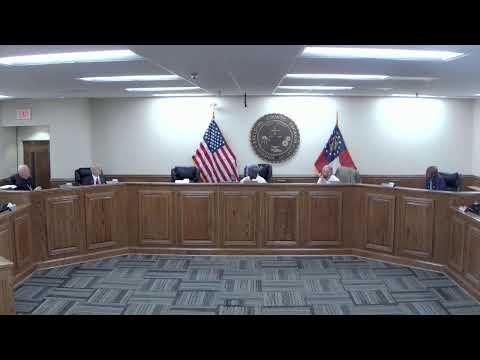
Commissioners review splash-pad concept for City Park; ask staff to trim footprint and study water reuse
Loading...
Summary
Staff presented a concept for a splash pad at City Park and asked permission to seek bids; commissioners emphasized preserving green space, minimizing impervious surface, and studying water recycling versus flow-through systems before final design and budget commitments.
Spalding County staff presented a conceptual splash-pad design for City Park at a workshop and asked commissioners to authorize seeking bids and further design work. Director Amberger said the project is an impact-fee-funded item and the City Park location was selected after staff could not find suitable well-water options for a previously considered site.
Why it matters: the proposed splash pad would be free to use, include play elements sized for toddlers through teenagers, and sit near the community center, skate park and existing restroom/concession infrastructure. Commissioners raised concerns about the design’s concrete footprint, loss of green space, fencing and the cost and water use implications of either a flow-through (city water) system or a closed filtration-and-recycle system.
Details: the concept presented by manufacturer Vortex shows separate areas for toddlers and older children, an interactive bucket element and ground-level play for parents to supervise. Amberger said staff would ask the city to participate in utility costs and that the county could customize colors to reflect both county and city palettes. The county’s engineers would adapt the plan to reduce impervious surface where possible, Amberger said.
Water and maintenance trade-offs: Amberger described two plumbing options. A flow-through system uses treated city water and is cheaper to build and maintain but could use large daily volumes (Amberger estimated a potential 50,000–75,000 gallons per day for continuous use in peak season). A filtration-and-recycle system uses an underground tank (roughly 1,000 gallons), pumps and daily water-quality testing with chlorine; it reduces daily water demand but raises initial construction and maintenance costs and requires daily checks, staff training or a partner to operate.
Board direction and next steps: commissioners asked staff to reduce concrete, preserve green space and provide alternatives to fencing; to produce cost comparisons for flow-through versus recycled systems; and to coordinate with Griffin city staff on any intergovernmental agreement for water utilities. Staff asked to seek bids and return price estimates; the chairman said a formal vote would occur at the upcoming business meeting. No construction contract or binding intergovernmental agreement was approved in the workshop.