Cortland proposes emergency purchase of former elementary school at 264 Park Street
Loading...
Summary
Council considered an emergency ordinance authorizing the mayor to buy 264 Park Street (the former Cortland Elementary School) amid safety and demolition concerns, but residents pressed for inspections, cost details and clarity on funding prior to purchase.
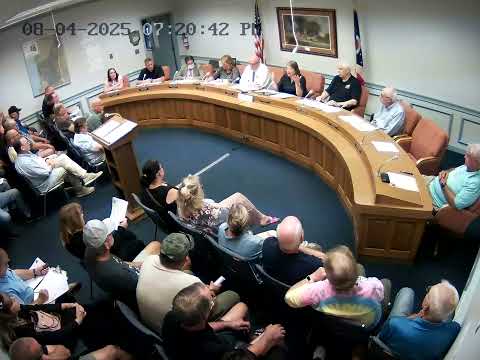
The Cortland City Council heard a proposal to adopt an emergency ordinance authorizing the mayor to buy 264 Park Street, the former Cortland Elementary School, as an immediate step to address a vacant, blighted property in a residential area.
Councilors and the mayor said the purchase is intended to clear a public-safety hazard and make the site eligible for county brownfield and demolition funding. "There is not a gas well," the mayor told the meeting, relaying site checks by state and utility officials and saying the line at street level was "cut and abandoned on 04/10/2024." The mayor said she had contacted the Ohio Department of Natural Resources and Enbridge; ODNR’s on-site inspector — identified only by his first name, Anthony — had concluded the feature was a pipeline regulator, not an oil-and-gas well, and Enbridge’s external affairs representative, Michael Cunnington, told the city the former meter/regulating equipment was removed and that new service could be installed if needed.
Why it matters: the city faces repeated complaints from neighbors about vandalism, trespass and the blighted building’s condition. Trumbull County was awarded roughly $6.3 million in a recent round of demolition and brownfield funding, city staff said; county funding programs generally require a local match (the mayor said the city’s share would be 25%). The council was asked to approve the purchase immediately under an "emergency" designation so the city could close promptly while grant opportunities remain available.
Key facts and debate: the purchase price on the agenda was $85,000. Several speakers noted the county auditor’s site valuation listed the property at about $28,580, and questioned paying a premium without a prior structural and environmental inspection. One resident challenged the price and asked whether the purchase would saddle taxpayers with demolition or abatement costs: "So you're willing to pay $85,000 for a building and then ask the taxpayers to pay another $500,000 to tear the building down?" a speaker asked. The mayor responded that the city would pursue available grant money and that a Phase I environmental assessment and structural review would be done after acquisition to determine next steps.
On hazardous materials: commenters and one former official recalled past asbestos-removal estimates that ranged from roughly $1.3 million to higher amounts for full abatement and demolition; council members and residents warned that demolition and remediation costs are volatile and urged the council to include contingencies. The mayor said some renovation could be possible if inspections show parts of the building are sound; she said community meetings would follow assessment results to gather local input on reuse versus demolition.
Process and next steps: the agenda listed the item as Ordinance O-41-125 (emergency) to permit a single-reading vote rather than the standard three readings; several people in the room cautioned that "emergency" refers only to the accelerated legislative process, not a declaration of a public-safety catastrophe. The mayor described the purchase as the step that would allow the city to access county and land-bank channels for abatement. City staff said the Trumbull County Land Bank would handle demolition/grant applications and estimates once the property is in local control.
What remains unresolved: the transcript of the meeting records a motion to adopt the emergency ordinance but does not include a final roll-call vote or the names of the mover and seconder. The council also did not provide a final figure for expected abatement costs; speakers gave competing recollections and estimates. The mayor said the city will perform a Phase I environmental site assessment and structural inspection after acquisition and return to the council with findings and options.
Residents urged caution, asking for contingencies (inspection- or appraisal-based purchase conditions) and clearer disclosure of potential city costs. City officials emphasized the time-sensitive nature of the county grant rounds and said acquiring the property would allow the city to pursue those funds and to secure the site for neighbors in the short term.