Get Full Government Meeting Transcripts, Videos, & Alerts Forever!
Get email alerts on the Transportation Policy topic
No spam. Unsubscribe anytime.
Wilsonville council backs short special session transport fix but debate exposes split
Summary
City council voted 3-1 to direct staff to work with state groups supporting a special legislative transportation package focused on operations and maintenance while urging retention of local revenue sharing and removal of tolling language; one member voted no, citing concern that the proposal is a short-term "band-aid."
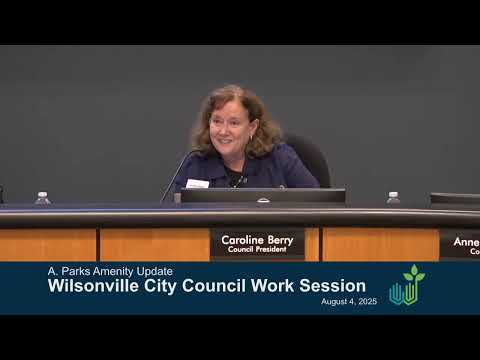
Wilsonville City Council voted 3-1 on Aug. 4 to direct city staff to work with the League of Oregon Cities and the state legislature to support a narrowly scoped transportation package for the governor's Aug. 29 special session, provided the package retains local revenue sharing, removes the threat of tolling on the Boone Bridge and includes accountability measures to limit financial burden on Wilsonville residents and businesses. The motion was made by Council President Barry and seconded by Councilor Cunningham; the motion passed 3-1.
Council members and staff framed the special session as a response to an expected shortfall at the Oregon Department of Transportation (ODOT) after the 2025 long session failed to pass the legislature's omnibus transportation bill. Everett Wilde, the city's government relations manager, told the council the governor’s announced proposal intends to focus on operations and maintenance rather than capital projects and is designed to be a short, targeted package to avert service and staff cuts at ODOT. “The governor has called a special session of the state legislature on August 29… with the goal of doing a small refined package that is focused on operations and maintenance, not capital projects,” Wilde said during the work session presentation.
Why it matters: Councilors said local maintenance funding is urgent because deferred maintenance raises future costs and because Wilsonville receives a share of any gas-tax revenue through the 50/30/20 distribution (50% state, 30% counties, 20% cities). Wilde noted the proposal would retain that split and would, if enacted as described, increase funds for local projects. He also said the package includes a proposed doubling of payroll-based STIF (Statewide Transportation Improvement Fund) funding; the city’s current STIF share is 0.1% of payroll and would rise to 0.2% under the described proposal.
Council debate exposed division about short-term fixes. Several councilors, including Council President Berry and Councilor Cunningham, voiced support for the staff recommendation as a pragmatic step to preserve maintenance funding and local revenue sharing. “If you don't take care of maintenance of roads, you're going to have potholes and deterioration that in the long run is going to cost a lot more money overall,” Berry said during discussion in the work session.
Opposition centered on process and equity concerns. One council member said the governor's plan had been announced by press conference only and that no bill text was available; the same member said the package was a “band-aid” that would place added costs on households already facing increased utility and living expenses and therefore registered a symbolic no vote. “I really have a problem with supporting a band aid legislative fix that kicks it down the road with not a comprehensive commitment to fix our transportation,” that member said during debate.
What the motion does and does not do: The council’s motion directs staff to work with statewide associations and the legislature to support a package meeting the listed criteria; it does not itself change local taxes or enact any state law. Staff said the gas-tax increase in the governor’s outline would take effect Jan. 1, 2026, and a road-user charge (pay-by-mile) system would not start until Jan. 1, 2027, because of the time needed to establish administrative systems.
Next steps: City staff said they would continue coordination through the League of Oregon Cities and the Association of Oregon Counties and report back as written proposals become available. Wilde cautioned that, while the special session is intended to be short, the underlying policy questions will return to the regular legislative calendar and that the city can still register support or opposition to specific bill language as it emerges.
Ending: The council’s action is intended as early engagement with the governor’s proposal; several members said they expect a larger transportation package to return in a later session and indicated they want to review actual bill language before committing further positions.