Get Full Government Meeting Transcripts, Videos, & Alerts Forever!
Get email alerts on the Traffic Calming topic
No spam. Unsubscribe anytime.
Committee backs more police patrols and speed trailer after residents warn of fast traffic near Hennepin Street pool
Summary
After multiple residents reported frequent speeding, near-misses and scooter concerns on Hennepin Street, the Streets, Alleys and Traffic Committee directed increased police patrols and placement of a speed trailer to test whether enforcement reduces the problem; formal speed-bump installation was not adopted and will be revisited in spring.
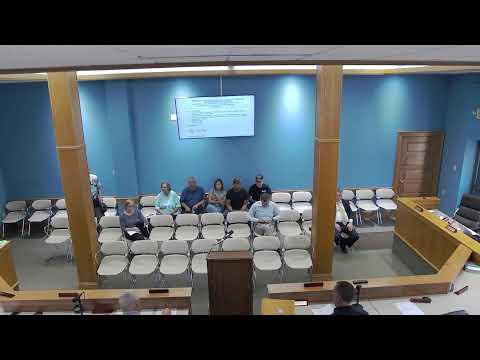
The Streets, Alleys and Traffic Committee of the El Salvador City Council on Aug. 4 directed increased, targeted police patrols and trial placement of a speed trailer on Hennepin Street between MacArthur Road and 11th Street after residents described recurring speeding and safety risks during pool season.
The committee’s action followed several residents’ accounts of short bursts of racing vehicles, limited stopping at stop signs and frequent scooter traffic during the summer. “I live second house from the corner … they come in and out of that pool … flying,” resident Gordon Parks said, describing the street where he has lived for 36 years. Resident Shane Link, who said he lives at 1214 Hennepin Street and has been there 25 years, said he’s seen “a lot of close calls” with children on bikes and scooters.
The committee framed the response as enforcement and temporary engineering measures rather than immediate new permanent traffic calming. Mike, a police representative, told the committee the department will increase randomized stationary patrols and try to schedule officers around pool hours; he also said the department can deploy the city’s speed-trailer and review footage from automated camera systems. “We’ve got cameras throughout the city, and we could plug those into our flock system,” Mike said, describing how staff could query recent footage by vehicle description.
Committee members and police described enforcement as the first step because speed-calming hardware could create other problems in winter and across many neighborhoods if installed broadly. The chair asked staff to try police patrols and the speed trailer for a period and report back in the spring when pool operations resume. The committee did not vote on installing permanent speed bumps at the meeting; a committee member noted uncertainty about what formal motion would be required and characterized the result as guidance to staff.
Residents suggested complementary engineering changes: Parks proposed converting the pool parking area to one-way circulation so exit traffic is forced through a stop sign, and recommended adding another speed bump on Hennepin. Police said they will attempt to station officers at pool hours and rotate enforcement across neighborhoods to avoid concentrating resources in one block. Police also noted that citations were not consistently issued during past spot patrols because officers do not observe violations every time they are present.
The committee’s direction distinguishes between short-term enforcement (police patrols, speed trailer, camera review) and longer-term infrastructure decisions (permanent speed bumps or one-way reconfiguration), which it deferred for future consideration.
The committee encouraged neighbors to report incidents with vehicle descriptions or license-plate information so staff can run camera searches and to contact the police nonemergency line for nonemergent issues; for emergencies, members were told to call 911. The committee planned to reassess the measures after the swimming season.