Get Full Government Meeting Transcripts, Videos, & Alerts Forever!
Get email alerts on the Electrical Code Amendments topic
No spam. Unsubscribe anytime.
Lawrence code board debates AFCI, GFCI and surge rules as staff refines ordinance timeline
Summary
City staff and the Building Code Board of Appeals discussed proposed updates to the electrical code — including arc‑fault circuit interrupter (AFCI) and ground‑fault circuit interrupter (GFCI) requirements, surge protection and an emergency disconnect — and asked for more data before recommending changes to the City Commission.
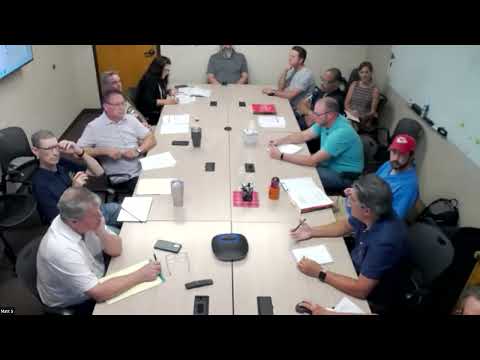
Members of the City of Lawrence Building Code Board of Appeals spent the meeting reviewing proposed electrical-code amendments tied to the 2017–2023 editions of the National Electrical Code (NEC), focusing debate on arc‑fault circuit interrupter (AFCI) requirements, expanded GFCI coverage, surge protection and an outside emergency disconnect.
The discussion matters because the board’s recommendations will shape the draft ordinances city staff sends to the City Commission for potential adoption. Board members and contractors said any change that reduces life‑safety protections or raises construction costs could affect homeowners, multifamily housing and affordability.
City staff described a stepped timeline: internal review of major codes (IRC, energy, IBC, IFC and NEC) through mid‑September, a likely period of more detailed board meetings in October–December, and a staff goal of moving ordinances to the commission in early 2026 with a target adoption date of July 1, 2026 if reviews proceed on schedule. Matt Schmidt, deputy code official for the City of Lawrence, said staff will adjust memo dates after a request from the fire chief to push the fire code review into September.
Justin McCray, residential permit technician, who prepared the draft electrical amendments, said he started the draft by re‑examining the 2017 NEC amendments and proposed several deletions in his initial draft. “I proposed deleting the entire section,” McCray said, referring to the expanded AFCI requirements found in more recent NEC editions; he also proposed removing some surge protection provisions and an outside emergency disconnect in places. McCray emphasized his draft is preliminary and invited feedback.
Board members and stakeholders raised safety, reliability and cost concerns. JJ Walks, a master electrician and board member, argued new houses built by licensed builders are “the safest houses that they've ever been,” but also warned that many fires result from unlicensed or amateur wiring. Walks said jurisdictions vary on requiring AFCIs when panels are replaced and noted the uneven impact of code requirements on retrofits.
Adrian Jones, a board member, urged caution about striking life‑safety rules and asked for more empirical data on AFCI performance and nuisance tripping as the NEC expanded AFCI coverage. Brian Jimenez, assistant director with Planning and Development Services, echoed that sentiment: “If we're gonna amend any provision ... of life safety, we should have a pretty good reason for doing so with information and research to back it up.”
Contractors and the home‑builders’ representative, Bobby Flory of the Lawrence Home Builders Association, warned about cost impacts on new construction and retrofits. Participants estimated typical AFCI breakers retail roughly $74–$100 and said contractors often mark up to about $130 for customers; for large new single‑family homes installers said a job could require dozens of AFCI breakers (estimations in the discussion cited roughly 40 circuits for a large home), which can add several thousand dollars. Board members and electricians also cited local differences: a full service upgrade was estimated at about $3,000 in Lawrence versus as much as $6,000–$7,000 in other jurisdictions such as Topeka where enforcement differs.
On GFCI coverage, staff noted the draft removes GFCI protection for many 250‑volt receptacles (ovens, dryers, ranges) and carried forward exceptions for single receptacles supplying equipment such as refrigerators, garage door openers and certain freezers. Several electricians said adding GFCI protection to some appliances can cause nuisance trips and interrupt critical equipment — and that certain EV chargers and some manufacturers advise against GFCI on those circuits because they can malfunction or trip.
Surge protection also drew debate. Staff said they had removed a broad surge protection requirement in the draft because of unfamiliarity with the devices and cost concerns; board members asked staff to research whole‑house surge options and the cost range (estimates during the meeting ranged from a few hundred dollars for a basic device plus around an hour of labor to $1,000 or more for higher‑end, whole‑house equipment).
The board did not vote on any of the electrical amendments at the meeting. Instead, staff asked board members and stakeholders to submit written feedback by e‑mail on AFCI, GFCI and surge items so staff can return with a revised ordinance at the next meeting. Schmidt said staff will circulate an updated memo and that some code‑specific meetings in quarter 4 could focus on individual topics (for example: energy, IFC, AFCI/GFCI specifics) rather than the prior, broader schedule.
Procedural actions at the meeting included approval of the May 6 meeting minutes and adjournment. A motion to approve the minutes was made by JJ Walks and seconded by Brian Jimenez; the board approved the minutes with the understanding staff will return with revised minutes in a different format for future meetings. A motion to adjourn, moved by JJ Walks, carried.
The board’s next steps: staff will revise the electrical draft ordinances (notably AFCI, GFCI, surge protection and emergency disconnect language), collect written comments from board members and stakeholders, and present a redlined ordinance at the following meeting. Board members asked staff to include research and data on AFCI performance and nuisance‑trip rates so the board can make a documented recommendation to the City Commission.