Justice Oversight Committee reviews Vermont pretrial supervision pilot, seeks program changes
Summary
The Joint Justice Oversight Committee heard a review of Vermont's pretrial supervision statute and pilot program in Essex and Orleans counties and was told the program needs increased supervision intensity, stronger cross-agency coordination, and clearer referral authority to reduce the pretrial detained population and improve public safety.
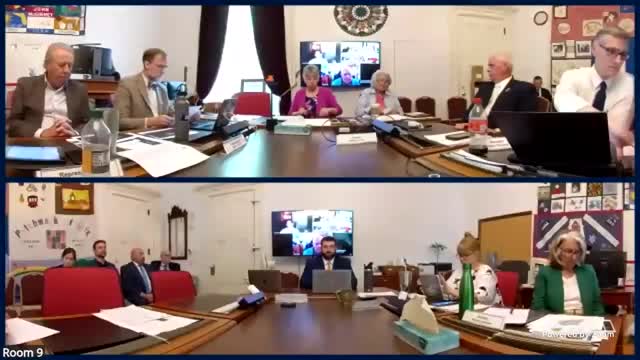
The Joint Justice Oversight Committee on July 16 heard a presentation from the Council of State Governments (CSG) Justice Center on Vermont's new pretrial supervision program and next steps to expand it beyond a two-county pilot.
Committee members were told the program, established in statute and run by the Department of Corrections (DOC), can help ensure court appearance and reduce reoffending, but it currently lacks the staffing, referral processes and cross-agency coordination needed for a successful statewide rollout.
Ben Novakowski of the Office of Legislative Council summarized the governing law, saying the program is established and governed by 13 VSA —75—55 and can be imposed under the conditions-of-release statute 13 VSA —75—54. Novakowski said the statute sets two eligibility routes for placement: either an accused who has violated conditions of release under 13 VSA —75—59 or a defendant with at least five pending criminal dockets. He added DOC administers the program and uses an evidence-based screening tool to set levels of supervision.
David DeMort and Ellen Whelan Wiest of the CSG Justice Center presented initial findings from site visits to the pilot counties and interviews with stakeholders. DeMort said the detainee population awaiting trial in Vermont is growing: "as of two days ago, the pretrial detainee population was 560 people," about 100 more than the same day a year earlier. He told the committee, "if you want a really workable pretrial program that is statewide, you're going to have to get to a certain point" on staffing, referrals and service access.
Presenters described supervision tiers ranging from automated telephone reporting to in-person supervision and electronic monitoring. They said DOC currently conducts risk and needs assessments using the ORAS (Ohio Risk Assessment System) tools and that compliance reporting requires pretrial supervision officers to notify prosecutors of court-ordered condition violations, while DOC has discretion about reporting DOC-imposed administrative breaches.
CSG's initial recommendations included: increase frequency and intensity of officer contacts (including more in-person supervision for higher-risk cases); authorize DOC staff to make direct, timely referrals to the court in response to condition violations to create swifter accountability; add brief behavioral-health screening at intake and streamline referrals to health and human services; broaden acceptable community providers for service delivery while concentrating intensive resources on individuals who pose the greatest public-safety risk; and build out evaluation and data collection tied to program goals (court appearance, reduced rearrest, and reductions in pretrial incarceration).
Speakers emphasized limitations created by current law and resourcing. Novakowski and the Justice Center presenters said the statute preserves prosecutorial discretion about whether to pursue arrest warrants or other sanctions after reported violations. DeMort and Whelan Wiest said the pilot counties (Essex and Orleans) were selected because the initial appropriation was limited (about $600,000) and warned that moving statewide without adjustments and more resources "would be a disaster." DeMort told the committee the program in its current form produces supervision levels that are inadequate for many people with significant mental-health or substance-use needs.
Committee members pressed on details of operations, including how referrals are initiated, whether courts or DOC should administer pretrial services in a unified-state system, and what staffing increases would be required to move from a pilot to statewide model. Gary Marville, deputy director of field services, confirmed there are court liaisons and that probation officers in post-conviction supervision can and do file petitions and communicate directly with judges; presenters said the same immediate lines of communication are not yet fully in place for the DOC-run pretrial model.
The Justice Center said it will continue stakeholder engagement through September and produce a draft report of findings and recommendations around October with an eye to a fuller report by November. The presenters framed their work as a multi-year implementation roadmap: some improvements are short-term (adjust supervision intensity with current staff), while others will require phased investments over one to four years to achieve statewide coverage.
Ending: The committee directed continued review and follow-up with the Justice Center and DOC. The presenters will return with a written report and specific staffing and policy options for committee consideration later in the year.