
Kansas panel hears timeline, logistics for new Office of Early Childhood under HB 2045
Get AI-powered insights, summaries, and transcripts
Subscribe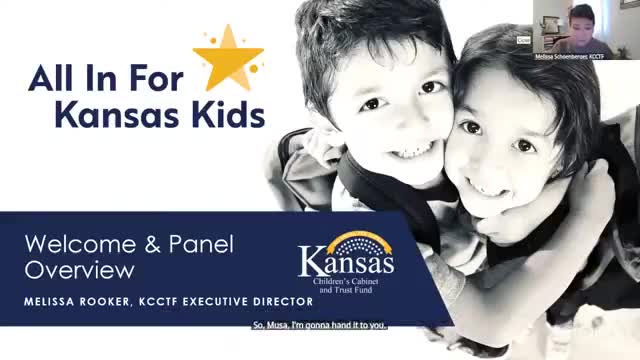
Summary
At a remote meeting of the Kansas Children’s Cabinet and Trust Fund’s Early Childhood Recommendations Panel, Melissa Rooker, executive director of the Kansas Children’s Cabinet and Trust Fund, told panelists that House Bill 2045 has set a timeline to create an Office of Early Childhood and move multiple programs and funding streams into that new office.
At a remote meeting of the Kansas Children’s Cabinet and Trust Fund’s Early Childhood Recommendations Panel, Melissa Rooker, executive director of the Kansas Children’s Cabinet and Trust Fund, told panelists that House Bill 2045 has set a timeline to create an Office of Early Childhood and move multiple programs and funding streams into that new office.
The plan matters because the bill requires a year of planning, beginning July 1, 2025, and culminating July 1, 2026, to transfer functions such as the Child Care and Development Block Grant-funded activities, child care licensing, quality-improvement work and several home‑visiting programs into a single state office to better coordinate services for families and providers.
Rooker described the transition as both “budget mechanics” and logistics — requiring approvals, waivers, IT, legal and human‑resources work — and said the governor will hire a planning director to lead a core team that includes secretary‑level leaders and technical staff from agencies such as the Department for Children and Families (DCF), the Kansas Department of Health and Environment (KDHE), Kansas State Department of Education (KSDE), and the Division of Budget and Office of Information Technology Services. She said the cabinet will merge into the new Office of Early Childhood as part of the change.
"The office will bring movement of the Child Care Development Block Grant fund," Rooker told the panel, explaining that the block grant supports child care subsidy, licensing, and quality improvement functions that will shift into the new office. She added that officials are aiming to complete transfers without disrupting services to families and providers.
Panelists heard that planning is already underway: Rooker said a core planning team has been named and the governor’s office has collected concerns and questions from affected agencies to inform priorities. She said some programs may be grants that will expire and others will require ongoing technical and policy decisions. Rooker described the reorganization as similar to “a corporate merger,” with both administrative and program‑level choices to be made.
Panel chair Melissa Schoenberger (Kansas Children’s Cabinet and Trust Fund, early childhood system specialist) told members the recommendations panel will have a continuing advisory role during the transition and may be asked to provide system‑level input, noting the panel’s history of producing resources such as a kindergarten transition kit and updates to Kansas early learning standards that were later adopted statewide.
Panelists asked questions about where program functions currently reside and how the cabinet will coordinate with KSDE and other agencies during the move. Rooker emphasized stakeholder input and said the cabinet and staff will update the panel as the planning team advances and as appointments (including the planning director) are announced.
Background and next steps: Rooker said the planning timeline will require close coordination among agencies on IT, contracts, budget transfers and staffing and that a planning director named by the governor will lead the process. The panel will be kept informed through regular updates, and members who represent state agencies or local practitioners may be asked to relay technical questions and concerns from their programs.
Ending: The panel did not take a formal vote on the transition at this meeting. Members were asked to continue reviewing the All In for Kansas Kids strategic plan and to identify priorities and stakeholders the panel should hear from during the coming year as the planning work proceeds.