Work group recommends statewide exit interview system, plans handoff to workforce registry (CAPE) for implementation
June 21, 2025 | Children’s Cabinet, Governor's Boards & Commissions, Organizations, Executive, Kansas
This article was created by AI summarizing key points discussed. AI makes mistakes, so for full details and context, please refer to the video of the full meeting. Please report any errors so we can fix them. Report an error »
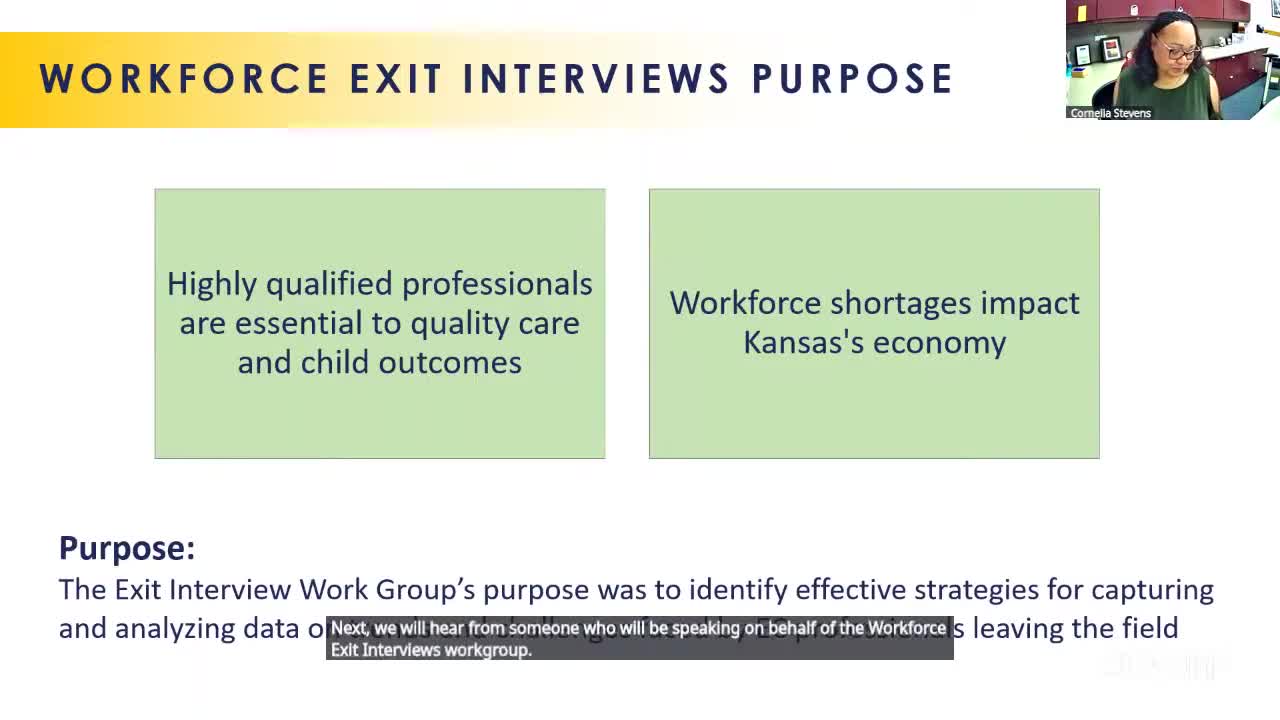
Spokesperson Stephanie Wiggins outlined the group's purpose: to collect consistent data about why early-childhood professionals leave their jobs so policymakers and program leaders can target retention strategies. Wiggins said the group developed draft interview questions, reviewed existing protocols, consulted Casita Research and Evaluation for instrument design, and met with CAPE staff. She said CAPE is prepared to bring the project to KDHE and the CAPE governing board to plan implementation.
Wiggins described core considerations: keep the instrument short and available in multiple languages and formats (paper, phone, online); consider compensating participants to improve response rates; automate registry triggers to capture exits in near-real time; and ensure data privacy and appropriate access controls. The proposed content covers demographics, primary reason for leaving, job satisfaction scales, compensation and benefits, professional development, work‑life balance and mental-health supports, and a final open question about what would have kept the respondent in the job.
Wiggins emphasized the value of linking exit responses to existing registry records to analyze trends by role, tenure, training history and location. The group recommended building automated triggers in CAPE so the system prompts an exit survey when a worker departs; they also proposed capturing positive exits (promotions or transfers) in addition to departures from the field.
Wiggins said the work group will support CAPE during planning and implementation and remain available as a resource after the handoff for troubleshooting and contextual support. "Cape is now bringing the project forward to KDHE and their governing board to begin planning some of those implementation phases as well," Wiggins said.
Panel members asked for follow-up materials; Wiggins said she will share links to draft documents and that the work group welcomes further feedback. No formal vote was taken at the meeting; the recommendation is at the implementation-planning stage with CAPE and KDHE.
View the Full Meeting & All Its Details
This article offers just a summary. Unlock complete video, transcripts, and insights as a Founder Member.
30-day money-back guarantee
Sponsors
Proudly supported by sponsors who keep Kansas articles free in 2025

