Get Full Government Meeting Transcripts, Videos, & Alerts Forever!
Get email alerts on the Judicial Nominations topic
No spam. Unsubscribe anytime.
Nominating commission interviews multiple candidates; focus on court administration, technology and access
Summary
The Kansas Supreme Court Nominating Commission conducted interviews with multiple applicants for an open seat, pressing candidates on administrative experience, court technology and public outreach. Commissioners recessed into executive session for confidential deliberations and later reconvened.
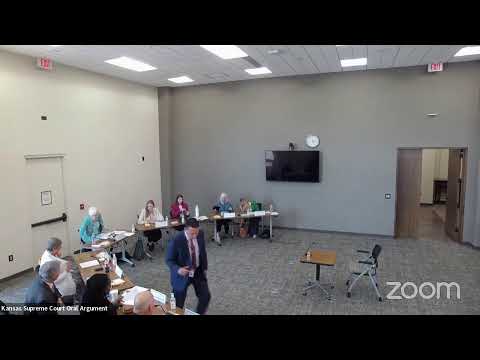
The Kansas Supreme Court Nominating Commission met to interview candidates for an open seat on the state Supreme Court, probing applicants’ judicial experience, administrative skills and views on technology and public access.
The interviews, which included Shawnee County District Court Judge Cheryl Rios, Wyandotte County Judge Kathleen Lynch, Kristen Diane Lieber (chair of the Kansas Board of Tax Appeals) and private-practice attorney Anthony Rupp, emphasized three recurring themes: management and administrative experience; responses to emerging technology, including artificial intelligence; and efforts to broaden access to justice in rural and underserved areas.
Commissioners pressed candidates on administrative experience and the daily work of the court. Kristen Diane Lieber, chair of the Kansas Board of Tax Appeals, described running a high-volume administrative tribunal and taking on extensive back-office duties during staffing shortages: “In my current position, it has felt like 90 to 95% of the work I have done has been administration,” she said, and noted she obtained “slightly under $500,000 worth of grant funds” to update the board’s IT and web infrastructure. Lieber told commissioners that BOTA handles roughly 7,500 tax appeals a year, with about 1,300 hearings in the last four years and more than 200 full opinions produced during her tenure.
Candidates framed administrative competence as central to the court’s work. Anthony Rupp, a civil litigator with decades of practice, pointed to leadership roles in large law firms and civic organizations as preparation for the Supreme Court’s managerial responsibilities: “I have served in two management roles with that firm... All aspects, from budget to hiring and firing,” he told the commission.
Commissioners also sought candidate positions on technology and artificial intelligence in court work. Lieber warned that AI tools can “hallucinate” legal citations but also asked whether AI might help pro se litigants and address attorney shortages in rural areas. Several candidates signaled willingness to confront those tradeoffs; Judge Cheryl Rios and others described learning from experiences with court technology and collaborative judicial committees.
Access and rural representation were raised repeatedly. Candidates described outreach efforts—public education in schools and community events—and emphasized the need for consistent technology and Zoom options to reduce travel burdens for litigants and attorneys serving distant counties. Rupp and others cited their work in both urban and rural parts of Kansas when discussing why they could represent statewide concerns.
The commission conducted formal procedural business alongside the interviews. Early in the meeting a commissioner moved to end an executive session for interviewing and return to open session; the motion passed without opposition. Later, the commission recessed the public meeting to an afternoon break by motion and vote. Toward the end of the recorded proceedings commissioners voted unanimously to recess into executive session to discuss confidential personal information of candidates; they later reconvened and adjourned until the next day.
The interviews did not produce a public vote on nominees during the recorded session. Commissioners indicated they would continue deliberations in executive session before making a public recommendation. The commission’s next steps were not specified on the public record.