Get Full Government Meeting Transcripts, Videos, & Alerts Forever!
Get email alerts on the Road Consortium topic
No spam. Unsubscribe anytime.
EDC explores regional road consortium, innovation grants to lower paving costs
Summary
Committee members discussed creating a multi‑jurisdictional paving consortium or shared‑services vehicle, potential state innovation grants, and technical constraints that make county paving cost figures not directly applicable to village streets.
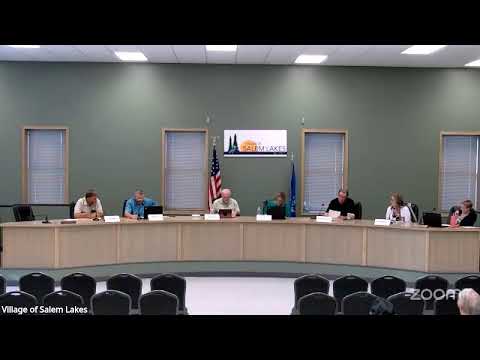
Salem Lakes Economic Development Committee members discussed a proposal to explore a regional road consortium or shared‑services arrangement aimed at reducing paving costs, and outlined next steps including outreach to neighboring municipalities and further legal review.
The topic matters because road maintenance is a major municipal expense; committee members said a coordinated approach with other local governments and use of state grant programs could yield significant savings if eligibility and operational details can be resolved.
Brian Filiatro and other members described an idea for a multi‑jurisdictional paving consortium that would allow villages and towns to plan and bid paving work together, hire or hire‑out skilled crews, and apply jointly for state grants. Committee members said success likely requires three to four participating communities and a governance structure to prioritize projects. One member described the goal as "shared services" for paving rather than each village running separate programs.
Members discussed grant funding options and legal constraints. A staff member noted that the state "innovation grant" has been, historically, available only to municipalities and tribes under a 5,000 population threshold, which would affect Salem Lakes' eligibility under current rules. The committee heard a county comparison: county mill‑and‑overlay work was quoted at about $300,000 per mile, but village work typically costs more because of additional driveways, culverts and base repairs; as Greg (public works staff) put it, "that price was primarily for mill and overlay, not for anything that requires any base improvements." Committee members cautioned that those differences must be factored into any consortium budgeting.
Speakers said the timeline for creating a consortium would be at least a year: bid cycles and a 15‑year pavement plan mean a consortium would likely not be operational for the 2026 construction season and could be targeted for 2027. Committee members recommended early steps: continue legal review, talk with Kenosha County and nearby municipalities about interest, and investigate whether a smaller community could take the lead in applying for an innovation grant if state eligibility does not change.
No binding decisions or contracts were approved. The committee asked staff and volunteers to continue research, to reach out to neighboring villages, and to monitor the state’s revision of the innovation grant rules. Members flagged potential alternate funding such as the state Local Road Assistance Program (LRAP) and noted that some projects—particularly those requiring base repairs or many driveway transitions—may remain more expensive than county roadway work.
The meeting closed without a vote on the consortium concept; committee leaders recommended further technical and legal work before returning a formal proposal to the board.