Get Full Government Meeting Transcripts, Videos, & Alerts Forever!
Get email alerts on the Solid Waste Transfer Station topic
No spam. Unsubscribe anytime.
Rutherford County transfer station posts nearly 8,000 tons, runs a surplus in first month
Summary
Mayor Joe Carr and Solid Waste Director Bishop Wagner reported the county's new transfer station processed 7,965 tons in July, generated roughly $653,798 in receipts against $587,181 in operating costs, and returned a $66,616 operating surplus; officials said diversion and a forthcoming recycling RFP are next steps.
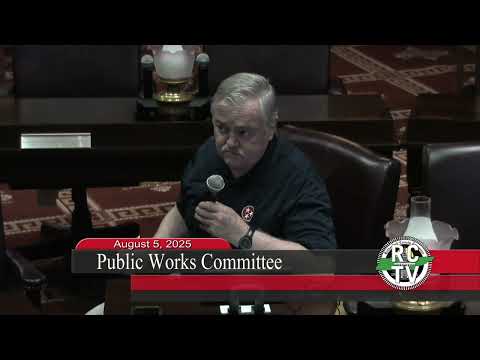
Mayor Joe Carr reported that Rutherford County's new transfer station processed 7,965 tons of material in July and produced gross receipts of $653,797.54, producing an operating surplus of $66,616.27 after $587,181.27 in operating costs. The report, delivered during the Public Works and Planning Committee meeting, covered volume, customer experience and early plans to expand recycling.
The mayor said the July tonnage equates to an average of roughly 400 tons a day, and that the bulk of July volume occurred in the final three weeks after a short ramp-up. "As of July 31, we have done 7,965 tons," Mayor Joe Carr said. He told the committee the station processed more than 125 trucks per day on average and recorded a peak of 138 customer trucks on one day.
Committee members heard from Bishop Wagner, Rutherford County's Solid Waste Director, and Matt Davis, assistant solid waste director, who described operations, staffing and customer outreach. Wagner introduced fleet manager Jackie (last name not specified in the transcript) and said staff had already sought informal feedback from drivers at the scale house. "Tell me about your experience," Wagner said the scale attendants ask customers; he said staff had received "very constructive feedback things to make it operationally better."
The transfer station is accepting both commercial account customers and cash customers; officials said about 15 commercial customers are on account. Mayor Carr read unsolicited customer emails and payments inquiries that staff received after invoices were issued, including notes from local haulers saying they had diverted business to the county station and asking how to pay invoices.
Officials emphasized that all material leaving the transfer station departs the county for final disposal. Asked whether the county tracks out-of-county waste brought to the station, Mayor Carr said there is not currently a system to identify the origin of each load: "Not currently." He added that if the commission wants a policy to restrict out-of-county waste, the committee could discuss how to enforce an "out-of-county tag or an out-of-county truck."
Wagner described a recent tour of Cedar Ridge, the WM landfill in Lewisburg, Tenn., and said properly run landfills should not have odor when operated and covered correctly. He said the county's approach gives the county "an option to control the waste stream and to increase the ability to divert materials from landfills," and announced the county will issue an RFP to move its recycling pilot beyond the initial phase.
Committee members recommended a formal customer survey at about six months, and several members praised the operational start. No formal policy changes were decided at the meeting; officials said further discussion will be needed if the commission wishes to restrict out-of-county loads.
The committee voted later in the meeting on a separate budget amendment to return unspent funds to the current year budget for landfilling/post-closure work (see separate article).