Get Full Government Meeting Transcripts, Videos, & Alerts Forever!
Get email alerts on the Paradise Park Bond topic
No spam. Unsubscribe anytime.
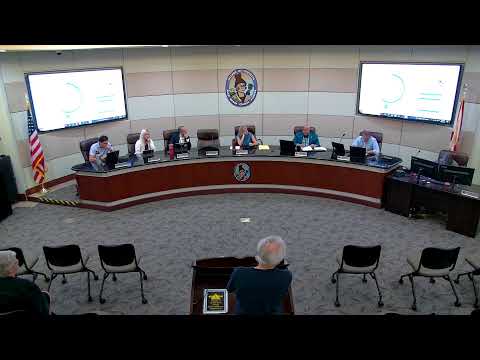
Tequesta council discusses March bond referendum, lease option and next steps for 1 Main Street (Paradise Park)
Summary
Village attorney Keith briefed the council on the timetable and legal steps for placing a general obligation bond referendum on the March 10, 2026 ballot to buy 1 Main Street (Paradise Park); council instructed staff to return at a September workshop with more specific ballot language, appraisal estimates and a lease draft.
Village attorney Keith explained the sequence and deadlines for placing a general obligation bond on the March 10, 2026, ballot: the council must retain bond counsel, adopt a resolution establishing the bond issue and deliver referendum materials to the supervisor of elections in early December to meet publishing and ballot deadlines. He described the subsequent bond‑validation hearing in circuit court if voters approve the measure and estimated a likely closing around October 2026 under a smooth schedule.
Staff presented background on the property identified as 1 Main Street (Paradise Park). The current owner, represented in the meeting by Ryan Frankel, offered the village the opportunity to purchase the property; the staff report noted a sale price in backup material and that a bond figure of $9,000,000 had been used in council materials. Staff said the village must order two independent appraisals if it chooses to pursue acquisition; staff also described a temporary lease option the owner offered while a referendum proceeds. Staff reported that leasing in prior years cost the village roughly $42,000 to $55,000 for short periods; staff estimated current maintenance and utilities could add approximately $20,000, making a one‑year lease roughly $120,000 total.
Council members asked for and discussed multiple details: whether the $9,000,000 figure included development costs (staff said it reflected a purchase total only), the availability and cost of appraisals (staff reported an appraisal quote near $3,000), and the risks that shared parking agreements and parcel configuration could create for future uses. Several council members and public commenters urged that residents decide the property’s future by referendum. One council member said a previous bond failed because the ballot language was open‑ended; several members asked that this ballot question be more specific about the public purpose (for example, “for acquisition of land for public park purposes” and whether a future charrette or design process would follow).
Public comment included representatives from Harvey Academy, which uses the owner’s field for daily recess, and a developer representative who suggested lease or revenue options such as land leases to help offset costs. Several residents urged caution and raised maintenance and long‑term operating cost concerns; one resident warned a 30‑year bond would produce substantial debt service and asked the council to negotiate purchase price more aggressively.
Council members and staff agreed on a near‑term schedule: bring the item back to the September 2 workshop with (a) sample ballot language options, (b) two independent appraisal cost estimates, (c) a proposed lease agreement for short‑term events, and (d) an outreach plan (public charrettes or other engagement) so voters can visualize likely park or mixed‑use concepts before voting. Staff said the owner was willing to hold the property while a referendum was pursued and that the village’s finance director had a recommended bond counsel to consider. The council did not adopt a referendum resolution that night; it directed staff to return with the materials and timeline required to decide whether to place a bond question on the ballot.