Get Full Government Meeting Transcripts, Videos, & Alerts Forever!
Get email alerts on the Taxes And Budget topic
No spam. Unsubscribe anytime.
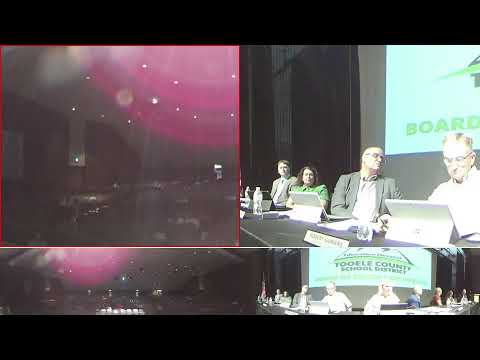
Board of Education holds truth-and-taxation hearing as residents oppose proposed tax increase
Summary
The Board of Education held a public hearing on truth and taxation, during which dozens of residents voiced opposition to a proposed tax increase intended to close the district’s budget gap and trustees discussed audit findings, communication and teacher compensation.
The Board of Education held a public hearing on truth and taxation, during which dozens of residents voiced opposition to a proposed tax increase intended to close the district’s budget gap and trustees discussed audit findings, communication and teacher compensation.
The hearing matters because the board is considering final tax rates and a budget that trustees said is intended to close a multimillion‑dollar shortfall; residents and board members spent the meeting debating whether to raise taxes, what cuts or accountability measures should accompany any increase, and how the district should report results to the public.
During the public comment period, multiple residents urged the board not to approve a tax increase. Resident comments included concerns about household financial strain, a request for clearer breakdowns of how increased revenue would be used, and calls for better district accountability. Alex, president of Stanford and Clark, said, "I personally am a fan of some taxes," while also urging careful stewardship. Several speakers cited local cost burdens — one commenter said property taxes for a household went to "$3,000" in prior years, and another said "thousands of houses" are planned for construction in the coming three years; those figures were presented by speakers and not confirmed by district staff during the hearing.
Board procedures: a motion to open the public hearing was moved by Bob and seconded by Todd; the motion passed. At the end of public comment a motion to close the hearing and return to regular session was moved by Scott and seconded by Bob; that motion passed. Trustees then moved to agenda item 3.1, described on the agenda as a resolution adopting final tax rates and budgets. Trustees discussed particulars of the district’s shortfall and possible remedies, including deeper communication with the public, prioritized teacher compensation, and cost‑savings workgroups.
Discussion details: trustees and staff described a budget gap they characterized in multiple ways during the meeting (speakers referenced figures including $23,000,000 shortfall and later figures of roughly $14,000,000); trustees said those numbers reflected changing estimates and prior one‑time funding choices by past administrators. A trustee encouraged the use of key performance indicators and more frequent reporting on student achievement tied to budget decisions. Staff and trustees also noted that an external audit was under way or had been requested; one trustee said the audit and its recommendations were a reason to welcome additional review.
A motion discussed by trustees would have increased revenue "to raise to $19,250,000,000.00 to close the gap" as stated in the meeting transcript. That dollar figure appears in the record of the hearing as spoken during the discussion; the transcript does not record a completed vote tally or the final outcome on the resolution adopting final tax rates and budgets in the excerpt provided.
What was directed versus decided: the transcript records formal motions to open and close the public hearing and passage of those motions. Trustees discussed forming or prioritizing cost‑savings committees and stronger public reporting; at least one trustee said they wanted an amendment tying budget increases to specific performance and accountability steps. The transcript includes trustees saying they would vote on the resolution; the excerpt ends with multiple trustees saying "I vote yes," but a complete roll‑call tally for adoption of the final tax rates and budget is not recorded in the provided transcript.
Background and next steps: speakers repeatedly urged more transparency and questioned use of one‑time funds for ongoing salary commitments; trustees responded that state law and audit recommendations influence how districts can use one‑time money and that changes at the state level are under discussion. The board did not provide a final, documented vote count on the budget resolution in the supplied transcript; for the definitive outcome the district’s official minutes or the posted adopted budget resolution should be consulted.
Ending: the hearing produced extensive public comment and trustee discussion on taxes, accountability and instructional priorities. The board closed the public comment period and resumed regular session; the transcript provided does not include the final published vote tally on the resolution adopting final tax rates and budgets.