Get Full Government Meeting Transcripts, Videos, & Alerts Forever!
Get email alerts on the Land Use Zoning topic
No spam. Unsubscribe anytime.
Council approves major rewrite of subdivision and land‑development rules after multi‑year staff process
Summary
City Council voted unanimously to repeal and replace Part 13 of the codified ordinances governing subdivision and land development, a rewrite staff said updates a 50‑year‑old code, adds modern definitions and clarifies tree, landscaping and fee‑in‑lieu provisions.
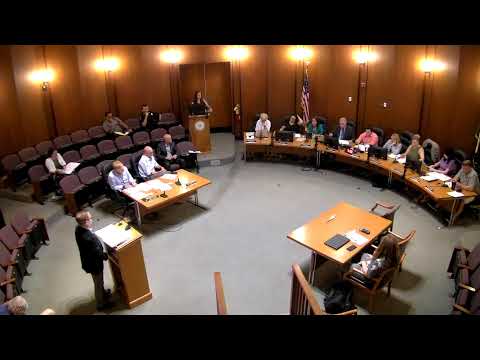
The Bethlehem City Council voted 7–0 on July 30 to repeal and replace Part 13 of the city’s codified ordinances governing subdivision and land development, a comprehensive update planning staff said had been years in the making. The rewrite replaces rules last substantially updated in the 1970s, adds dozens of definitions, and reorganizes design standards, landscaping, and transportation requirements, City Planner and staff told council. The planning division presented the change as a modernization effort intended to make technical terms clearer for staff, applicants and the development community. Why it matters: The ordinance governs how properties are subdivided and developed and includes technical standards for streets, sidewalks, trees, stormwater and design review. Changes to Part 13 will shape how future projects are reviewed and what applicants must submit. Council members asked questions at the meeting about specific provisions. Councilwoman Laird asked how the proposal treats trees that could be affected by development and whether a forester’s objection could prevent tree removal; planning staff answered that the forester can recommend against removal but that the city’s authority varies by circumstance, with street‑tree requirements more directly enforceable than disputes about interior trees on private parcels. Council members also asked whether projects already in process could use the new rules; staff said the transitional language would apply to projects that had not been finally completed, and that pending appeals would generally not be able to retroactively adopt more favorable provisions unless the ordinance specifically allowed it. Council members inquired about the new “fee‑in‑lieu” option for transportation, bicycle and pedestrian improvements. Planning staff said the provision allows an applicant to pay a fee instead of constructing certain off‑site improvements in some circumstances; staff said the fee mechanism is intended to fund improvements citywide when on‑site work is infeasible. Staff recounted outreach and review steps: planning commission hearings and staff meetings beginning in 2021 and continuing through public review and a prior public hearing. The ordinance received a favorable recommendation from the planning commission and passed final passage at the council meeting. What to watch next: The planning department will publish guidance and updated application checklists to reflect the new standards. Developers, neighborhood groups and the environmental advisory committee will likely review the implementing guidance as projects enter review.