
Newport council gets TIF feasibility update; approves design contract and hires broker for downtown redevelopment
Get AI-powered insights, summaries, and transcripts
Subscribe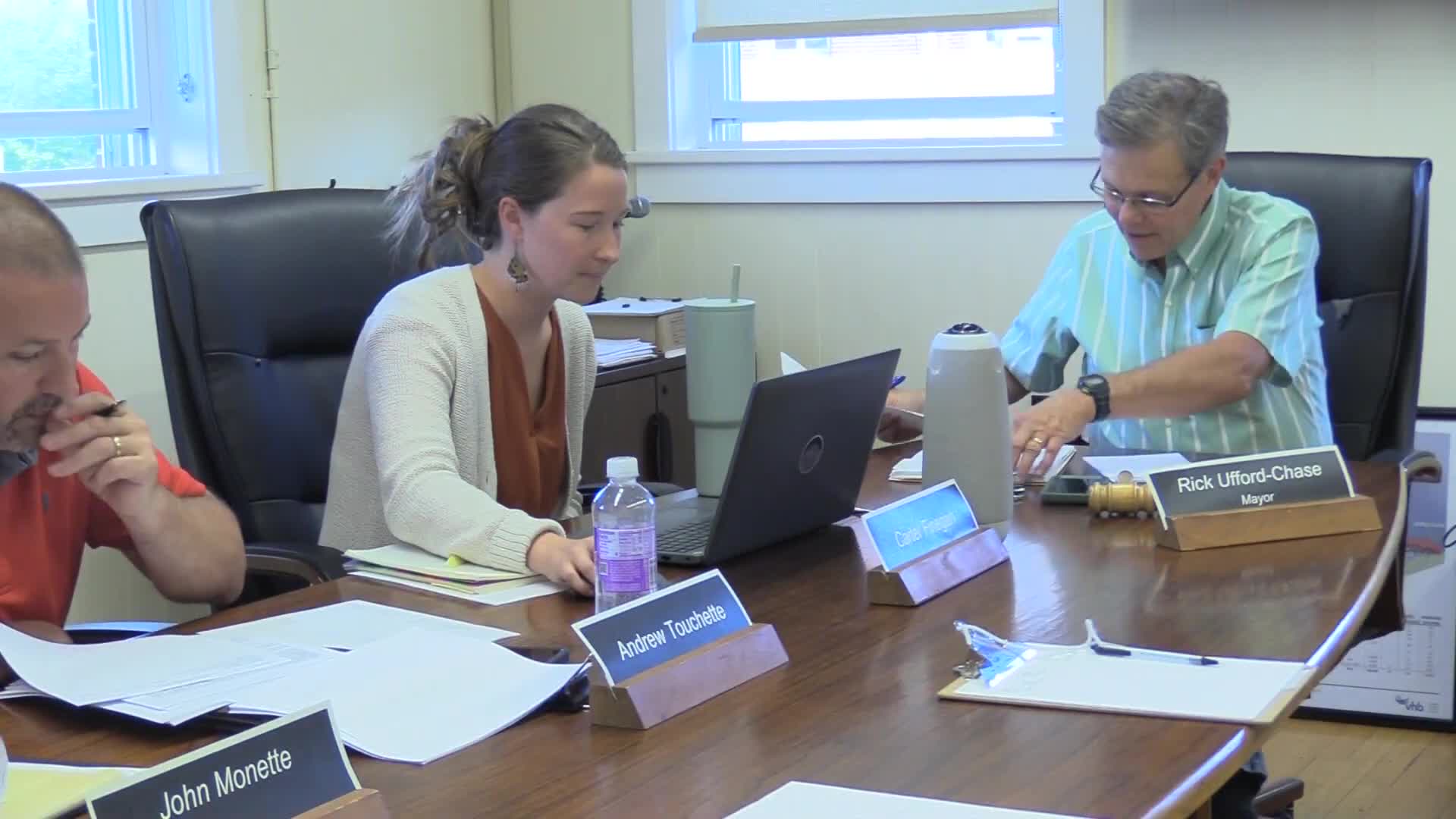
Summary
Consultant Stephanie Clark briefed the council on tax increment financing (TIF) feasibility and next steps. Council later authorized a $15,000 planning/design contract (paid from Walmart funds) and retained Century 21 Farmer Forest as the citys broker for downtown real-estate negotiations.
NewportCity Council members on July 21 heard a status update on a potential downtown tax increment financing (TIF) district from consultant Stephanie Clark of White and Burke and later authorized two steps to advance downtown redevelopment: a $15,000 contract for planning and design services and hiring Century 21 Farmer Forest to represent the city in real-estate negotiations.
The TIF briefing was presented as an informational update; no TIF plan or district was proposed for approval at the meeting. Stephanie Clark told the council that TIF is "a state run program" that uses incremental property-tax gains from new development to repay bonds issued for infrastructure such as streetscape, stormwater, and parking. Clark said the tool is meant to remove infrastructure barriers that block private investment and that the municipality works with a private development partner under a development agreement.
The consultant emphasized that a TIF district requires a viable first project. "There's no such thing as if you build it, they will come," Clark said, adding that the state will not authorize a district without a credible short-term project and that communities must manage early cash-flow deficits with short-term financing or interest-only structures.
Council members and residents questioned scale, risk and timing. A resident who identified herself as Anne asked whether the city would have to carry debt while projects were not yet generating tax increment; Clark replied that early deficits are common and can be managed through staged financing, and that the development agreement can include minimum taxable-value obligations so a developer cannot simply walk away without financial accountability.
After the public portion of the TIF update, the council moved into executive session to discuss sensitive real-estate negotiations related to downtown. When the public meeting resumed, the council approved two related actions: - A motion authorizing the mayor to enter a contract with BHB to provide planning and design services for downtown redevelopment in the amount of $15,000, to be paid from the Walmart funds reserve. (Motion moved by Councilor John Minette; seconded; vote: motion carried.) - A motion authorizing the mayor to sign a contract with Century 21 Farmer Forest to represent the city in real-estate transactions tied to downtown development. (Motion moved and seconded; vote: motion carried.)
Council discussion preceding the approvals focused on sequencing: Clark and staff said the next work should prioritize a short list of feasible, high-priority projects and technical due diligence (site-level engineering, environmental screening, and remediation where needed). Clark noted TIF can be used for brownfield remediation where cleaning the site is a public benefit that unlocks private investment.
Clark said her next briefings will propose priority projects, a sequence of first-phase investments and additional studies needed to complete a district plan. She said the city and Newport Downtown Development (NDD) will continue public outreach and meetings with property owners and developers before any formal TIF application to the state.
The council and NDD also discussed process, transparency and the role of a development agreement in protecting the citys interests. No final TIF plan, financing commitments or bond authorizations were made at the July 21 meeting.
Why this matters: A TIF district would allow Newport to borrow to build public infrastructure that developers have said is needed to start private projects. The city would repay that debt from new property-tax revenues created by the projects. That structure can speed downtown redevelopment but requires careful legal agreements, credible initial projects and management of early cash-flow deficits.
What's next: Clark and city staff will continue feasibility and concept planning and return with proposed priority projects and more detailed cash-flow modeling. The council has authorized short-term design work and a broker to support upcoming negotiations.
Sources: Presentation and Q&A with Stephanie Clark (White and Burke); motions and votes recorded by the City Council on July 21, 2025.