Get Full Government Meeting Transcripts, Videos, & Alerts Forever!
Get email alerts on the Prior Authorization topic
No spam. Unsubscribe anytime.
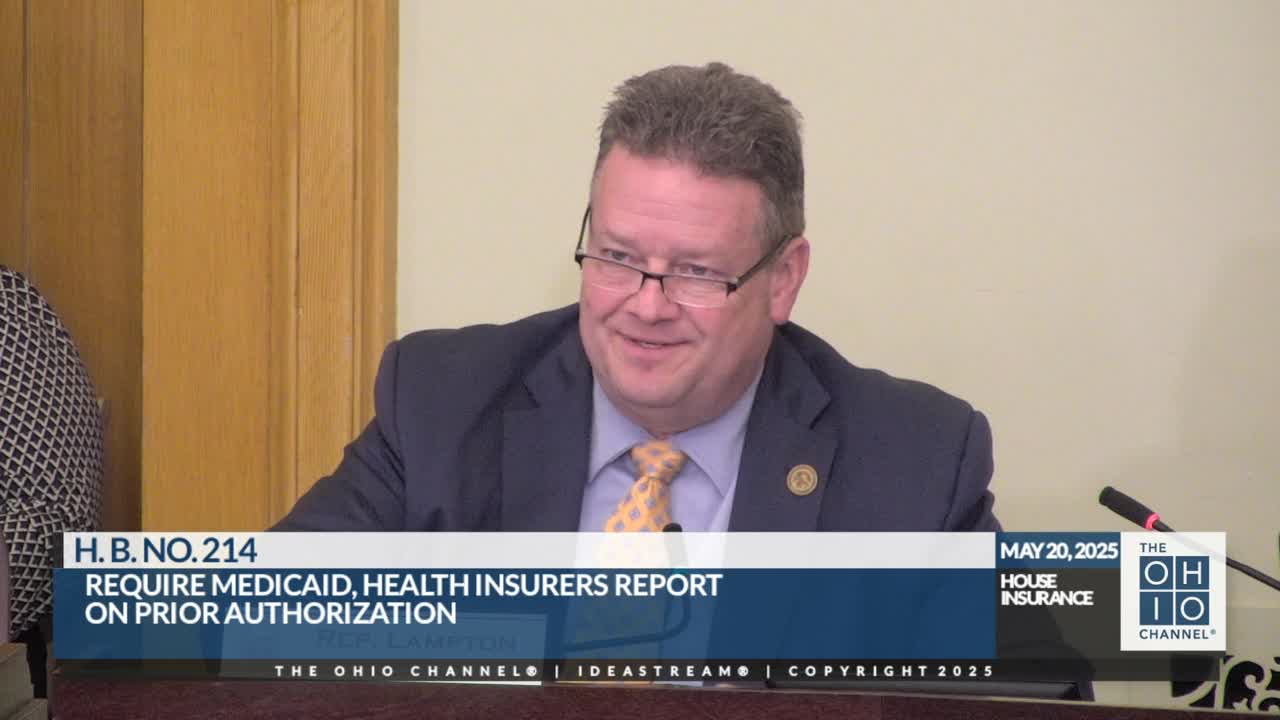
House committee hears ‘gold card’ bill to exempt high-performing providers from prior authorization
Summary
Representative Kevin Miller, sponsor of House Bill 214, told the House Insurance Committee on a first hearing that the bill would create a mandatory exemption to prior-authorization requirements for high-performing health-care providers.
Representative Kevin Miller, sponsor of House Bill 214, told the House Insurance Committee on a first hearing that the bill would create a mandatory exemption to prior-authorization requirements for high-performing health-care providers.
"This system would provide a gold card to these high performing providers that have been approved at a rate of at least 90% when prescribing a specific service, device, or drug during the prior 12 month period," Miller said, describing a program commonly called "gold carding." He said the bill requires a minimum claim volume in the lookback period and does not eliminate prior authorization entirely.
The bill would let providers who meet the criteria prescribe a specific service, device or drug "without having to be burdened by prior authorization," Miller told the committee. He said the bill raises the approval threshold from 80% in the prior General Assembly to 90% and increases the minimum lookback claim requirement from 10 claims to 20 claims in the past 12 months.
Why it matters: supporters say prior authorization is increasingly burdensome and delays care; opponents and some committee members asked for implementation data. Miller cited clinician-reported statistics to describe the scope of the problem: "93 percent of physicians report health care delays as a result of prior authorizations," and "88 percent of physicians describe the prior authorization burden as high or extremely high." He also said more than 30 organizations supported a prior version of the bill in the last General Assembly, including provider groups and patient advocates.
Committee questions focused on changes since the prior session and evidence from other states. Leader Jerrels asked, "Between this GA and last GA, what has changed in the bill?" Miller replied the principal changes were the higher approval threshold and the raised claim-count requirement. Representative Dieter asked whether other states have adopted similar gold-card programs; Miller named Kentucky, Texas and West Virginia as examples and said he was still reviewing implementation data, adding, "I think Texas, was the 1 that was most significant, and I'm still waiting to look at some of the data from the implementation there."
The hearing was informational only: no committee vote or formal action on the bill occurred during this session. Miller said he would provide additional implementation data to the committee on request.
Meeting context: this was a first hearing and sponsor testimony. Committee members requested evidence on health and cost outcomes from other states and clarification of the bill’s thresholds and claim-count mechanics. The chair called the minutes of the earlier meeting approved by unanimous consent before beginning testimony.
What’s next: as a first hearing, HB 214 remains under committee consideration. Staff and the sponsor may provide requested data to inform subsequent hearings or amendments.