Get Full Government Meeting Transcripts, Videos, & Alerts Forever!
Get email alerts on the Parking Payments topic
No spam. Unsubscribe anytime.
Ohio bill would require cash and three-minute grace for mobile parking systems
Summary
Representatives testified in favor of House Bill 238, which would require jurisdictions that use mobile-only parking payments to provide alternative payment methods and add a three-minute grace period before issuing citations.
Columbus — Lawmakers heard proponent testimony on House Bill 238 on the accessibility of mobile parking payment systems and a proposed three-minute grace period for pay-by-app meters.
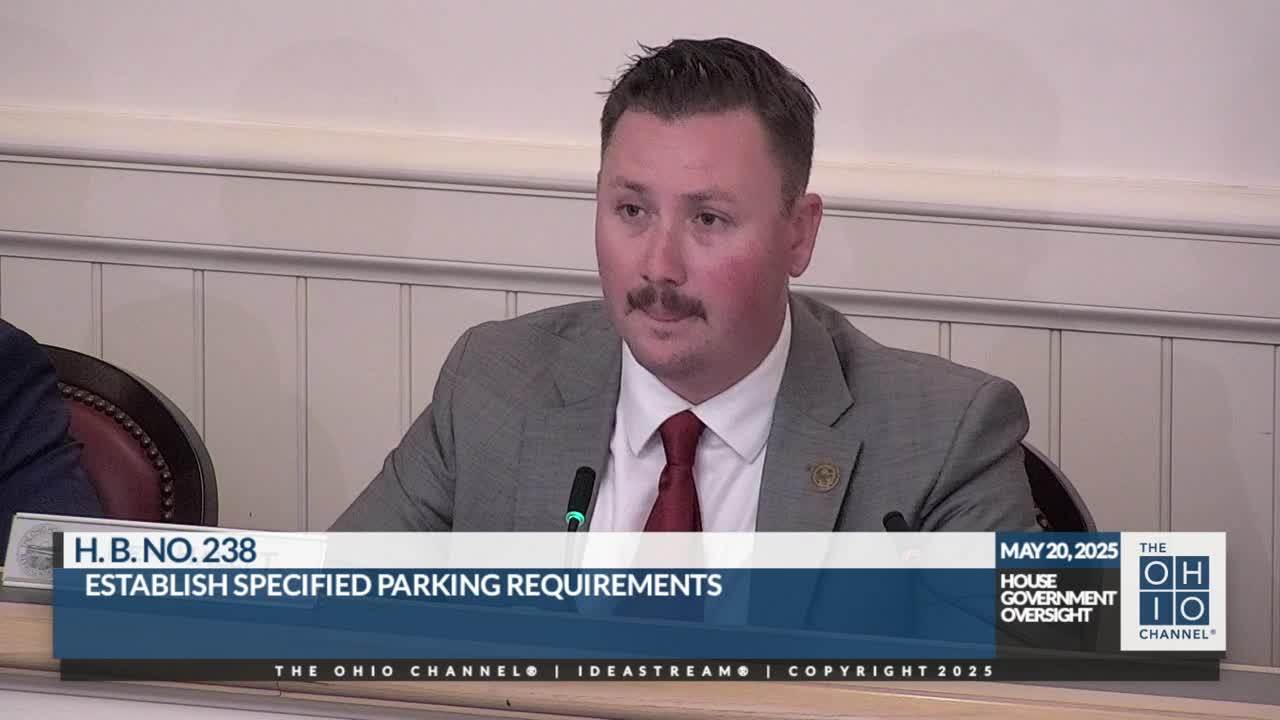
Supporters told the House Government Oversight Committee that the bill would require parking authorities that rely on mobile apps to provide additional payment methods, including cash and coin, and to rescind citations issued within three minutes of a driver parking or attempting to pay. Representative John Rogers, sponsor of the measure, said the change is intended to prevent “unjust parking citations” when apps or networks fail.
“Many of our senior citizens struggle to navigate technology,” Representative John Rogers told the committee, arguing that an app-only system can bar people from courthouses, medical facilities and job centers. Rogers said the bill would require “cash, coin, credit card, quick response code, or any other method that the director of public safety deems sufficient.”
Representative Lorenz, a joint sponsor, said the bill builds on prior work from the last General Assembly and aims to create a consistent statewide policy. “We have been moving more and more cashless as a society, but there still should be an opportunity to utilize cash,” Lorenz said, calling the proposal a way to “make parking meters more accessible to a wider range of Ohioans.”
Committee members pressed sponsors about implementation and costs for cities. Representative Mike Rader, who said he served on Lakewood city council, noted vendors for coin-accepting meters are increasingly rare and warned local governments could face procurement hurdles. Rogers and Lorenz said they had discussed the measure with local officials and vendors; Rogers said some coin meters remain available as “new old stock” and that the bill is not intended to override local home-rule authority.
Members also raised security concerns. Representative King asked about ransomware and skimming of smart meters; Rogers and Lorenz cited risks, saying the bill would provide a payment option for people who prefer not to enter card data into apps. Rogers described incidents of skimming and tracking tied to QR code systems and said a cash option would reduce the amount of personal data collected.
The bill would also extend or clarify the appeals window in some cases, sponsors said, and require rescission when a ticket is issued within three minutes of parking or while a payment is processing. Sponsors asked the committee to move the measure forward; the committee held the bill’s first hearing and took testimony but recorded no vote during the hearing.
Supporters recommended outreach to municipal parking departments to ensure the availability of coin or cash-accepting equipment and to address any unforeseen procurement costs. The committee did not set a further hearing date during the session.
Less urgent details: sponsors referenced a prior proposal from the last General Assembly (House Bill 442) as background on earlier efforts to require multiple payment methods.