Get Full Government Meeting Transcripts, Videos, & Alerts Forever!
Get email alerts on the Parking Payment Access topic
No spam. Unsubscribe anytime.
Ohio bill would require alternative parking payments, add 3-minute rescind window for tickets
Summary
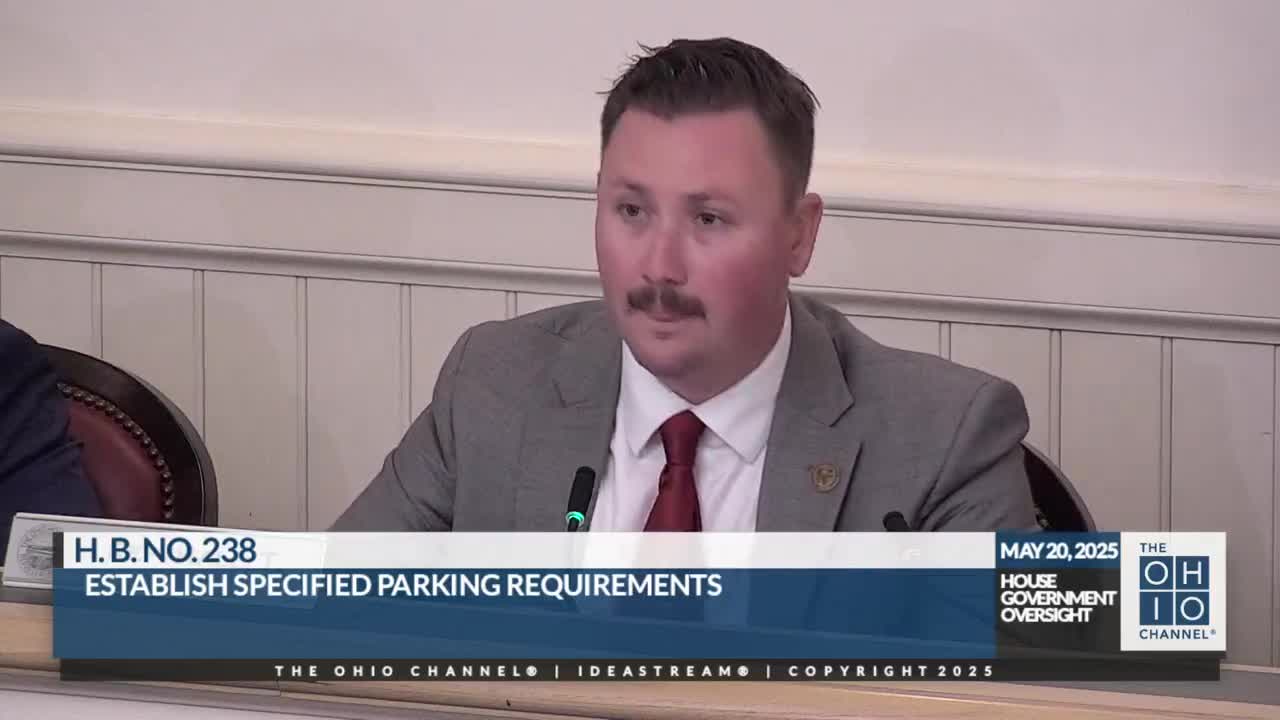
Sponsors of House Bill 238 told the House Government Oversight Committee they want to require local parking systems to offer non‑smartphone payment options and to rescind citations issued within three minutes of parking or of a payment attempt.
Representative Rogers, sponsor of House Bill 238, told the House Government Oversight Committee on Oct. 11, 2025, the bill would require parking authorities to accept multiple payment methods and to create a short grace period for app users who are slow to register a payment.
The bill “would ensure that there are other ways to pay for parking, including cash, coin, credit card, and quick response code,” Representative Rogers said in proponent testimony. He also said the measure would establish a three‑minute period during which a citation issued within three minutes of parking or of a payment attempt must be rescinded.
Why it matters: Committee members and sponsors said online‑only parking systems can penalize people who do not have smartphones, credit cards, or who have difficulty with mobile apps, including some senior residents. Sponsors argued the change would protect people using courthouses, job and family services, and medical facilities where on‑street parking is important.
Supporters told the committee that many Ohio cities use app‑based systems such as ParkMobile and that those systems can fail to log a timely payment because of internet outages, processing delays or user errors. Representative Rogers said the legislation also extends the window for appealing a citation, though the committee record did not include a final numeric change to the appeals timeframe in the hearing materials.
During committee questions, Representative Rader, who said he formerly served on Lakewood City Council, asked whether cities had been consulted and whether coin‑accepting meters remain available. He said his city had returned to coin meters to address similar problems and warned that parts and meters that accept coins are less common now.
Representative Lorenz, joint sponsor, said vendors who still make coin‑operated meters contacted lawmakers when a similar bill was considered previously. Representative King asked about cybersecurity and skimming risks; sponsors noted concerns about QR‑code skimmers and said the bill is in part intended to reduce consumer exposure by allowing cash or card at the meter.
Discussion vs. decision: The committee held a first hearing; sponsors answered questions but there was no committee vote or formal action on the bill at this session.
Ending: Sponsors asked the committee to advance the bill for further consideration so municipalities can ensure multiple payment options and reduce fines tied to payment‑processing delays.