Get Full Government Meeting Transcripts, Videos, & Alerts Forever!
Get email alerts on the School Technology Policy topic
No spam. Unsubscribe anytime.
Laramie County trustees and staff weigh tougher cell‑phone rules, cite costs and special‑education limits
Summary
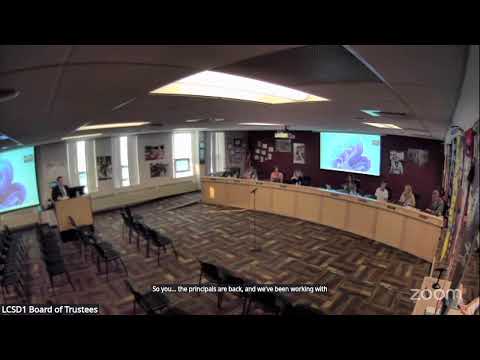
Board members, principals and administrators met in a work session to discuss tightening the district’s cell‑phone and personal‑device rules. Staff raised special‑education and privacy limits, principals described building‑level approaches, and district staff outlined vendor costs and possible staging for any rollout.
Laramie County School District No. 1 trustees held a work session to ask questions and collect staff input on whether to tighten the district’s existing electronic‑device policy and associated administrative regulations. The meeting focused on special‑education accommodations, staff training and the cost and logistics of device‑storage solutions.
Board members said community members have urged stricter limits because phones distract students and can amplify bullying; administrators and school leaders urged clarity so building policies are consistent and do not conflict with special‑education requirements. Jeff Lewis, executive director of student services, told the board that some vendors lease lockable pouches and that the district’s secondary enrollment (about 6,200 students) would make a districtwide lease expensive. “That lease would be about a $155,000 a year for those devices,” Lewis said; he also described a one‑time lockbox option with an estimated upfront cost of about $240,000 and noted there are varying recurring and installation cost models.
Special‑education staff cautioned trustees that individualized education programs (IEPs) may require a device or biometric monitoring (for example, glucose monitoring) and that policy language must not conflict with federally required accommodations. “What we write in the IEP has to be required and necessary in order for the student to access their education,” said Stephen Kern, director of special services, describing how teams write flexible assistive‑technology language rather than naming a single device.
Principals described practical building solutions. At Johnson High School, staff require students to place devices in lockers and enforce consequences consistently, said the Johnson principal, who added that follow‑through by school leadership was a key factor in success. Other principals said a single, districtwide rule would reduce confusion for substitute teachers and staff who move between buildings.
Trustees and staff discussed phased approaches and enforcement trade‑offs: districtwide “bell‑to‑bell” prohibitions, classroom collection by teachers, volunteer lockboxes per classroom, or central office enforcement. Administrators also warned of students substituting other devices (for example, school iPads or earbuds) and of privacy and search‑and‑seizure issues if staff investigate whether a device is being used for a medical purpose.
The board did not vote or take formal action at the work session. Trustees asked staff to provide cost estimates, clarify administrative‑regulation language, and return options for staged implementation that balance classroom management, special‑education accommodations, student privacy and budget constraints.
District leaders invited principals and teachers to provide written recommendations after the meeting and asked them to email ideas to the superintendent’s office so the board can consider staff input while it drafts any policy or administrative changes.