Get Full Government Meeting Transcripts, Videos, & Alerts Forever!
Get email alerts on the Legal Education Pipeline topic
No spam. Unsubscribe anytime.
Pilot scholarship bill aims to recruit underrepresented Ohio students into law schools
Summary
Representatives Williams and Mohammed backed House Bill 101, a $350,000 pilot to fund LSAT prep, mentoring and $4,000 scholarships for 10–20 underrepresented Ohio undergraduates; the Ohio Bar Association and Department of Higher Education would report outcomes to the General Assembly.
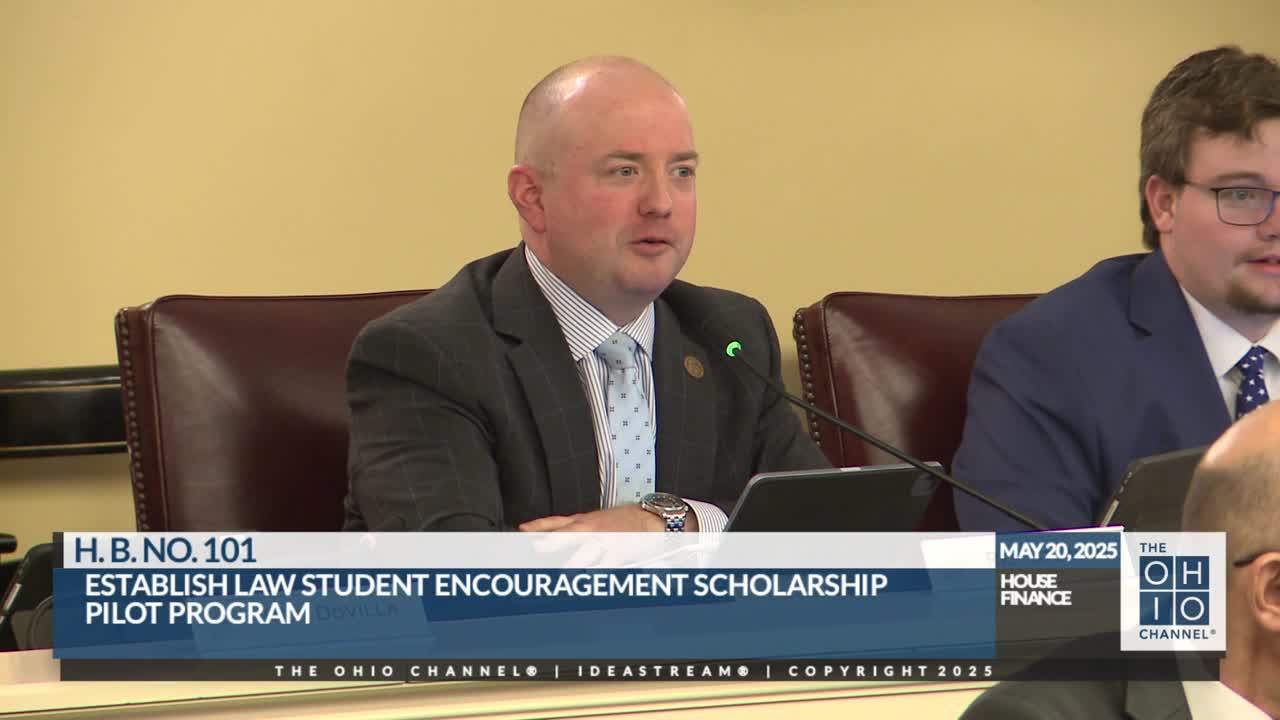
Representative Williams and joint sponsor Representative Mohammed presented House Bill 101, a pilot scholarship and support program intended to encourage students from underrepresented backgrounds to pursue legal education.
The bill would appropriate $350,000 to the Ohio Department of Higher Education to fund a pilot selecting about 10 to 20 Ohio students for $4,000 scholarships, one‑on‑one mentoring, LSAT test preparation materials and academic support. Sponsors framed the program as a recruitment and pipeline initiative to address a shortage of attorneys in many Ohio counties; testimony cited Ohio Bar Association data showing large attorney‑to‑population imbalances in many counties. The Ohio Bar Association would be required to monitor outcomes and the department would receive a report by early 2028 summarizing administration, outcomes and costs.
Witnesses and committee members discussed program goals and measurement: sponsors said metrics would include LSAT participation, enrollment in law school, law‑school academic performance, graduation and eventual practice location to assess whether the program increases lawyers practicing in underserved regions. Sponsors also described an amendment excluding immutable characteristics as selection criteria in light of recent Supreme Court guidance, focusing instead on applicants’ life hardships and barriers overcome. No final vote occurred during the hearing; sponsors said the appropriation was timed to the 2027 budget but could be accelerated if the legislature chose.