Get Full Government Meeting Transcripts, Videos, & Alerts Forever!
Get email alerts on the School Bus Safety topic
No spam. Unsubscribe anytime.
House Finance Committee advances amended school-bus safety bill, trims $10 million duplicative budget language
Summary
The Ohio House Finance Committee favorably reported an amended substitute for House Bill 3 after adopting an amendment that removes $10 million already included in the House-passed budget and limits a DEW administrative allowance to fiscal 2026.
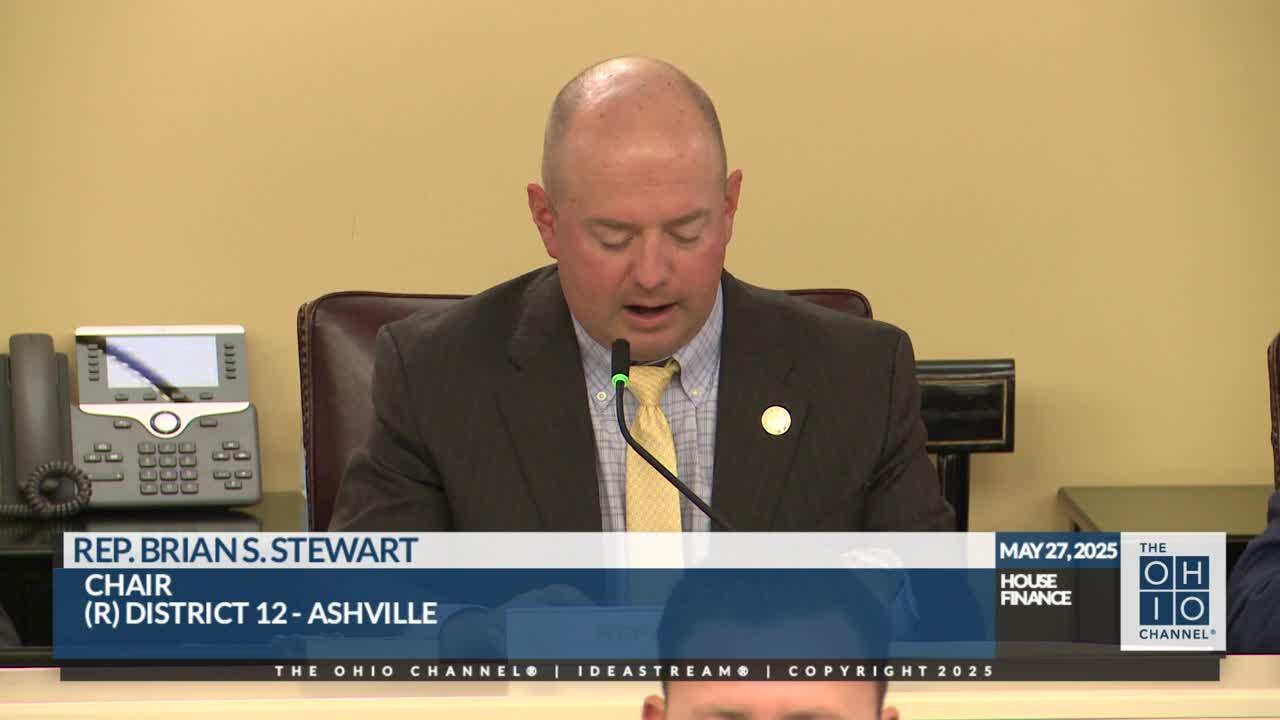
The House Finance Committee on Wednesday voted to favorably report an amended substitute of House Bill 3, a measure sponsors say is aimed at strengthening school-bus safety. Vice Chair Davila moved the committee to report the amended substitute and recommend passage; the motion passed with one negative vote and the measure will be sent to the rules and reference committee.
The committee adopted an amendment described by Vice Chair Davila as removing $10,000,000 “in funding, which is already in the house passed version of the budget.” The amendment also narrows an administrative allowance, permitting DEW to use up to $100,000 to administer the school-bus safety grant program “in fiscal 26 only instead of in each fiscal year of the next biennium.” The amendment’s language was prepared “in conjunction with the sponsor of the bill,” the chair said, and was made part of the bill before the committee voted.
The committee then heard proponent testimony from Paul Imhofe of the Buckeye Association of School Administrators. Imhofe, who said he served on the governor’s school-bus safety task force and was a superintendent for 16 years, told the committee “school bus safety is a real issue around Ohio” and described three elements he said the bill would add: increasing penalties for unsafe driving around buses, allowing cameras to aid enforcement, and funding education about existing laws. “I think it’s a common sense bill,” Imhofe said.
Committee members had no recorded questions during Imhofe’s appearance. Following the testimony Vice Chair Davila moved to report the amended substitute bill favorably; the clerk conducted a roll-call vote. The chair granted Legislative Service Commission harmonizing authority for the committee report and reminded members to sign before leaving so their votes would be counted.
The committee’s action is a procedural committee-level advance; it does not by itself enact law. The amendment relies on language in the house-passed budget that the vice chair described as already providing $10 million; the committee did not adopt new, stand-alone appropriations for that amount at the hearing.
Committee leaders said the amended substitute will proceed through the normal rules and reference process. No implementation detail or effective dates beyond the fiscal-year-limited administrative allowance in the amendment were specified during the hearing.