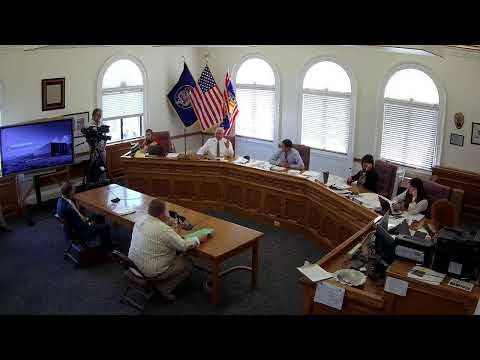
County approves rezoning of about 4,000 acres for proposed Jewel data‑center campus
Loading...
Summary
The Miller County Commission adopted planning and zoning recommendations to rezone roughly 4,000 acres from agricultural to heavy industrial for a proposed data‑center campus by Jewel Capital Partners after a public hearing with supporters and neighbors voicing concerns about traffic, noise and long‑term uses.
The Miller County Board of County Commissioners voted to adopt planning and zoning recommendations to change roughly 4,000 acres near Highway 50 from agricultural zoning to heavy industrial zoning, a move that clears the way for a proposed artificial‑intelligence data‑center campus by Jewel Capital Partners.
The vote came after a public hearing in which the applicant and county planning staff described the proposed project and neighbors and other residents raised concerns about traffic, noise, light and what future owners might do with heavy‑industrial zoning.
Mark McDougall, who identified himself as representing Jewel Capital Partners, Bridal C Farms and Red Willow, told the commission the project — which he repeatedly called “Jewel” — is planned as an AI data‑center campus sited on a contiguous block of land between Delta and Holden, just off Highway 50. “The project is 4,000 acres approximately located, between Delta and Holden just off of Highway 50,” McDougall said. He said the large parcel allows the applicant to space buildings and meet state air‑quality permitting requirements.
Adam, county planning staff, told the commission the change of zone is one of several procedural approaches available. “There can either be a zone change or an overlay zone or a development agreement,” Adam said, explaining that an overlay or development agreement would require additional steps and public hearings and would likely take more time to complete.
Supporters at the hearing said the rezoning would bring tax revenue and jobs. Ron Larson, a Miller County resident, said the project would “provide a profound positive impact” and more steady revenues to the county. Residents who opposed or questioned the rezoning asked for tighter limits, phased approvals or use‑specific conditions to preserve rural character and address traffic on local roads.
Speakers raised specific concerns about construction traffic and long‑term uses of heavy‑industrial zoning. A nearby resident warned about truck traffic on McCormick Road and asked how many construction workers the project would bring; McDougall’s team said construction could peak at about 300 tradespeople and that construction access would use local roads rather than direct access from Highway 50. Pat Bennett of the sheriff’s office asked about traffic impacts during construction and operations.
McDougall said water for the site is privately owned: “On this site, all the water is privately owned, and it's in deeded water rights in each of our wells. We won't be taking water from any municipality,” he said. He also described planned on‑site power generation using natural gas generator sets and said the applicant will space facilities to limit visual and audible impacts.
Commissioners and staff discussed alternatives to a full rezone, including an overlay zone limited to data‑center uses or a development agreement that would proceed through additional public hearings. Adam said those alternatives would add time because of public‑noticing requirements.
After public comment, a commissioner moved to adopt the planning and zoning recommendations for the zone change; another commissioner seconded the motion. The commission approved the motion by voice vote in open session.
The ordinance and rezoning approval do not themselves authorize specific data‑center construction: future conditional‑use permits and site‑specific permits will be required and will be the subject of further public notice and review. County staff and the applicant told the public they expect the conditional‑use process to include conditions addressing traffic, lighting, noise and other impacts and that the applicant plans to build in phases so later phases can be reviewed in light of earlier phases.
Next steps include systematic review of conditional‑use permit applications, permitting for on‑site generation and air‑quality permits, and subsequent permit reviews by planning staff and the planning commission. The applicant and commissioners invited continued public comment during the conditional‑use process.