Get Full Government Meeting Transcripts, Videos, & Alerts Forever!
Get email alerts on the Equity Statement Revision topic
No spam. Unsubscribe anytime.
Board agrees to update equity statement; will place minor edits on next consent agenda and launch larger rewrite process
Summary
The board discussed revisions to its 2021 equity statement, agreed to place modest wording changes on the next consent agenda, and asked staff/board members to produce a fuller rewrite over the coming months with a draft to be discussed at the December policy session.
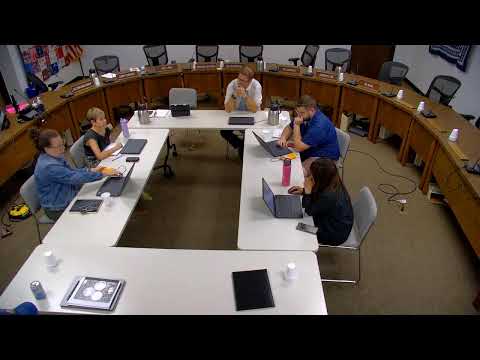
Eau Claire — The Eau Claire Area School Board opened a multi-part discussion Tuesday on updating its equity statement adopted in 2021, agreeing to place modest wording edits on the next consent agenda and to pursue a fuller rewrite over a multi-month cycle.
The equity statement functions as the board’s guiding preamble to policy, officials said, and the review is intended to keep the document aligned with current terminology, broader audiences and district priorities. Staff member Dang presented a memo with thematic analysis and options for revision, and the board discussed trade-offs between a short, staff-facing “North Star” document and a longer statement that enumerates specific district commitments.
Dang told members the review aimed to provide “multiple perspectives and multiple ideas that would be worthy of discussion” and suggested clarifying the statement’s audience, adding references to organizational systems (for example, staffing systems) and balancing historical context with a call to action. She also offered research-based examples and a list of reflective questions to guide a rewrite.
Board members expressed support for preserving specific commitments in the existing statement while making the language more inclusive and accessible. Several members suggested shifting phrasing that described the district’s perspective (for example, from language that read as “our predominantly white perspective”) toward language that names structural sources of inequity (for example, “whiteness” or systemic barriers) so the statement reads as historically grounded yet inviting to staff and families.
Board Member Stephanie volunteered to lead the drafting process and work with staff to produce an initial rewrite; the board agreed that a small drafting group should produce a first full draft for review. Members asked staff to present the shorter edits recommended by Dang as a consent-item at the next meeting so the board can reaffirm the statement in the near term while the larger rewrite proceeds. Chair Nordine and others framed the rewrite as a multi-year, cyclical effort aligned with the district’s planning cadence.
Members discussed intended audiences — staff, students, families and external stakeholders — and debated whether the document should be condensed for visibility (for example, a short statement displayed in classrooms) while preserving a longer version that lists specific actions and commitments. Several board members emphasized that any revision should make it easy for classroom teachers and building staff to see their role in enacting the district’s equity goals.
The board did not adopt a final rewritten statement Tuesday. The board agreed to place the modest edits recommended by staff on the next meeting’s consent agenda and to pursue a more extensive rewrite, with Board Member Stephanie convening a small drafting group and returning a first full draft for discussion at the board’s December policy work session.