Get Full Government Meeting Transcripts, Videos, & Alerts Forever!
Get email alerts on the Transportation Safety Grant topic
No spam. Unsubscribe anytime.
County approves $500,000 Safe Streets for All grant to study pedestrian and bicycle safety
Summary
The county approved a $500,000 Safe Streets for All grant — $400,000 federal, $100,000 local match — to fund a countywide pedestrian and bicycle safety study; staff will procure a consultant after notice to proceed from the Federal Highway Administration.
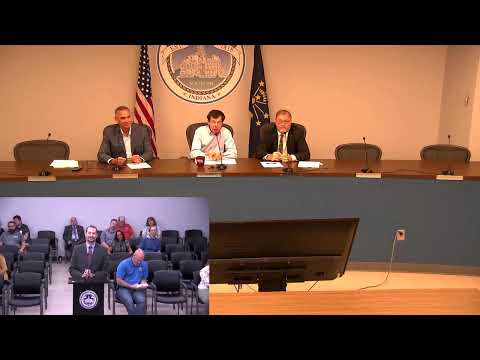
County commissioners voted to accept a $500,000 Safe Streets for All grant on a unanimous voice vote, authorizing staff to finalize the contract and begin procurement once the Federal Highway Administration issues a notice to proceed. The grant includes $400,000 in federal funding and a $100,000 local match.
The study will review county roads for pedestrian and bicycle safety issues and recommend improvements countywide. Larry Robbins, who presented the agreement to the commissioners, said the work would identify safety concerns, collect traffic and crash data, and propose projects that could qualify later for implementation funding. "This is $400,000 in federal money, $100,000 in local money for a $500,000 grant," Robbins said.
Robbins told the board the county does not yet have a consultant. After the contract is executed and the Federal Highway Administration issues a notice to proceed, staff expect to run a request for proposals and select a consultant. He estimated a timeline similar to a recent municipal effort — roughly six months to complete the study if a consultant is under contract in the last quarter of the year.
Commissioners asked how the grant would affect county finances. Robbins said the county is responsible for the $100,000 recipient share and that the plan was to use planning engineering funds for the match. He also raised a cash-flow question: the county may need to pay a consultant up front and later be reimbursed by the federal grant. "I do need to figure out with the grant is whether this is reimbursable," Robbins said, adding that county counsel would be consulted about the potential cash‑flow issue.
The grant covers county roads only; it will not directly fund state highways or city streets, though Robbins said the study could identify issues at intersections that include state or city routes and those problems would be documented. He cited Harlan Road as an example of a county corridor with known safety concerns that the study could examine.
The board approved the agreement by motion and voice vote. No contractor was selected at the meeting; staff were directed to return procurement documents and proceed after federal authorization.
The action does not itself commit funds for construction or implementation. Robbins said the study’s goal is to identify projects that could later be funded either with local money for minor fixes or via implementation grants for larger projects.