Get Full Government Meeting Transcripts, Videos, & Alerts Forever!
Get email alerts on the Public Safety Budget topic
No spam. Unsubscribe anytime.
Sheriff outlines 3‑year IT replacement plan, seeks targeted staffing and benefits changes
Summary
Vigo County Sheriff presented a multi‑year IT/hardware replacement plan, requested pay adjustments for operations staff and building security, proposed policy changes to sick‑day payouts, and sought a part‑time offender‑registry position and modest increases for training and vehicle repairs.
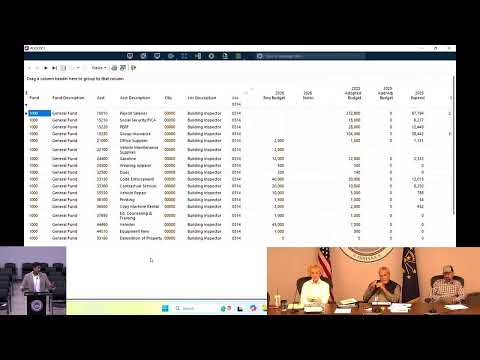
The Vigo County sheriff and his staff presented a detailed budget for 2026 that includes a three‑year information‑technology replacement plan and multiple personnel and program requests. Jeff Fox, identified as the sheriff's IT operations manager, presented a color‑coded spreadsheet showing planned hardware and software replacements tied to a five‑year lifecycle for jail and public‑safety equipment and urged a proactive replacement schedule to avoid large one‑time costs.
The sheriff told the committee the office is not seeking a large across‑the‑board raise for deputies in 2026 but proposed raising three operations staff positions (IT/operations personnel) to a target of 82% of deputy pay, describing the change as a step to align support staff with deputy salary scales. He also proposed converting a vacant lieutenant position to a captain's position (a net additional stipend of about $3,000 cost to the county) and creating a part‑time offender‑registry position (24 hours/week) to free current staff for fieldwork. "He can free himself up to be out in the field," the sheriff said of adding a clerical part‑time registry worker.
The sheriff also asked the committee to change the sick‑day retirement payout policy so that departing deputies receive pay for the full banked sick leave rather than the current practice of paying half the accrued amount. He described the maximum sick bank as 90 days and said paying the full amount could cost the county tens of thousands in years when multiple staff retire.
Other budget items include a proposed $25,000 annual training line (to pay for courses and training equipment), a $15,000 increase for vehicle repairs and a $10,000 county supplement request to a sheriff's sale/process‑server fund to avoid using deputies to serve process. The sheriff also requested modest salary adjustments for frontline business office staff and administrative assistants and an increase in hourly pay for process servers from $17 to $20. The sheriff's office noted that some IT and contractual items also appear in the county's public‑safety (LIT) fund and that the office planned to discuss how to allocate those costs.
The committee discussed how hardware lifecycles and licensing (Cisco, Microsoft and other services) drive multi‑year costs. Jeff Fox said the IT plan aims to stagger replacements, avoiding a single year with high replacement costs and reducing risk of equipment end‑of‑life causing operational failures.
Ending: The sheriff's office did not receive a final appropriation at the hearing; committee members asked for follow‑up details and said some items may be funded from the public‑safety LIT fund or split across funds.