Get Full Government Meeting Transcripts, Videos, & Alerts Forever!
Get email alerts on the Estonian Choral Piece topic
No spam. Unsubscribe anytime.
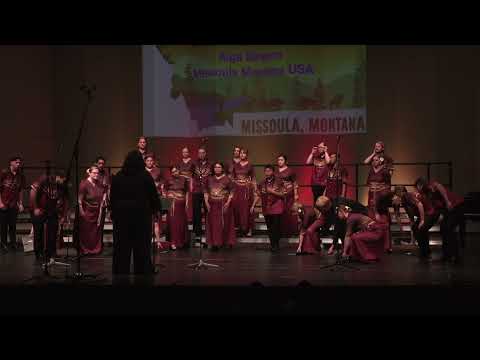
Estonian choir performing at Missoula festival sings commissioned piece drawing on language contest entries
Summary
An Estonian choir at the Montana International Choral Festival performed a commissioned piece whose text incorporated entries from a contest for the "most beautiful sentence" in Estonian, the composer said on the festival broadcast.
An Estonian choir performing at the Montana International Choral Festival in Missoula sang a commissioned piece whose text the composer said was drawn from entries to a contest for the most beautiful sentence in Estonian.
The composer and choir representative, speaking on behalf of the Estonian Radio Girls' Choir, said the choir first performed a piece based on a folk melody. She described the commissioned work and explained how she selected lines from the language contest: “just about some years ago, we had a competition of most beautiful sentence in Estonian language, but they were we are very proud of our Estonian language,” she said. She quoted one winning sentence as meaning “drive slowly over the bridge,” and said other contest lines included a phrase that she rendered as “money makes the world go round” and another she summarized as “the spare money pot of the dead.”
The composer also said she used a line listeners use to test whether someone is Estonian: “it is really nice to chew apple for lunch,” and arranged several of those short sentences into a logical order for the commissioned work, she said. On the broadcast she warned listeners that when the ordering becomes more forceful or “devil like” it signaled the musical narrative that money and other motifs were asserting themselves in the text.
Why it matters: the remarks link a contemporary commissioned choral piece to active language and culture work in Estonia and to the nation’s choral traditions. The composer emphasized Estonia’s large song celebrations, saying such events gather tens of thousands of singers and pointing listeners to the scale of those national gatherings: “we have song celebrations in every 5 years where about 30,000 singers or even more gathered on 1 stage and we sing together,” she said, and noted that “just about 2 weeks ago we had this song celebration again.”
The choir representative said the festival would now perform a song that had been performed by thousands of female singers at the national celebration; she asked the audience to imagine a much larger stage and a far larger choral mass.
The broadcast framed these remarks as cultural context for the choir’s set rather than as an explanation of technical composition choices. The festival program listed the Estonian selection as part of the evening’s international repertoire.
The Estonian representative’s comments were delivered between pieces and included both description of source text and cultural background on Estonia’s choral traditions.