Get Full Government Meeting Transcripts, Videos, & Alerts Forever!
La Joya ISD presents new goal progress measures, tighter monitoring and a ‘managed instruction’ theory of action
Summary
At a Aug. 6 La Joya ISD board workshop, district leaders proposed revised goal progress measures (GPMs) for reading, math and college- and career-readiness based on one year of MAP data, described a managed‑instruction model that ties school autonomy to performance, and proposed a board monitoring calendar and operating procedures.
La Joya Independent School District administrators presented revised goal progress measures and a new governance framework Wednesday, asking the Board of Managers to adopt annual targets based on the district’s first full year of MAP assessment data and to endorse a “managed instruction” theory of action that links earned autonomy to school performance.
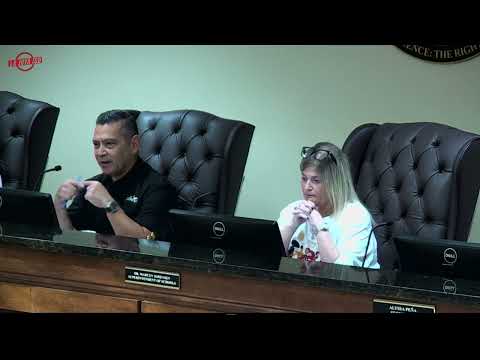
The presentation, led by Dr. Little and delivered alongside Superintendent Dr. Sorensen, laid out updated targets for early‑grade MAP percentiles, middle‑school MAP-to‑STAAR projections, and high‑school college‑ and career‑readiness measures. District staff also proposed a board monitoring calendar to track GPMs and constraint progress measures at regular intervals and a draft set of board operating procedures for future refinement.
Why it matters: The board’s decisions will set year‑by‑year expectations used to assign campus targets, differential supports and, for higher‑performing schools, opportunities for operational flexibility. District leaders said the changes reflect new, usable MAP baseline data and will determine which campuses receive intensive interventions this year under the superintendent’s constraints.
Dr. Little, the staff presenter, told the board that some GPMs now have concrete numeric baselines and long‑term targets. “Now we're saying from 36 percent in our most recent June results to 45 percent by June 2029,” he said of a first‑grade MAP benchmark used to track progress toward a third‑grade reading goal. He explained the district will set campus‑by‑campus targets based on each school’s starting point and student population.
The packet showed these notable target changes (end‑of‑year baseline → long‑term target by school year 2028–29): first‑grade MAP reading 36% → 45%; second‑grade MAP reading 33% → 45%; an early reading fluency measure (K–2) 40% → 65%; kindergarten math (Texas kindergarten assessment composite) 83% → 88%; first‑grade math (MAP) 37% → 45%;…
Already have an account? Log in
Subscribe to keep reading
Unlock the rest of this article — and every article on Citizen Portal.
- Unlimited articles
- AI-powered breakdowns of topics, speakers, decisions, and budgets
- Instant alerts when your location has a new meeting
- Follow topics and more locations
- 1,000 AI Insights / month, plus AI Chat