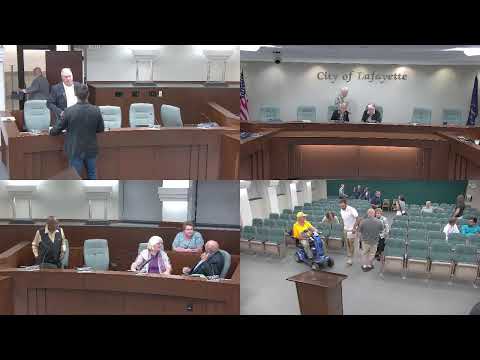
Wabash Township officials urge council to approve public-safety LIT distribution as development accelerates
Loading...
Summary
Wabash Township Trustee Angel Valentin told the council that rapid population growth and higher run volumes have left the township—s fire department understaffed and under-equipped and asked the council to distribute public-safety LIT funds.
WABASH TOWNSHIP — Wabash Township Trustee Angel Valentin told the Malawithia common council at a public hearing that the township—s fire department needs a distribution from the county—s public-safety local income tax (LIT) to cover state-mandated radio upgrades, an air-pack replacement and ambulances as the township—s population grows.
Valentin said, "This is our third year that we're requesting funds from the public safety LIT," and outlined that the LIT fund "provides about 11 and a half million dollars" annually and that units must apply by Sept. 1 under state rules. He said Wabash Township faces fast growth and equipment needs tied to an expected 55% population increase through the early 2030s and roughly 4,800 new housing units in the township's service area.
The request—s nut graf: The public hearing highlighted competing claims about how LIT dollars should be distributed. Township officials said residents of unincorporated areas have paid into the public-safety tax but received no share; city and county officials said the LIT distributions support existing municipal public-safety obligations and warned reallocating funds could reduce resources available for city services.
What officials said - Angel Valentin, Wabash Township Trustee, described staffing and equipment shortfalls and said the township seeks radio, air-pack and ambulance funding so the department can reach the 8-minute response standard. He said the township had requested funds in 2023 and 2024 but those requests were not approved. - David Tate, a member of the Wabash Township board, said that "by the Indiana statutes, these funds are available only to municipality and not to the unincorporated areas even though we pay into that." He also repeated figures Valentin gave: $11.5 million distributed annually in LIT and a cumulative total of about $58.6 million collected since February 2019. - Ed Ward, fire chief of the Wabash Township Fire Department, told the council that residents of the unincorporated area have contributed about $5.8 million of the LIT total and that repeated requests for a portion of the distributions have not been granted.
Opposition and context - Scott Galloway, Lafayette police chief, told the council: "I, as the police chief of the city of Lafayette, respectfully ask that you deny this request," arguing the city's public-safety budget and planning depend on LIT funds already allocated to municipal services. - Brian Alcar, Lafayette fire chief, urged the council not to approve the Wabash Township request, saying the city's own fire and EMS readiness depends on continued LIT support for staffing, specialty teams and equipment. He said reallocating funds would reduce Lafayette's capacity to deliver services.
Other contributors Several public officials and planners joined the hearing to give technical or planning context. Monica Casanova (Fairfield Township trustee and Indiana Township Association West Central Area director) said the LIT distribution process as written by the state does not effectively address cross-jurisdictional public safety. Nathan McBurnett of the Area Plan Commission described large permitted development volumes in Wabash Township and said the township is experiencing some of the county—s fastest near-term growth.
Outcome and next steps No formal council vote on a LIT distribution to Wabash Township was recorded at the hearing. Council members and city officials discussed the state processes that govern LIT allocations and the county—s timeline; township representatives asked the council to consider the fairness of current distributions and recommended a solution so unincorporated residents who pay the tax can see benefits. Council members did not adopt an ordinance or resolution relating to the request during the meeting.
Why it matters Wabash Township officials contend that rapid residential growth and rising run volumes have strained the volunteer and paid staffing model and that without additional capital and operating support they will not reach response-time targets. Township leaders say state policy (including SB 1, which they said will reduce some property-tax revenues) makes LIT funds a critical revenue source for their capital needs.
Clarifying details Township speakers provided multiple figures: officials said public-safety LIT distributions total roughly $11.5 million annually; cash balances in LIT funds countywide were described as about $16.1 million this fiscal year; the township estimated 55% population growth from 2020 to the early 2030s and about 4,800 new housing units in its service area (source: Angel Valentin, David Tate, Nathan McBurnett, Ed Ward).
The council did not make a decision at the hearing; township leaders said the application deadline under state rules is Sept. 1 and they asked the council to consider the request before that date.
Speakers quoted in this article are those who addressed the council during the public hearing listed in the meeting record; the council did not take a recorded vote on the LIT distribution request.