Get Full Government Meeting Transcripts, Videos, & Alerts Forever!
Get email alerts on the Short Term Rental topic
No spam. Unsubscribe anytime.
Charleston BZA denies short-term rental request at 475 Lindbergh Street after neighbors describe noise, parking and contact problems
Summary
The Charleston County Board of Zoning and Appeals unanimously denied a special-exception request to operate a short-term rental at 475 Lindbergh Street on James Island after neighbors and the board raised ongoing noise, parking and property-maintenance concerns and said they lacked reliable contact information for the owner.
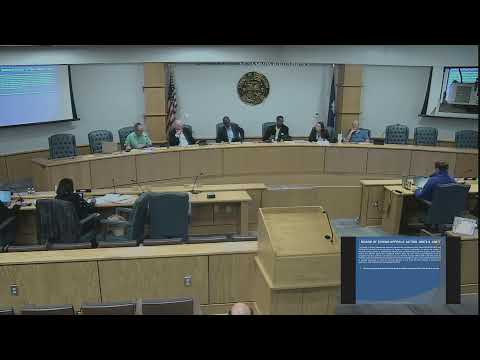
The Charleston County Board of Zoning and Appeals on Aug. 4 unanimously denied a request to operate a short-term rental at 475 Lindbergh Street on James Island after neighbors described repeated noise, parking and upkeep problems and said they could not reach the owner.
The applicant, Adam Bergen, told the board he and his co-owner live partly out of town but manage the property and had used monitoring devices inside the house to catch loud interior noise. He said he would provide neighbors with contact numbers and that the house’s landscaping and other issues would be addressed. "We're more than open to work with any of the neighbors," Bergen said during testimony.
Neighbors who spoke told the board they had experienced late-night parties, cars parked on grass and in front of the stop sign, and a pile of tree limbs left in the front yard for months after utility crews cut a tree. Rick Little, who lives nearby, said he and other neighbors were unable to contact the owner when problems occurred: "There was no phone number, no ability to contact him when there was problems going on." Don Clanton, who lives next door, described repeated late-night disturbances that left family members short on sleep.
Staff presented the application as a request for a special exception to allow a short-term rental in an R-4 low-density residential zoning district. The property was shown to have a three-bedroom house and the applicants proposed four to five on-site parking spaces; staff’s calculations indicated the driveway could fit 4–5 vehicles but the required parking for the requested use would be four spaces plus an ADA-adjustment if applicable.
Board members repeatedly noted that neighbors who live immediately adjacent — the people most affected by an STR — had testified to ongoing problems and said they had no reliable way to contact the owner. One commissioner urged the applicant to consider deferral so he could remedy neighborhood concerns and return with additional neighbor support. After discussion, a motion to deny the request was moved, seconded and carried unanimously.
The BZA made clear the denial was rooted in the board’s findings of fact: the board said adequate provisions had not been made to protect adjacent properties from noise, traffic and parking impacts and that the neighbors had not been provided reliable contact or management arrangements that would address incidents promptly. The board also noted the property had been operated as a short-term rental without the current authorization for a period, which factored into their findings.
The decision is final once mailed to the parties; the applicant was told staff would provide follow-up materials on next steps, including appeal options.
Members of the public and the applicant were told by the chair that formal appeal of a BZA decision must be filed in circuit court within 30 days of the mailed decision, per state statute referenced at the hearing.