Get Full Government Meeting Transcripts, Videos, & Alerts Forever!
Get email alerts on the Fire Department Consolidation topic
No spam. Unsubscribe anytime.
Butte-Silver Bow safety coordinator warns charter language creates oversight gap for volunteer fire departments
Summary
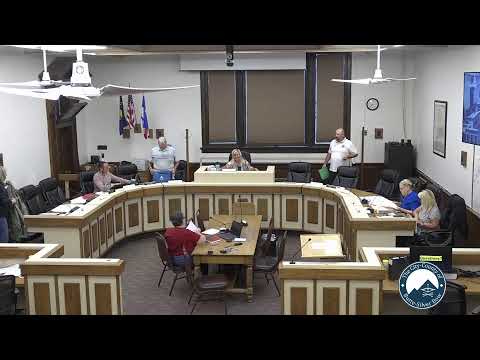
Butte-Silver Bow — James Ouellette, the county’s safety and health coordinator, told the Butte-Silver Bow Study Commission on Aug. 4 that the charter and local ordinance language creating a single fire department that includes both paid and volunteer divisions has created a legal and safety oversight gap that exposes firefighters and the county to risk.
Butte-Silver Bow — James Ouellette, the county’s safety and health coordinator, told the Butte-Silver Bow Study Commission on Aug. 4 that the charter and local ordinance language creating a single fire department that includes both paid and volunteer divisions has created a legal and safety oversight gap that exposes firefighters and the county to risk.
Ouellette, who also serves as the county ADA coordinator, said Montana Department of Labor compliance inspectors began scheduling visits to volunteer stations in January and that the county must clarify who has authority to set and enforce safety standards for departments listed in the ordinance as one Butte-Silver Bow Fire Department. “There shall be a fire department,” Ouellette said, quoting the charter language, and added that when the county assumes responsibility for facilities, apparatus and workers’ compensation it must also have the authority to enforce safety controls.
Why it matters: Ouellette argued the uncertainty affects firefighter safety, county liability and workers’ compensation premiums. He cited national and state safety standards and case analyses that conclude many line-of-duty deaths and injuries are preventable with consistent policies, training and administrative controls.
Most important facts: Ouellette walked the commission through risk-management concepts — the Swiss-cheese model and the hierarchy of controls — and reviewed firefighter injury and fatality statistics from national sources. He told commissioners the county provides personal protective equipment (PPE) and pays workers’ compensation but, in his view, lacks consistent authority to require fit testing, training, maintenance and other administrative controls for volunteers who operate under county apparatus and badges.
Ouellette repeatedly emphasized administrative controls: clear chain of command, job hazard analyses, medical evaluations and respirator fit testing. He said those items are prerequisites before issuing or relying on PPE such as self-contained breathing apparatus (SCBA). He described a recent Department of Labor compliance inspection schedule for nine volunteer districts that prompted his review.
Commissioners and insurers on coverage: Representatives from Marsh McLennan Agency and the Montana State Fund attended and confirmed volunteers can be covered. Rody Holman of Marsh McLennan said the city–county workers’ compensation policy “does possess a volunteer endorsement,” and that “volunteers are covered under that policy.” Sarah Rupp, an underwriter with Montana State Fund, said volunteer departments in other counties commonly carry their own policies but that coverage is available and underwriting takes safety records into account.
Legal context and competing views: Commissioners raised a long-standing legal question about charter language and state law. Commissioner Mary McCormack noted that the local charter dates to 1977 and said a 1979 state law preserved certain volunteer-district rights: “We passed the charter in 1977… In 1979, a state law was passed … and that is the law that is still in effect today,” she said, pointing to the conflict between charter language and later state statutes. Ouellette and several commissioners said the commission should ask the county attorney for a formal legal opinion.
Costs and scope: Ouellette outlined the scale of local firefighting resources as part of his risk overview: the county lists 12 fire stations, two career stations and nine volunteer stations with more than 170 firefighters overall. He said addressing compliance and PPE needs carries real expenses and that the county must consider funding and possible tax or budgeting changes if it formalizes oversight of volunteer units.
What was not decided: The commission did not take formal action during the presentation. Commissioners asked for more legal analysis, and Ouellette said he would continue coordinating with the county attorney and the state Department of Labor. State inspectors have paused some follow-up work while the parties discuss jurisdiction and remediation, he said, but he added there was no fixed deadline from inspectors.
Context and next steps: Ouellette asked the commission to decide whether volunteers should remain within the single department structure established in the charter and ordinance, and he urged clearer lines of authority if the county is to continue providing apparatus, facilities and insurance. Commissioners said they will seek legal input, hear from Anaconda-Deer Lodge County as a comparator and gather public feedback in upcoming open houses before making a recommendation to voters.
Ending: The presentation prompted sustained questioning from commissioners, county insurance representatives and state fund staff. No vote or ordinance change was proposed at the meeting; the study commission flagged the issue for further legal review and public discussion as part of its ongoing charter review process.