Get Full Government Meeting Transcripts, Videos, & Alerts Forever!
Get email alerts on the Affordable Housing topic
No spam. Unsubscribe anytime.
Evaluation committee hears Affirmative Investments’ proposals for Orange Street, Vesper Lane and Bartlett Road
Summary
The Nantucket Affordable Housing Evaluation Committee met July 31 to hear Affirmative Investments’ presentation on competing financing approaches for three town-owned parcels — Orange Street, Vesper Lane and Bartlett Road — and began scoring Proposal 2. The proposals would create 57 restricted rental units but require a significant town subsidy and multiple layers of state and federal funding.
The Nantucket Affordable Housing Evaluation Committee met July 31, 2025, to hear a presentation from Affirmative Investments on proposals to develop three town-owned parcels at Orange Street, Vesper Lane and Bartlett Road and to begin the committee’s scoring of Proposal 2.
Why it matters: the projects combined would create 57 income-restricted rental units across three sites, require a significant town subsidy and use layered state and federal funding. Committee members said the design and program would expand local affordable and workforce housing but flagged repayment risk to the town and property-management experience for LIHTC-funded units.
Affirmative Investments’ presentation and sites
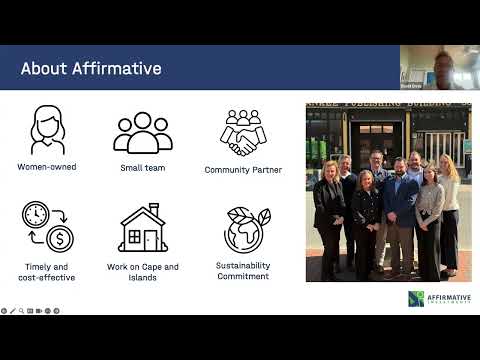
David Anderson, president of Affirmative Investments, introduced the team and the firm’s experience developing tax-credit and community-based housing across Massachusetts. Virginia (Affirmative’s design lead) described site layouts and building designs. Orange Street: 28 units in four buildings (12 one-bedrooms, 12 two-bedrooms, 4 three-bedrooms) with 28 parking spaces, a preserved central tree and a proposed bus shelter/pull-off. Bartlett Road: 12 units (8 one-bedrooms, 4 two-bedrooms) with concealed parking between buildings. Vesper Lane: a senior (55+) design with 17 units (15 one-bedrooms, 2 two-bedrooms), an accessible single-floor design in most buildings, a circular walking path and on-site solar panels and climate-controlled tenant storage. Virginia noted elevators and shared management space where planned.
Financing, timing and program differences
Tara (Affirmative presenter on finance) laid out two financing paths the proposer submitted: (1) a workforce-housing approach in which the Orange Street and Bartlett Road buildings would be financed as workforce rental housing and Vesper Lane would be a separate LIHTC (low-income housing tax credit) senior project; and (2) a full LIHTC strategy covering all three sites. Tara said the workforce option could move the Orange and Bartlett buildings ahead roughly a year and a half earlier than the full LIHTC option and would require less state layering for those two buildings.
Tara summarized the town funding differences in plain terms: the workforce approach reduces layering of restrictive funds but increases the town capital ask because workforce rents support less mortgage leverage than LIHTC-backed projects. She said the town contribution difference between the workforce and LIHTC approaches is “about a $7,000,000 difference.” Affirmative’s materials included a request for a deeply subordinated town loan of roughly $11,800,000 against the full LIHTC stack in the materials the committee reviewed.
Committee concerns and questions
Bernie Husser (financial consultant to the town) warned that the projected net cash flow after debt service was low on the LIHTC stack and that, as modeled, the town’s deeply subordinated loan could take many years to be repaid. He noted that the town will likely borrow to fund any subsidy and that interest costs on that borrowing are not included in the headline subsidy number; he said that additional interest expense would materially increase the town’s ultimate cost. Husser recommended further sensitivity work and said Hilltop Securities (the town’s financial adviser) would produce an independent analysis for bond counsel and the committee.
Several committee members said the workforce option’s operating projections showed stronger cash-flow trending because those units support higher initial rents, even after conservative expense growth assumptions. Committee members repeatedly stressed that Hilltop Securities and bond counsel must review any town-borrowed subsidy before a recommendation.
Property-management experience and operations
Multiple members expressed concern about the proposed local property manager’s lack of experience managing LIHTC properties of this size and complexity. Several recommended the developer either partner with or provide consulting support from a manager experienced with LIHTC rules and recurring recertifications. The committee asked Affirmative to clarify property-management plans and to identify any proposed third-party partners.
Design, neighborhood impacts and sustainability
Committee members generally described the site and building designs as thoughtful and compatible with local architectural character. Specific design points highlighted by presenters and members: - Orange Street: buildings stepped down to protect a central tulip poplar and a new sidewalk and bus pull-off were included in the plan. - Bartlett Road: parking concealed between buildings, reinforced turf for emergency access. - Vesper Lane: senior-focused single-floor units, circular walking path and accessible design. - Sustainability: several buildings include solar panels and the project is proposed to meet the Massachusetts stretch energy code; committee members asked for clarification about net-zero or higher-efficiency commitments.
Process and next steps
Brian Turbot (director of municipal finance and chief procurement officer for the town) opened the public-comment period (no public attendees) and then led the committee to begin its formal scoring of Proposal 2 against the RFP criteria. Members spent the meeting assigning preliminary rankings across categories (developer capacity, affordability, site design, sustainability, financial feasibility and references). Turbot said the committee will finalize composite rankings after receiving any additional clarifying information from Affirmative, Hilltop’s analysis and input from the Affordable Housing Trust. The committee set a follow-up, publicly posted meeting for Wednesday at 11:00 a.m. to finalize rankings and discussed sending a letter to Affirmative asking for a time extension to complete the trust recommendation if needed.
Votes at a glance
- Motion to accept the agenda: approved by roll call. Tally: yes 9, no 0, abstain 0. (Committee members recorded present and voting: Christie Ferantella; Chantal Blois Murphy; Tracy McDonald; Leslie Snell; Rick Sears; Don Hill; Bernie Husser; Abby de Molina; Brian Turbot.)
- Motion to adjourn: approved by roll call. Tally: yes 9, no 0, abstain 0. (Same voting membership.)
What the committee will ask Affirmative to provide
Committee members requested clearer detail on: (1) the property-management plan for LIHTC units and any third-party manager or consultant engagement; (2) updated pro formas and cash-flow sensitivities, including assumptions about vouchers/mobile Section 8 use in occupancy; (3) clarification on sustainability commitments (net-zero/Passivhaus targets if any); and (4) any adjustments to the town subsidy request and proposed repayment schedule the developer can contemplate.
Quote (from meeting): David Anderson, president of Affirmative Investments: "Affirmative was created, in 1983 as a social investment investment banking firm..." Tara (Affirmative): "we could move those 2 projects ahead quicker starting about a year and a half earlier than the LIHTC full project."