Get Full Government Meeting Transcripts, Videos, & Alerts Forever!
Get email alerts on the Ergonomics topic
No spam. Unsubscribe anytime.
Presenter: ‘Fit the work to you’ after 200 ergonomics injuries reported
Summary
In a Safety Moments presentation, Mike Stagg urged staff to adjust tools, workstations and tasks to individual bodies after citing 200 ergonomically related injuries in the first half of the year and nearly $500,000 in incurred costs.
Mike Stagg, presenting during a Safety Moments session, told staff the workplace should be adjusted to fit workers’ bodies to reduce repetitive-strain and posture injuries. “We’ve had 200 of these ergonomic type of injuries just in the first half of the year,” Stagg said, and he cited about $500,000 in incurred costs linked to those injuries.
Stagg said roughly three-quarters of strains and sprains the organization recorded were attributable to ergonomic factors such as awkward or static postures, repetition and fatigue. “Seventy-five percent of these strains and sprains are as a direct result of some ergonomic issue,” he said.
Why it matters: Stagg said these injuries are common across desk and field work and carry both human and financial costs. He illustrated common risk factors — awkward posture, repetitive motions and low fitness or fatigue — and urged staff to take practical steps to reduce risk.
Recommendations and examples from the presentation included: adjusting workstation height and chair settings so keyboards align with elbow height; raising materials from the floor onto platforms to avoid bending; positioning frequently used tools within easy reach; taking short movement breaks every 30 minutes; and selecting appropriately sized or left-/right-handed tools. On lifting, Stagg said the preferred approach is to get help: “The only proper lifting technique is to get help,” he said, and recommended team lifts when possible.
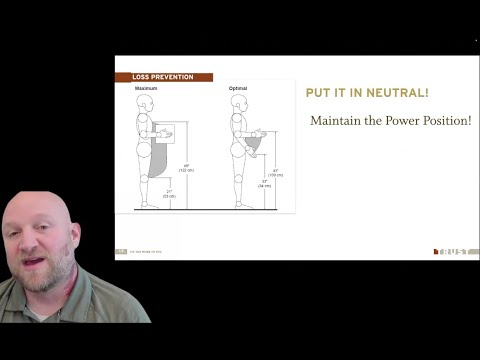
Stagg explained the “power position” for hand-carrying items — arms close to the body at about 90 degrees with the legs doing most of the work — and recommended breaking repetitive tasks into different activities every 30 to 45 minutes to reduce strain. He used an example of a streets crew member repeatedly turning a shovel to illustrate how repetition causes injuries even when tasks are performed correctly.
The presenter also described how most tools and equipment are designed for people between about 5 feet 1 and 6 feet 2 tall, and encouraged staff who fall outside that range to request adjustments or alternate equipment. He closed by urging staff to speak up if a tool or workstation causes pain: “If you’ve got a tool that you’re using that hurts your hand when you use it, get something else. Speak up and say something,” Stagg said.
The session included a brief chat comment praising the material; no formal actions, votes or policy changes were recorded during the presentation.