Get Full Government Meeting Transcripts, Videos, & Alerts Forever!
Get email alerts on the Student Health Vaping Prevention topic
No spam. Unsubscribe anytime.
Racine schools roll out expanded vaping-prevention lessons and a diversion program to avoid expulsions
Summary
Racine Unified presented an updated vaping-prevention plan that expands curriculum for grades 5–9, adds resources for parents, and will pilot an out-of-school diversion program (Empowering Futures) as an alternative to mandatory expulsion for certain substance incidents.
RACINE, Wis. — Racine Unified School District staff on Monday told the board they will expand classroom vaping-prevention lessons, publish parent resources and pilot a 10‑week diversion program that can be offered in place of automatic expulsion for some student substance incidents.
Andrea Rickers, executive director of student services, said the district received grant funding for prevention work and has partnered with Focus on Community to deliver classroom curricula and intervention services. “The number 1 reason that students and children, kids across the country have identified as the why is that their family and friends do it,” Rickers said, describing the social drivers that staff hope the curriculum will address.
The district plans to add lessons from the Catch My Breath curriculum to existing programming: three additional lessons in sixth grade, two lessons for grades 6–9, and optional fourth‑ and fifth‑grade materials if the board agrees. Staff also plan to purchase a short module called Fentanyl Facts for grades 6–9 and consider four extra substance‑misuse lessons for fifth grade. Materials and links from the CDC, the Wisconsin Department of Health Services and Children’s Wisconsin will be posted on the district website for families.
Nut graf: The update is meant to reduce student harms, expand prevention education to younger grades and offer a remediation path that keeps students in programming rather than automatically removing them. In particular, the district will pilot “Empowering Futures,” a program that pairs SMART Recovery principles with the All Stars prevention curriculum as an alternative route in some expulsion cases.
Most important details: the Empowering Futures pilot will be delivered by Focus on Community and uses the SMART (Self‑Management and Recovery Training) and All Stars curricula. The program runs 10 weeks, with three two‑hour sessions per week; participants must meet a 90% attendance and active‑participation requirement and a parent or guardian must provide permission and engage at least once during the course. If students comply with program requirements, a pending expulsion would be held in abeyance; non‑compliance would resume the formal expulsion process.
District staff described the broader prevention package as a combination of classroom lessons (life skills taught in grades 3–7 currently, with expansion under review), evidence‑based screening and brief interventions (SBIRT) and community outreach. Jason Mickma of Focus on Community described a hands‑on parent outreach activity, Hidden in Plain Sight, in which volunteers walk through a staged youth bedroom to see items parents might not recognize as signs of use. “Every single person that has walked through that that I’ve been present for has walked up saying, ‘Wow. I had no idea,’” Mickma said.
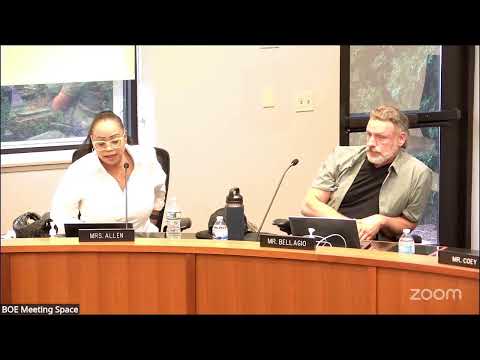
Board members raised questions about where the Empowering Futures sessions will be held and student access. Staff said the pilot will be housed at Park High School after school hours and is open to students districtwide; families may request assistance with transportation. Board member comments underscored community concerns about the proliferation of vape shops. “There are so many vape stores opening, and it’s become so popular,” Board Member Harris said, linking retail availability to youth accessibility.
Staff noted other supports: in‑school screening and brief intervention (SBIRT) by trained staff, life‑skills classes in elementary and middle grades, parent toolkits and videos, and printed materials for schools. The presentation referenced a district settlement fund available for prevention work; a board member said the amount available from that fund is “around $400,000.”
The board did not take a formal vote Monday; staff presented the plan for consideration and said elements will appear for approval at future business meetings. The materials shown to the board will be posted on the district website and used in outreach to parent groups, the parent leadership network and the family and community engagement office.
Ending: Staff said the pilot and curriculum expansions aim to begin in the coming school year, with the Empowering Futures pilot starting in the fall. The board directed staff to continue development of materials and logistics and to return with any items that require formal board approval.