Get Full Government Meeting Transcripts, Videos, & Alerts Forever!
Get email alerts on the Economic Development Tif topic
No spam. Unsubscribe anytime.
Elyria council deadlocks on development agreement for DVR project after lengthy debate over road acceptance and TIF risks
Summary
A split council vote on a committee report about a proposed DVR commercial realty development left the project’s economic incentives unresolved after extended discussion about whether approving a development agreement now would obligate the city to accept narrow streets and other public improvements later.
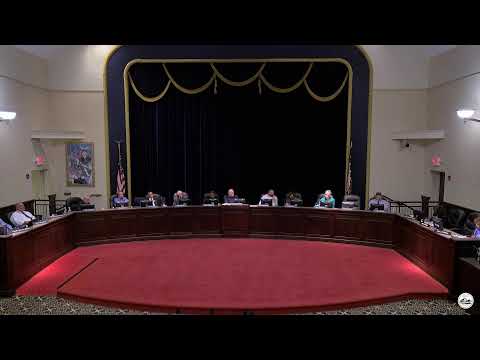
Elyria City Council members debated for more than two hours on Monday over whether to endorse a development agreement and accompanying tax-increment financing for a proposed DVR commercial realty project, ultimately producing a 5–5 committee outcome and forwarding a minority report rather than approving the legislation.
The dispute centered on whether approving the development agreement and TIF now would effectively commit future councils to accept the project’s public improvements — in particular narrow road widths and the final plat — and the legal and financial risks if council later refused acceptance. Attorney Ross Balthus, who reviewed DVR’s revised draft, warned members that approving the incentive now but later rejecting the public improvements “would lead to litigation” and could be seen as bad faith toward the developer and the port authority.
That legal caution framed much of the meeting. “If council is not comfortable…this needs to be addressed sooner rather than later,” Balthus said, arguing that the port authority and potential bond underwriters will rely on council approval when marketing bonds and advancing reimbursements tied to public improvements.
Councilmembers raised technical and planning questions during the strategic planning session that followed the regular meeting. Several members requested direct testimony from city staff about the planning commission’s review, road dimensions, sidewalk requirements and utility easements. Councilmember John Oswald said he was not comfortable approving the incentive without hearing from the building official and the city engineer about items that planning commission had passed over internal objections. "That's why I would like them to say, this is what I didn't agree with," Oswald said.
Supporters urged moving ahead. Councilmember Saworka (surname per transcript) said delays could “complicate and muddy” future options such as siting a fire station in the southeast quadrant or encouraging a retail siting on alternate parcels. Others noted the economic implications: city and school projections presented earlier estimate future tax revenue from the development but officials said the school compensation agreement and final TIF text still required revision.
After discussion, a motion to accept a committee report endorsing the development agreement (with the contested preapproval language removed by DVR’s counsel) was put to a roll-call vote and produced a tie. The chair instructed clerical follow-up: the item will be prepared as legislation for possible first reading and, if council members are available, a special meeting could be scheduled for Aug. 11 to consider finalized documents. City attorneys said they could present a final draft by then if remaining edits were resolved.
The planning and legal back-and-forth highlighted two practical points: the planning commission approval permits the developer to proceed under zoning, but council acceptance of public improvements (dedication of streets, sidewalks and utilities) is a separate council decision; and approval of a TIF often presumes those same improvements will be accepted. Attorney Balthus summarized the dilemma: approving the incentive signals the city’s endorsement of the project “as presented,” and voting otherwise later risks litigation and undermines the financing.
Council members who opposed immediate endorsement emphasized unresolved technical questions — road widths (some plans showed 22-foot streets), sidewalk and drainage arrangements, utility easement placement, buffering between commercial and residential uses, and where maintenance and snow removal responsibility would lie. Engineer remarks in the meeting noted the city’s current minimum public-road widths are larger than 22 feet and that private roads of narrower width exist but are typically privately maintained.
The outcome leaves the project in limbo: no committee-level endorsement passed, and council attorneys recommended circulating a final, consolidated draft to members before any formal vote. The school district’s attorney present said a first reading by council could help the school board schedule its review, but that the school compensation agreement still needed finalization.
Councilmembers indicated a desire for a formal, fully edited development agreement and associated TIF documents before taking a final vote. The administration and counsel said they would attempt to deliver a final draft for the council’s next committee meeting; in the meantime, council staff will file the committee action as a minority report rather than a full committee endorsement.
Looking ahead, attorneys and staff said the earliest practical path to a formal vote would be to circulate a finalized draft for review and consider the matter at a special session, giving council members time to resolve technical questions and legal exposure before committing to incentives.