Get Full Government Meeting Transcripts, Videos, & Alerts Forever!
Get email alerts on the Facilities Capital Projects topic
No spam. Unsubscribe anytime.
Flossmoor SD 161 pauses classroom refresh as persistent humidity, mold issues prompt forensic review
Summary
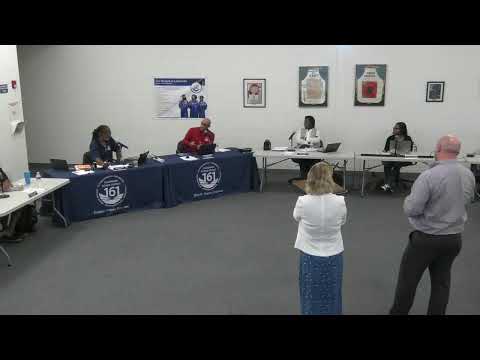
At the April 4 Flossmoor School District 161 Board of Education meeting, district staff told the board that persistent summer humidity and condensation at Flossmoor Hills School — and elevated humidity at Western Avenue School — have damaged ceiling tiles and floor coverings, forced removal of wet materials and led the administration to pause planned classroom refresh work until forensic engineering reviews are complete.
At the April 4 Flossmoor School District 161 Board of Education meeting, district staff told the board that persistent summer humidity and condensation at Flossmoor Hills School — and elevated humidity at Western Avenue School — have damaged ceiling tiles and floor coverings, forced removal of wet materials and led the administration to pause planned classroom refresh work until forensic engineering reviews are complete.
District staff said the buildings have required emergency steps, including placing a rented dehumidifier in every classroom and office and removing wet ceiling tiles to allow the plenum spaces to dry. "We have removed the ceiling tiles," Fran, a district staff member, said, adding that crews were cleaning visible mildew and ordering replacement tiles.
The board heard that contractors and Wold, the district’s engineering consultant, have monitored the buildings since the HVAC upgrades in 2021. Matt Burton, a mechanical engineer with Wold, told the board the problem appears each year in a roughly six- to eight-week window in late summer and early fall and that the district has tried multiple HVAC- and control-based fixes. "When you bring air in, you gotta let air out," Burton said, explaining the role of building pressure and exhaust fans in managing outdoor-air ventilation.
Wold staff reported that chilled-water piping insulation in the ceiling plenums is condensing and that building-envelope infiltration — gaps at the exterior soffit and wall interface from older construction — likely lets moist air into the plenum. Mike Eichhorn, an architectural team member with Wold, said the buildings lack a modern air barrier and weather barrier, increasing the risk of vapor movement through materials.
The administration described actions already taken: installing control changes and return grills to improve airflow above ceilings, adding dehumidification sequences to unit ventilator controls, replacing exhaust fans and rebalancing the HVAC system, and daily monitoring of rooms. Staff said humidity has been reduced in many rooms to roughly 60–70 percent with dehumidifiers in place, but several classrooms have registered humidity levels as high as 90 percent at times.
Because cosmetic renovations would be ruined if the underlying moisture problem persists, the administration recommended postponing classroom refresh work at Flossmoor Hills and Western Avenue until the district can confirm a reliable technical fix. "It would seem to us that this has to be the priority," Fran said. District staff said they will engage forensic architecture/engineering firms to perform thermal imaging, material forensics and computational modeling of airflow and vapor movement, obtain multiple quotes, and bring those findings and recommended scope back to the board at the next meeting so the work can be incorporated into next summer’s bid packets if appropriate.
District staff provided preliminary cost notes: replacement ceiling tiles were estimated at "about $1,010,000 or so" in the meeting record, dehumidifier rental runs a few thousand dollars for the near term, and air-quality testing costs were described as roughly $1,500–$2,000. Staff said many floor rugs were inexpensive throw rugs and that larger carpeted areas are being cleaned and can be restored rather than replaced.
Board members said safety is the top priority and asked the administration to obtain the forensic reports early enough for the board to review them in advance of any decision. Several board members indicated low risk tolerance for accelerating the renovation timeline before the engineering findings are known. The administration said drawings for the next summer’s work are due in the coming months and that, depending on the forensic findings, the repair could be a relatively simple envelope repair or a much larger, costlier project.
No formal board action to delay the broader construction program was taken at the meeting; staff described the plan as a recommendation and a direction to obtain forensic analyses and competitive quotes and to return recommendations to the board for consideration.
District officials said air-quality testing will continue and that classrooms will reopen with dehumidifiers and some ceiling tiles left open until humidity subsides. Staff described the implementation risk as "high" until the forensic review can establish the root cause and an effective remediation plan.