Get Full Government Meeting Transcripts, Videos, & Alerts Forever!
Get email alerts on the School Parking Policy topic
No spam. Unsubscribe anytime.
Dennis-Yarmouth committee rejects proposed high school assigned‑parking policy after debate over suspensions, fees and enforcement
Summary
The Dennis‑Yarmouth Regional School Committee declined to adopt a proposed assigned‑parking and permitting system for the high school for 2025–26 after lengthy discussion about linking parking to grades, tardies, a $20 fee and how the district would enforce suspensions.
Dennis‑Yarmouth Regional School Committee members voted down a proposal to adopt an assigned‑parking and permitting system for Dennis‑Yarmouth Regional High School for the 2025–26 school year after lengthy questions about enforcement, equity and an attached suspension policy.
Assistant Principal Michelle (representing the high school) presented the proposal, saying the change would “create a consistent and secure parking system that supports school safety, student responsibility, and operational efficiency while fostering a sense of belonging and school pride.” She told the committee the draft would include assigned numbered spaces, a $20 nominal annual permit fee paid online, and eligibility tied to enrollment (grades 10–12), possession of a valid driver’s license and vehicle registration, punctual arrival and minimum academic standing.
The proposal listed progressive discipline for attendance and skipping class (for example: nine tardies → five school‑day suspension of parking privileges; 12 tardies → 10 days; subsequent tardies → longer suspensions or revocation). For academic performance the draft said any student who failed two or more classes on a report card would have parking privileges suspended, with the possibility of restoration after the next grading period. The administration proposed permits be visible while parked and that suspended privileges would not receive a refund of any fees.
Committee members praised aspects of the plan but raised repeated concerns about the policy’s punitive elements and administrative burden. “I love the incentiveness for academic performance and tardiness,” said Committee Member Mister Glenn, but he warned that placing hard numeric triggers in policy could be problematic and suggested leaving room for case‑by‑case administrative discretion. Committee Member Miss Landers, an attorney, said she feared suspending parking privileges could worsen absenteeism: “If someone is already struggling academically…and then their parking privileges revoked, that just means they’re not gonna come to school.” Several members echoed concerns about enforcement logistics, towing, and how the district would fund or administer towing or other penalties.
Others supported assigned spots, the tracking advantages of permits and the nominal fee for maintenance. Committee Member Mister New said he liked the idea of an assigned slot and the $20 fee, noting that paying could create an incentive to attend. Committee Member Mister Martin objected to adding a fee while the district is working to eliminate fees elsewhere: “If we are going to try to eliminate fees in other places, I don't understand why we have to do a fee for this.”
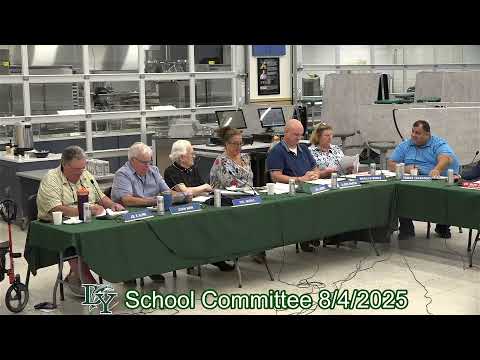
After discussion the committee moved to approve the policy as presented. The roll‑call vote resulted in four nays and three ayes; the motion failed. The chair instructed the administration to revise the draft taking committee feedback into account and invited the high school to return with a revised proposal.
Why it matters: The high school’s parking lot is a safety and supervision concern because of inexperienced drivers and chaotic traffic patterns. The proposal aimed to improve identification of vehicles on campus and to incentivize punctuality and academic engagement, but committee members and staff signaled strong reservations about tying parking privileges to disciplinary and academic triggers and about the district’s ability to enforce suspensions without unintended consequences for student attendance and equity.
What’s next: The administration will rework the draft to address concerns raised by committee members, including alternatives to numeric suspension triggers, clarification of enforcement and appeals, and how to treat students with financial need. The committee did not adopt the policy for implementation in 2025–26.