Get Full Government Meeting Transcripts, Videos, & Alerts Forever!
Get email alerts on the Municipal Budget topic
No spam. Unsubscribe anytime.
Fort Myers Beach sets tentative FY2026 millage to cover budget gap; public hearings slated for September
Summary
The Town Council voted 4–1 to adopt a not‑to‑exceed tentative millage rate for fiscal year 2026 after finance staff presented a budget gap driven by frozen pre‑storm revenue baselines and rising operating costs; the council scheduled public budget hearings for Sept. 11 and Sept. 24, 2025.
Fort Myers Beach’s Town Council set a tentative, not‑to‑exceed millage for fiscal year 2026 after finance staff outlined a budget shortfall driven by frozen, pre‑hurricane baseline revenue calculations and rising costs.
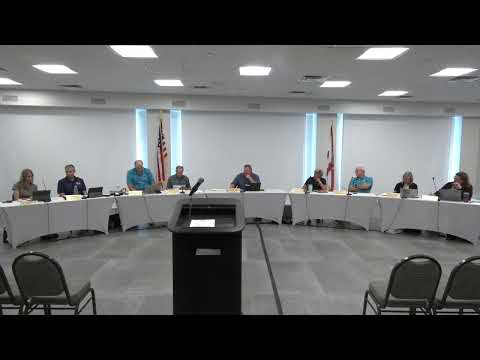
At a regularly scheduled meeting the council voted 4–1 to adopt a tentative millage rate that would provide the town with additional revenue to close an estimated operating gap for FY2026. Finance director Joe Anzick and town staff presented a high‑level budget snapshot that showed ad valorem (property tax) revenue increasing because of a rise in taxable value, and non‑ad valorem revenues growing in part due to parking and other receipts. Even with those increases, staff said the town faces a structural gap because certain revenue lines are still measured against pre‑Hurricane Ian (FY2022) baselines in the bridge‑loan calculation and the amount the town is allowed to draw from the existing bridge loan is limited.
Staff briefing: Anzick told council that projecting FY2026 revenues against the town’s statutory bridge‑loan rules produced a shortfall that would leave a budget gap unless the council approved a higher tentative millage or the town took deeper cost reductions. The finance presentation identified: a $670,000 increase in ad valorem revenue (driven by higher taxable value), non‑ad valorem increases of roughly $617,000, and a limit on bridge‑loan funds the town can count on for FY2026. Staff said the town’s previous-year workarounds — one‑time American Rescue Plan (ARPA) balances and unusually high interest income in FY2025 — are no longer available to close the projected deficit.
Council action and process: The council approved resolution 25‑210 to set a tentative millage by a 4–1 vote. Councilor King cast the dissenting vote, citing concerns about the impact on residents and calling for further examination of expense reductions and operational efficiencies. Mayor and other council members said the council had postponed year‑one increases for three post‑storm years and that staff had exhausted one‑time options; the adopted rate is a maximum that the council can lower at a later budget hearing but cannot increase after today’s statutory deadline.
Public hearings: Town staff scheduled two public budget hearings (required by Florida law) for Sept. 11 and Sept. 24, 2025, both at 5:01 p.m.; staff said the venue would be the new town hall pending final checks on availability and that they would confirm the meeting location in advance. The council will take final action on the millage and the FY2026 budget at the hearings.
Why the gap exists: Staff explained that FEMA and other post‑disaster funding rules, plus the method used to compute the allowable bridge‑loan drawdown, left the town in a situation where some revenue lines remain effectively pegged to pre‑storm levels even as operating costs (insurance, wages, flood compliance, and other expenses) have risen. Finance staff said the best way to avoid immediate service reductions and to preserve emergency reserves was a combination of a modest millage increase and continuing a close review of expenses and potential new revenue options. Council directed staff to return with detailed line‑by‑line budget projections and to work with the audit committee for additional analysis ahead of the September hearings.
What residents should know: The tentative rate adopted tonight is a statutory step that allows the town to notify the property appraiser and begin required public notices; the final rate can be reduced but not increased when council adopts the budget at the September hearings. Staff said billing and property tax impact estimates will be published in advance of the hearings and that staff will provide more granular budget detail at the council’s budget workshop and at the audit committee meeting before September.
Evidence and record: The finance presentation and council discussion summarized the revenue increases and the restricted bridge‑loan availability. The council’s vote to adopt the tentative millage passed 4–1; the motion was recorded and the meeting record includes staff slides and a schedule for fall hearings.