Get Full Government Meeting Transcripts, Videos, & Alerts Forever!
Get email alerts on the Restaurant And Nightlife topic
No spam. Unsubscribe anytime.
Council approves special exception for former Beach Theater with limits on outdoor music and seasonally required valet parking; parking variance cleared 4–1
Summary
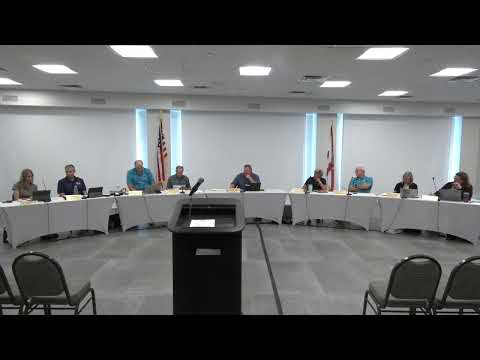
Town Council approved special exceptions to permit two restaurants with outdoor seating and limited outdoor entertainment at the former Beach Theater site (6425 Estero Blvd.), but imposed detailed limits on amplified music, seasonally required valet service and dock access.
Fort Myers Beach Town Council voted to approve a set of special exceptions for the former Beach Theater property at 6425 Estero Boulevard, allowing on‑site alcohol consumption, outdoor seating after sunset and limited live/outdoor entertainment — but only under a lengthy set of conditions designed to limit noise, parking overflow and neighborhood impacts. The council’s approval of resolution 25-239 was conditioned on the separate approval of a parking variance (resolution 25-240); the variance passed later in the meeting by a 4–1 vote.
What the council approved: The special‑exception package allows consumption on premises, new outdoor seating after sunset, and limited live entertainment consistent with the town’s Commercial Boulevard zoning standards. The council’s approval incorporated numerous conditions negotiated with staff and the Planning & Zoning board (LPA) intended to mitigate noise, limit parking impacts and require management controls.
Key conditions the council attached: Following presentations and a tightly contested public hearing, council required that outdoor amplified music be limited to 11 a.m. until 9 p.m. daily; that ground‑level food and beverage service be limited to 10 a.m.–10 p.m.; and that upstairs (enclosed) operations be allowed to remain open later (the council kept a midnight ending for enclosed upstairs operations). The council also required physical buffers and new perimeter walls in specified locations, a continuous hedgerow, and that certain glass or bifold doors be closed at night or be engineered in compliance with the town’s floodplain rules.
Dock and water access: The property contains an existing small dock. The council and the applicants agreed that the dock will be "not for public use; restricted access only" — amended language the council adopted to clarify the dock is for private use and water taxi access, not a public landing. Applicants and legal counsel discussed enforcing the restricted status via signage and by property management, and the council included signage and enforcement among the conditions.
Parking and valet: The applicant requested substantial reductions from the town’s base parking requirements for the large, converted theater building. To address neighborhood concerns about overflow parking and street stacking, the applicant committed to a shared parking arrangement with the nearby Dolphin Inn and to making valet parking available by default during the higher‑demand season. As part of the motion, the council required that valet service be provided at a minimum during season (defined in the motion as November 1 through Easter), at least from Thursday through Sunday 5 p.m. to close; employees must park off site and a shared‑parking agreement identifying off‑site spaces must be provided and recorded before permits are issued. Council also approved a parking variance (resolution 25-240) reducing required spaces from an estimated 115 to 33; that variance passed 4–1.
Noise management and enforcement: The council accepted LPA‑imposed conditions that the property must use a unified, management‑controlled in‑house speaker system (no external public address systems projecting across the neighborhood), prohibit full bands or percussion outside without a special events permit, limit types of amplified entertainment and preclude electronic games that beep or buzz. The council added language that an unremediated violation — as determined by an order of the town’s special magistrate — would render the special exception null and void.
Public comment and neighborhood opposition: Several nearby residents spoke against the project at the hearing, citing concerns about noise traveling down canals and into low‑density neighborhoods, possible parking overflow onto Egret and Curlew streets, and uncertainty about enforcement of private‑dock restrictions. Christine and John Madden, 181 Egret Street, urged an enclosed indoor solution and warned the council that outdoor bars and music adjacent to a quiet neighborhood would be disruptive. Applicant representatives said they had added buffering and screening, proposed a brick or concrete perimeter wall on the canal side, and committed to a on‑site contact number for neighbors and to strongly enforced valet management during season.
Who spoke and what they said: Patrick Vaness, a planning consultant for the applicant, summarized the proposal and the LPA conditions. Vaness said the project team had revised plans to add perimeter walls, a continuous hedge row, and a management phone number to address parking complaints. Owner representative Steve Bogue described the plan as two distinct restaurants — a casual, open down‑stairs venue ("Boardwalk Grill" was discussed as a potential name) and an enclosed upstairs steakhouse — and said the downstairs program was intended to be "casual" and not a full‑time party venue. Architect Albert Dambross explained the flood‑compliant design choices and how solid concrete perimeter walls will improve sound attenuation compared with the pre‑storm configuration.
Council votes: The council approved the special exception (resolution 25-239) by unanimous vote on a motion that included the new operating and mitigation conditions and that tied final approval to the parking variance outcome. Later in the meeting the council approved the parking variance (resolution 25-240) by a 4–1 margin; Councilor King cast the lone dissent on the variance due to continuing concerns about stacking and neighborhood impacts.
Why it matters: The decision allows redevelopment of a large vacant theater site into multiple restaurant uses on the South End of Estero Boulevard — a change the council and staff described as supporting walkability and South End restaurant capacity — while making noise, parking and access limitations legally enforceable through the conditions of the special exception.
Next steps: The applicant will provide the shared‑parking agreement and final site permits to staff before site‑work permitting proceeds; management and code enforcement will be responsible for responding to resident complaints. The council’s recorded conditions require the applicant to return to staff for administrative approvals and to comply with signage, valet, shared‑parking and sound‑mitigation commitments.