
Public utilities outlines proposed backflow prevention program, warns devices and testing carry costs
Get AI-powered insights, summaries, and transcripts
Sign Up Free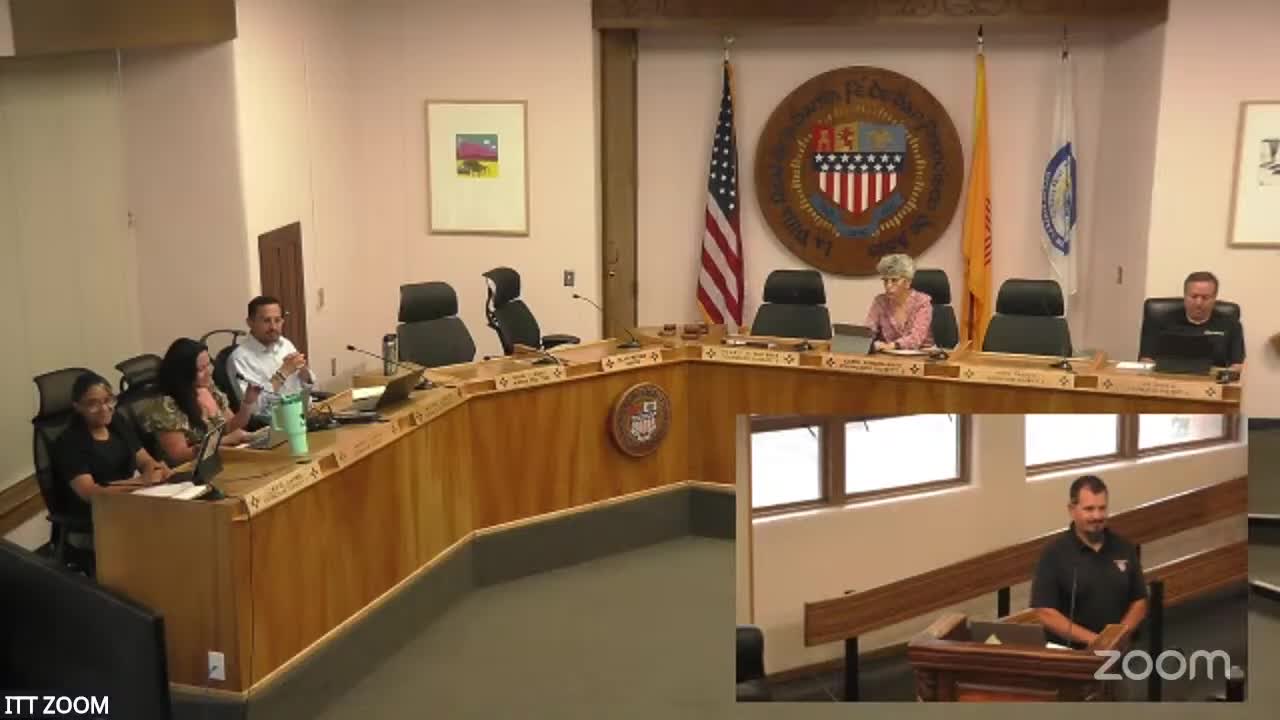
Summary
City staff presented a proposed cross-connection and backflow prevention program that would formalize annual testing and tracking of backflow assemblies; staff said devices are required by plumbing code and residential costs can range from about $800 to $1,500 for common meter sizes.
City staff briefed the Public Works and Utilities Committee on a proposed cross-connection control and backflow prevention program intended to reduce contamination risk to the drinking water system.
Justin Gonzales, the city’s cross-connection specialist, told the committee the program would formalize existing plumbing-code requirements by creating a program to track backflow prevention assemblies, mail annual testing notices to customers and follow up to ensure devices remain in operating condition. Gonzales said many required assemblies are installed at new construction but receive little post-installation testing and maintenance.
Gonzales described the mechanics and common causes of backflow — including back-siphonage after a main break and backpressure from private pumps or private wells tied into customer plumbing — and said proper assemblies prevent contaminated customer water from entering the public system. He showed photographs of large reduced-pressure zone (RPZ) assemblies used on fire suppression systems and irrigation, and a usage graph from a meter that showed reverse flow at a property where a private well had been tied into the service. Gonzales said the city had at least one backflow contamination event within the city in the last 15 years and that there have been backflow incidents statewide.
On costs, Gonzales estimated that a common residential 3/4-inch to 1-inch device typically costs roughly $800 to $1,500 installed, with larger-diameter devices used on commercial fire-suppression systems substantially more expensive. He said the program’s primary recurring cost would be annual testing and that devices are required by plumbing code at specific applications.
Committee members asked about the financial impact on customers. Councilor Alma Castro asked for confirmation on device cost; Gonzales gave the $800–$1,500 range for a common residential device. A staff member clarified that the proposed program is intended to ensure annual testing of devices already required by code, not to force new device installs where a device is not already required.
Gonzales used a short video example to illustrate how a pressure drop at a hydrant can cause reverse flow and pull industrial process water into a drinking system; he said a properly administered cross-connection program helps prevent such scenarios.
Staff said they are planning an ordinance to implement the program and would return with more details about scope and enforcement; no formal action was taken at the committee meeting.