Get Full Government Meeting Transcripts, Videos, & Alerts Forever!
Get email alerts on the Responsible Bidding topic
No spam. Unsubscribe anytime.
Council advances amendment to responsible‑bidding ordinance to tighten apprenticeship and project thresholds
Summary
The City Council on March 3 read and held over proposed amendments to its responsible‑bidding ordinance that would apply the rules to public works projects at or above $150,000 and to projects that seek economic incentives; the amendment also tightens apprenticeship proof requirements. Council members asked to retain a perjury attestation on the
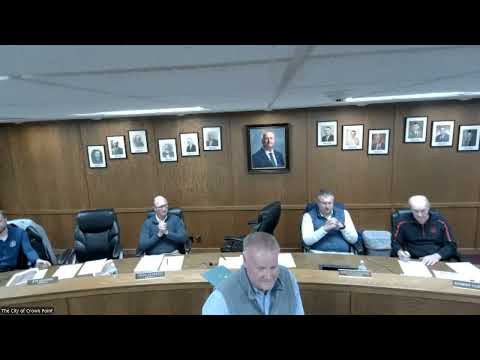
Crown Point — The City Council on March 3 read and held over for second reading changes to the city’s responsible‑bidding ordinance that would expand coverage and strengthen apprenticeship requirements for contractors seeking incentives or bidding on larger public works projects.
The proposed amendment would apply the ordinance’s provisions to public works projects with a threshold of at least $150,000 and to projects that ask the city for economic incentives, such as tax abatement. The revision also strengthens the apprenticeship provision by clarifying the qualifying standard for apprenticeship programs and requiring verifiable evidence of apprenticeship program operation over recent years.
Council discussion and staff clarifications
Council members expressed support for ensuring that any developer or contractor receiving city incentives meets workforce and apprenticeship standards. One council member asked that the ordinance retain explicit language requiring contractor/subcontractor attestations “under oath … subject to perjury” on city forms; staff agreed to include that language in the amended draft shown at second reading.
What was decided and what remains
The council voted to read the ordinance by title and hold it for a second reading; no final adoption occurred at this meeting. Staff said the proposed changes align with practices in peer communities and are designed to protect local skilled labor and assure quality on incentive‑backed projects.
Ending
Staff will return a revised ordinance for a second reading that incorporates the requested attestation language and any final technical edits.