
Board workshop advances 'managed instruction' theory of action to pair district coherence with school autonomy
Get AI-powered insights, summaries, and transcripts
Subscribe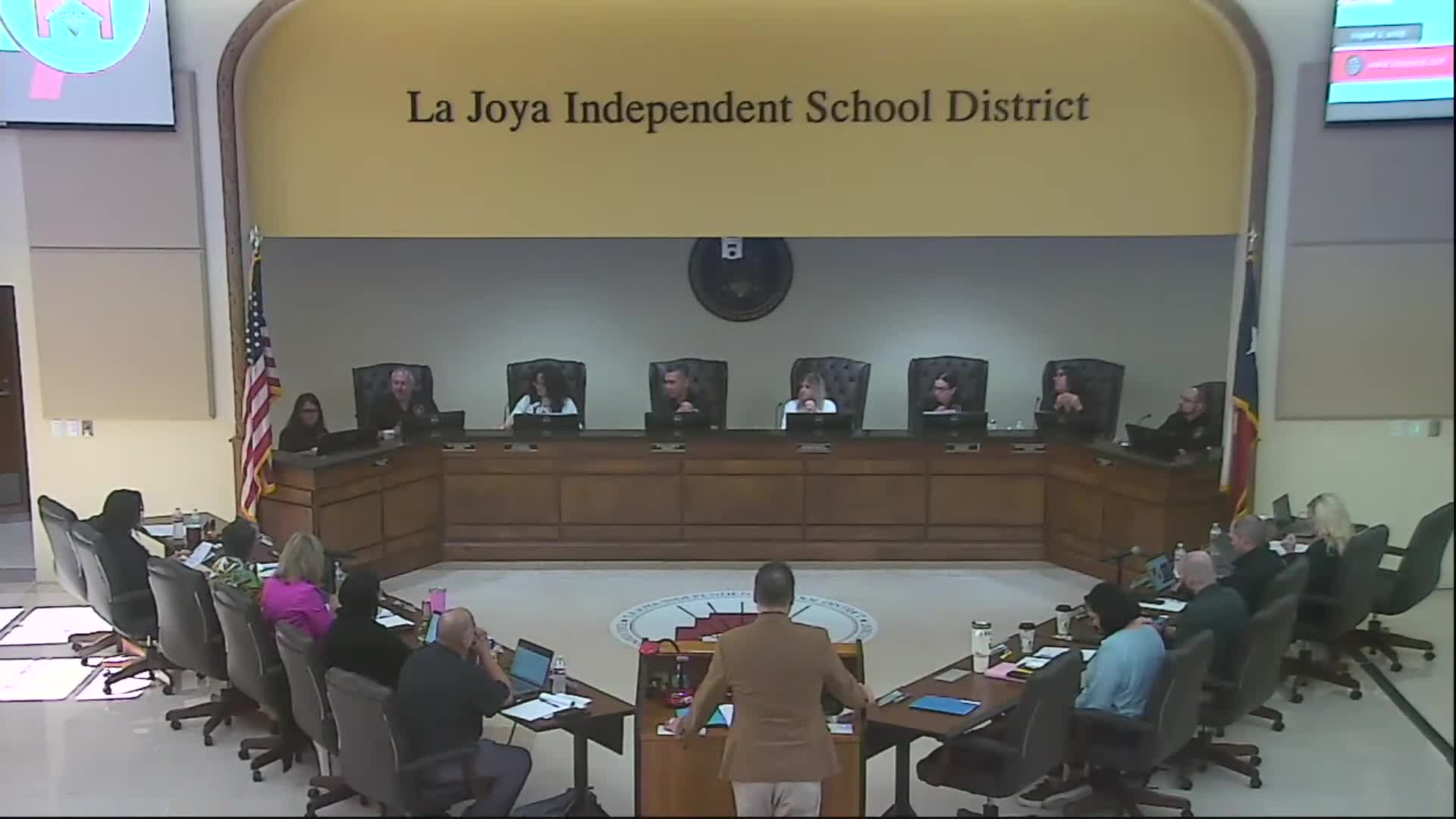
Summary
District and Lone Star Governance trainers proposed adding a theory of action to AE(Local) that centers a managed instructional foundation and earned, performance-based autonomy for schools.
La Jolla ISD leaders and a Lone Star Governance facilitator outlined a proposed addition to the district’s AE(Local) policy that would codify a “managed instruction” foundation and a pathway for schools to earn performance-based autonomy.
Joseph Nigella, presenting the proposed language, framed the approach as an "if–then" theory of action designed to align district expectations with campus innovation. He said the theory of action "connects our intentions to our expected outcomes" and that it should be written so the district and schools can act on it. The proposal appeared as a new Section K in the district’s AE(Local) policy packet.
Nut graf: The theory of action would make the school the primary unit of change while requiring all campuses to operate within a consistent, research-based foundation. Schools that meet district performance expectations could earn greater autonomy in staffing, scheduling or program models, provided they remain legally compliant.
Under the proposed language, the district’s role would be to set performance expectations, provide research-based supports and scale best practices; campuses would be empowered to implement locally appropriate strategies within district constraints. The presentation listed components of the managed foundation that campuses must follow (examples given in the workshop: curriculum materials, scheduling, professional development, budgeting processes and reporting). The “then” clause said that if those conditions are met and the district provides differentiated support, then the district will create a performance-driven system that balances coherence with school-level innovation.
Superintendent Dr. Sorensen emphasized clarity, consistency and communication: “It is incredibly important … that it is communicated to everybody, to all stakeholders so that all of our stakeholders understand when we say managed foundation, what that means,” she said.
Board members and staff described the proposed theory of action as practical and cross-functional, aiming to create a stable governance structure that survives board and leadership transitions. Board members asked how common such policy language is; presenters replied that many districts include a theory of action in AE(Local) language, and that Lone Star Governance and Systems of Great Schools work encourage an actionable, short set of expectations rather than “flowering” aspirational language.
The proposal will be placed on an upcoming agenda for formal board action; presenters said the wording is intended to be operational (clear roles, monitoring points and consequences) and to be accessible for campus and central-office staff.
Ending: District staff said the theory of action will be circulated as proposed policy language and returned for board consideration; they described it as a tool to guide the district’s strategic plan and the board’s monitoring calendar.